
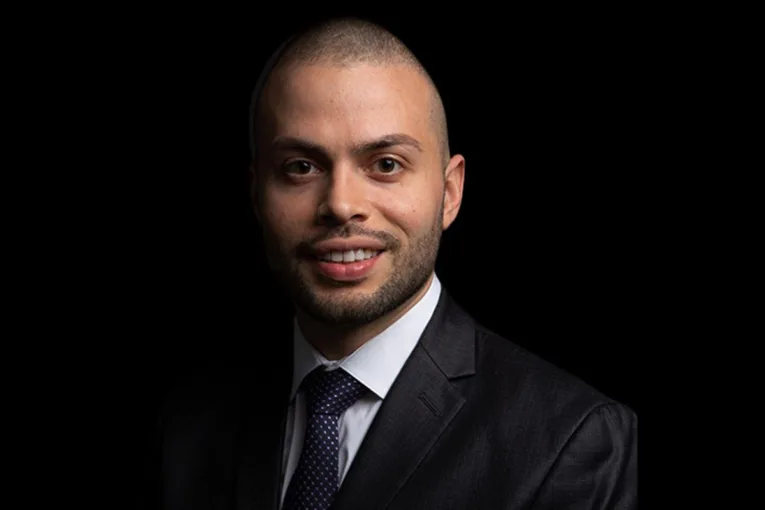
BOSTON — A federal judge in Massachusetts has granted a preliminary injunction preventing federal immigration authorities from examining data copied from immigration attorney Andrew Lattarulo’s cellphone after agents seized it at Boston Logan International Airport.
Lattarulo v. Mullin is a federal civil rights lawsuit concerning the warrantless seizure and copying of an immigration attorney’s cellphone at the U.S. border. Lattarulo alleges that the seizure was motivated by his outspoken criticism of federal immigration authorities rather than legitimate investigative concerns.
The case arose after U.S. Customs and Border Protection and Homeland Security Investigations agents intercepted Lattarulo at his arrival gate at Logan International Airport following a weekend trip to Aruba.
Lattarulo is an immigration attorney and part owner of Georges Cote LLP, a law firm representing thousands of clients in active immigration proceedings. He also operates a popular Instagram account featuring videos providing information about immigration rights.
Agents seized Lattarulo’s phone without a warrant and downloaded a copy of the data stored on the device, including confidential information and privileged attorney-client communications.
In October 2025, Lattarulo filed a verified complaint and request for injunctive relief, seeking a declaration that the search and seizure of his cellphone violated his First and Fourth Amendment rights.
He also sought the return of his phone, documentation of the chain of custody of any copies of its contents and the destruction of the copied data.
Homeland Security Investigations said the search was connected to an ongoing investigation into whether Lattarulo’s law firm employed individuals who lacked authorization to work in the United States.
Lattarulo argues that the warrantless seizure and search violated his First and Fourth Amendment rights, alleging that federal authorities targeted him because of his political speech.
The defendants argued that the border search exception to the Fourth Amendment permitted the seizure and that the investigation into Lattarulo’s law firm supplied reasonable suspicion to search his phone.
While the Fourth Amendment generally protects individuals against unreasonable searches and seizures, the border search exception grants federal authorities broader search powers.
In the 2021 case Alasaad v. Mayorkas, the U.S. Court of Appeals for the First Circuit held that federal authorities may conduct routine searches of electronic devices at the border without individualized suspicion, while more extensive searches require reasonable suspicion but not a warrant.
However, U.S. District Judge Allison D. Burroughs questioned whether that exception extends to investigations of alleged domestic crimes unrelated to an individual’s border crossing.
Burroughs granted Lattarulo’s request for a preliminary injunction Nov. 13, finding that he was likely to succeed on the merits of his First Amendment retaliation claim.
The judge noted that Lattarulo’s law firm partner, Audai Cote, who was responsible for employment eligibility compliance and had not publicly spoken about immigrant rights, returned from Aruba a day earlier without being subjected to a similar search.
Burroughs also noted that federal authorities seized Lattarulo’s phone just three days after notifying the firm of suspected employment documentation violations, despite providing the firm 10 days to verify the employees’ work authorization.
The judge found that the government had presented no evidence that cellphone searches were routinely conducted in comparable employment investigations.
Burroughs wrote that the circumstances surrounding the search provided “substantial support to an inference that its actions were pretextual.”
Federal authorities maintained that additional evidence would demonstrate that the search was unrelated to Lattarulo’s speech but declined to present that evidence in open court, citing concerns about compromising an ongoing investigation.
Burroughs also found that allowing the government to examine the contents of Lattarulo’s phone would cause irreparable harm to his privacy and that federal authorities had not demonstrated that the information was essential to their investigation.
Although the government returned Lattarulo’s phone eight days after its seizure, it retained a complete copy of the device’s data in an unreadable format.
Burroughs declined to order the destruction of the copied data, instead directing the government to preserve it in its current unreadable format until the conclusion of the proceedings.
The judge did not rule on the merits of Lattarulo’s Fourth Amendment claim, leaving that constitutional question unresolved as the litigation proceeds.
Editorial note: I verified the ruling against the original 12-page court order. The most significant correction concerns Alasaad v. Mayorkas: the First Circuit reversed the lower court’s ruling restricting suspicionless electronic device searches. I also incorporated the judge’s findings regarding departures from normal investigative procedures and removed the inaccurate assertion that the preliminary ruling has no bearing on the merits. CourtListener
