
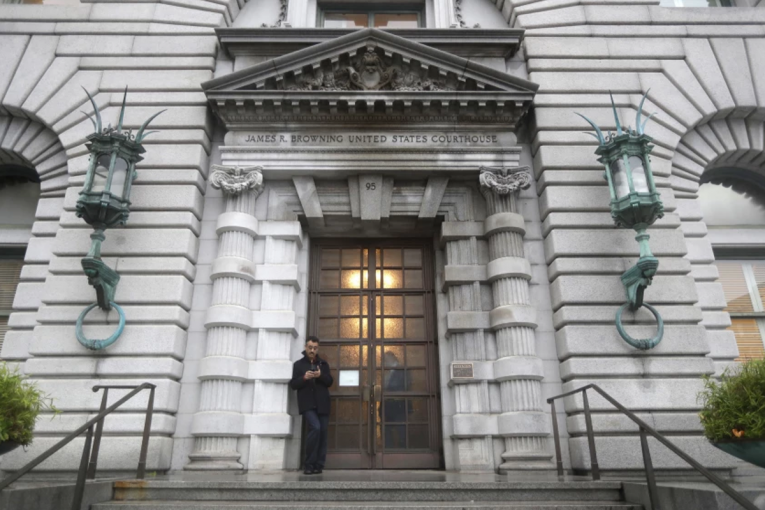
SAN FRANCISCO, Calif. — The U.S. Court of Appeals for the Ninth Circuit has allowed the State Department to continue suspending a congressionally mandated immigration visa lottery, ruling that the law firm challenging the suspension had not demonstrated a legal right to bring the lawsuit.
In an Oct. 29 order in Red Eagle Law, L.C. v. Rubio, a three-judge panel granted the federal government’s emergency request to stay a preliminary injunction requiring the State Department to reopen registration for the fiscal year 2027 Diversity Immigrant Visa Program.
The decision allows the suspension to remain in effect while the government’s appeal proceeds, even as the court expressly declined to endorse the State Department’s failure to implement the program.
Under the Immigration and Nationality Act, the State Department is required to administer an annual Diversity Visa Program, making up to 55,000 immigrant visas available to individuals from countries with historically low rates of immigration to the United States.
The program uses a lottery to randomly select approximately 100,000 individuals who may then apply for immigrant visas, subject to additional eligibility requirements.
For fiscal year 2027, however, the State Department failed to open the lottery registration period, effectively suspending the program for that year.
According to the Ninth Circuit’s opinion, the department provided no explanation for its failure to begin registration.
In August 2026, Red Eagle Law, L.C., a San Diego County immigration law firm that represents Diversity Visa selectees, filed a lawsuit challenging the suspension.
The firm argued that the State Department’s actions were arbitrary and capricious, unlawfully withheld agency action required by Congress and exceeded the department’s statutory authority.
The lawsuit invoked the Administrative Procedure Act, which permits federal courts to review agency actions and set aside decisions that are arbitrary, capricious, an abuse of discretion or otherwise contrary to law.
On Oct. 14, U.S. District Judge Jinsook Ohta of the Southern District of California issued a preliminary injunction requiring the State Department to resume the fiscal year 2027 lottery.
The district court ordered the department to announce the registration period by Oct. 29, open registration by Nov. 1 and notify selected applicants of their eligibility to apply by Dec. 3.
The federal government appealed the injunction and requested an emergency stay, arguing that the district court’s order should not take effect while appellate proceedings continued.
The Ninth Circuit panel, consisting of Judges M. Margaret McKeown, N. Randy Smith and Holly A. Thomas, granted the government’s request.
Although the government bears the burden of justifying a stay pending appeal, the court concluded that it had made a strong showing that it was likely to prevail because Red Eagle Law had not demonstrated that its interests were protected by the statute governing the Diversity Visa Program.
The court explained that the program was established to encourage immigration from countries with low rates of immigration to the United States, rather than to protect the economic interests of attorneys representing potential applicants.
The judges found that Red Eagle Law’s financial interest in representing Diversity Visa selectees was not sufficiently connected to the statutory purpose of the program.
The court also emphasized that Red Eagle Law was the sole plaintiff in the case and had not joined any prospective Diversity Visa applicants or claimed to represent such applicants in the lawsuit.
Under the Administrative Procedure Act’s zone-of-interests requirement, a plaintiff generally must demonstrate that its interests are at least arguably protected or regulated by the statute allegedly violated.
The Ninth Circuit concluded that Red Eagle Law had not satisfied that requirement.
The firm relied in part on the Ninth Circuit’s earlier decision in East Bay Sanctuary Covenant v. Trump, in which the court recognized that nonprofit organizations providing legal services to asylum seekers fell within the zone of interests protected by federal asylum law.
In that case, the court found that Congress had expressly contemplated access to pro bono legal services for asylum seekers.
The Ninth Circuit distinguished that precedent from the Diversity Visa Program, explaining that Congress had not included comparable provisions concerning legal services for lottery applicants or selectees.
The panel also rejected the firm’s reliance on CSL Plasma Inc. v. U.S. Customs & Border Protection, a D.C. Circuit decision involving businesses that benefited directly from a visa classification intended to support business activity.
The Ninth Circuit explained that the Diversity Visa Program was enacted to encourage immigration, not to generate revenue for immigration law firms.
Despite finding that Red Eagle Law lacked a viable cause of action under the statute, the panel made clear that its ruling should not be interpreted as approval of the State Department’s conduct.
“We do not endorse the Department’s failure to open the lottery registration period,” the court wrote.
The judges nevertheless concluded that the law firm had not demonstrated a likelihood of success because it fell outside the statute’s protected zone of interests.
Judge Smith wrote a separate concurring opinion arguing that Red Eagle Law also lacked standing under Article III of the U.S. Constitution.
Smith explained that federal courts may hear cases only when plaintiffs demonstrate a concrete injury that is fairly traceable to the challenged conduct and likely to be remedied by a favorable judicial decision.
He concluded that the firm’s claimed financial losses were too speculative because they depended on several uncertain events, including whether prospective immigrants would enter the lottery, be selected, qualify for visas and ultimately hire Red Eagle Law.
Smith also observed that the firm had not alleged an actual decline in revenue resulting from the State Department’s failure to implement the program.
His concurrence distinguished the firm’s potential loss of future business from the direct injuries necessary to establish constitutional standing.
The court directed its clerk to issue a briefing schedule for the appeal of the preliminary injunction.
To comment please go to one of these social media platforms:
Facebook: https://www.facebook.com/DavisVanguard
LinkedIn: https://www.linkedin.com/company/peoples-vanguard-of-davis-inc/
Instagram: https://www.instagram.com/davisvanguard/
X: https://x.com/davisvanguard
Bluesky: https://bsky.app/profile/vanguardnewsgroup.bsky.social
Subscribe to the Vanguard News letters. To make a tax-deductible donation, please visit davisvanguard.org/donate or give directly through ActBlue. Your support will ensure that the vital work of the Vanguard continues.
