
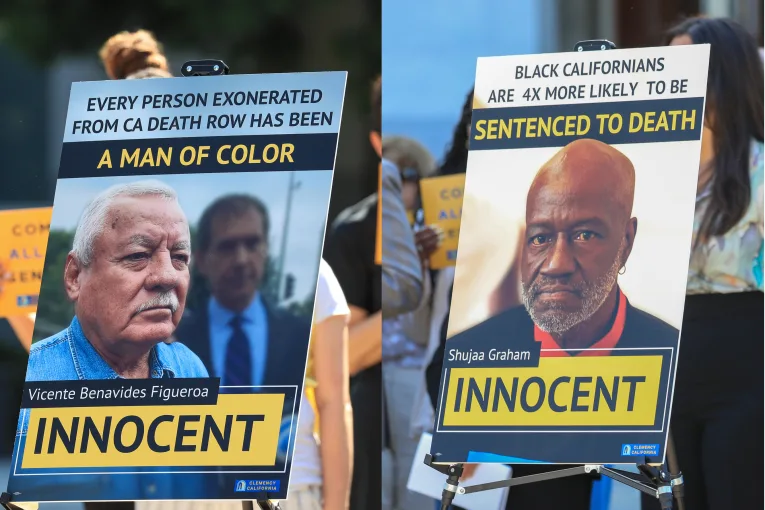
SACRAMENTO, CA — With the sun high over the State Capitol, a coalition of California and national civil rights leaders gathered on Thursday, June 26, 2025, to deliver an urgent message to Governor Gavin Newsom: commute the death sentences of all 574 individuals currently on California’s death row.
Framed by banners calling for mercy and banners bearing the names and faces of those once wrongly sentenced to die, the rally brought together faith leaders, civil rights attorneys, disability rights advocates, and families impacted by the criminal legal system. Their demand was clear and unanimous — universal clemency.
California’s death row, the largest in the country and one of the largest in the world, has long been a symbol of what advocates described as systemic injustice, racial bias, and irreparable harm. Two-thirds of those sentenced to die in the state have been there for more than 20 years. Dozens have languished on death row for more than 40 years — many without legal representation for their capital appeals due to chronic underfunding and institutional delay.
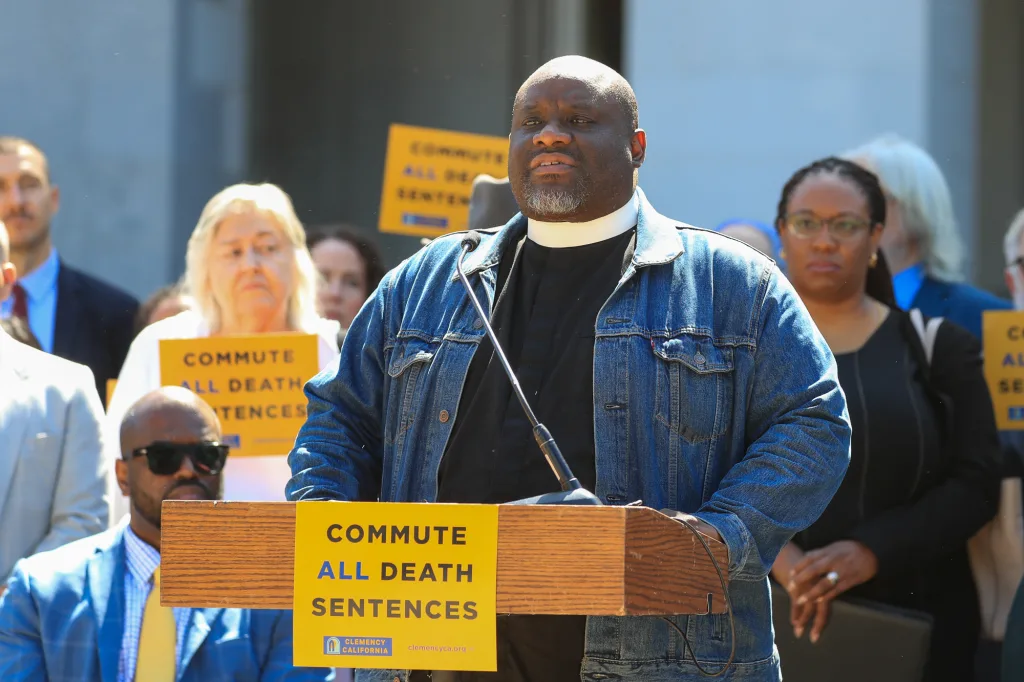
“We are here because we know that we are in a moment where our values, our commitment, and our history of civil rights, human rights must shine through more than ever before,” said Pastor Mike McBride, executive director of LIVE FREE USA and lead pastor at The Way Church in Berkeley. “We have no moral authority to take the life of anyone. My faith tradition teaches me that God has no pleasure in the death of anyone, whether they be wicked or just. That is God’s decision alone.”
Calling on Governor Newsom to “meet us at the place of mercy and justice,” McBride reminded the crowd that California prides itself on progressive values and moral leadership. “Why would you want power, particularly the power to show mercy, and you don’t act on that power?” he asked.
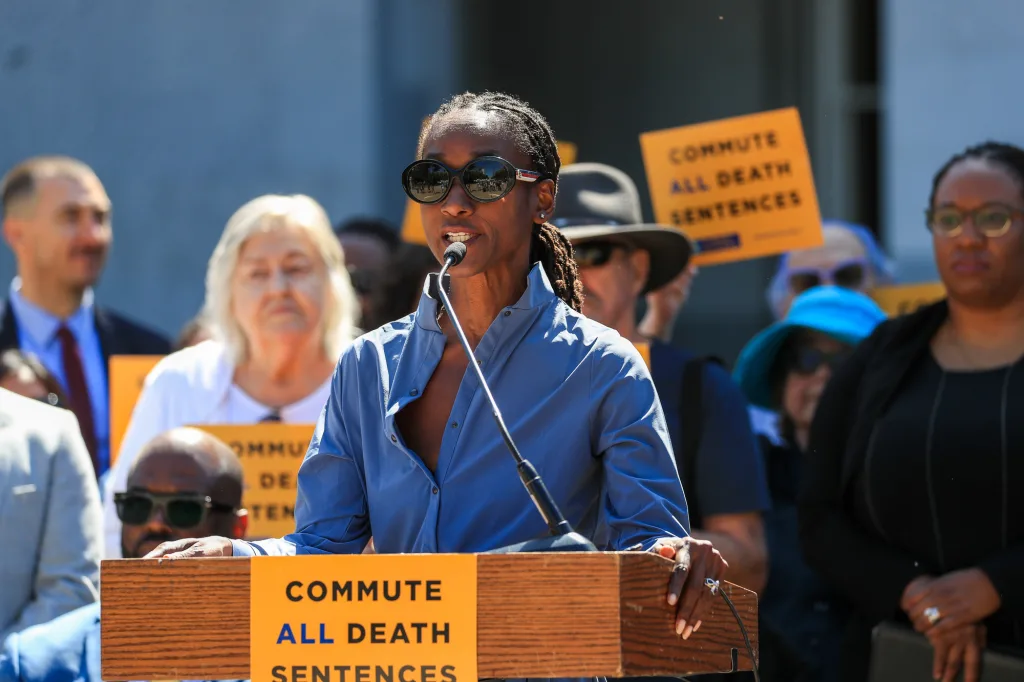
Lisa Holder, president of the Equal Justice Society and a former member of the California Reparations Task Force, offered a powerful indictment of the racial legacy underpinning the state’s capital punishment system. Drawing on the findings of the task force and her decades as a civil rights attorney, Holder traced the lineage of the death penalty from slavery and lynching to the modern criminal legal system.
“Our court systems banned Black jurors, excluded Black lawyers, prohibited Black witnesses from testifying against white defendants, and lynching was viewed as a legitimate alternative to due process,” Holder said. “There has never been a full-throated effort to repair the harm or transform the white supremacist narrative on Black criminality. From a racial justice perspective, there is no way to administer the state’s human execution system in a way that is moral or bias-free.”
Holder emphasized the glaring disparities: Black people represent 6 percent of California’s population, but 35 percent of the death row population. “To err is human. To forgive is divine,” she said. “We can’t authentically lead this fight against authoritarianism and state violence from the apex predators in the federal government until we clean up our own house.”
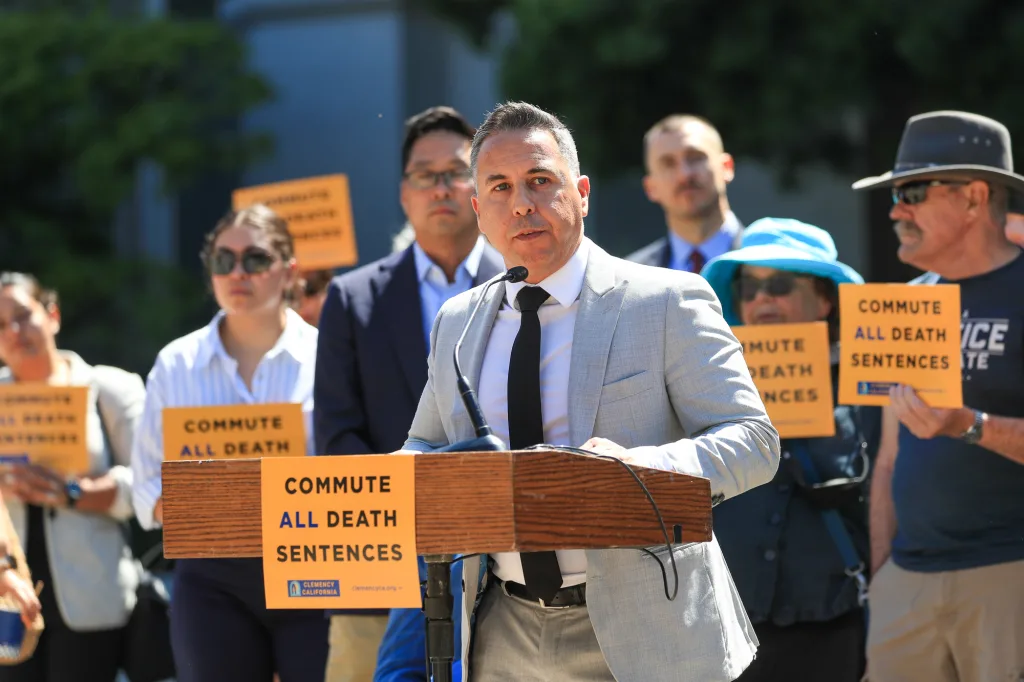
Michael Mendoza, criminal justice director for LatinoJustice PRLDEF, echoed the moral urgency and highlighted the disproportionate impact of the death penalty on Latino communities. “Since the moratorium on executions was announced, 14 of the 22 new death sentences have been Latino,” he said. “This is not a crisis of policy — this is a crisis of conscience.”
“Governor Newsom, you did the right thing placing a moratorium on executions,” Mendoza continued. “Now it’s time to take another moral step and commute these sentences. Justice cannot be racially selective.”
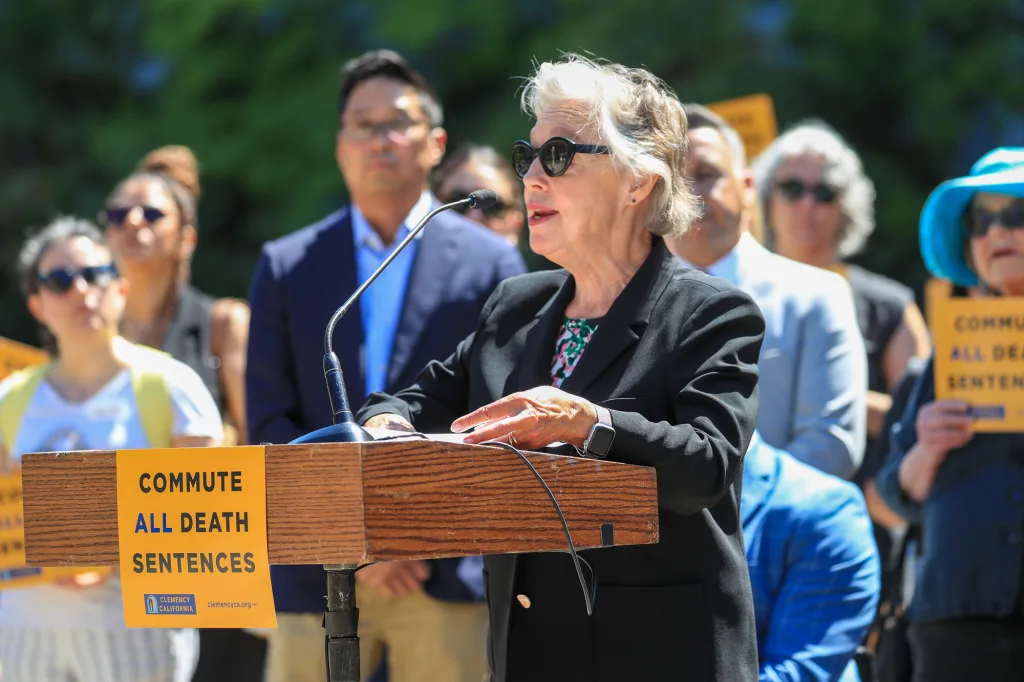
For Dorothy Ehrlich, former deputy executive director of the ACLU, the rally was a continuation of decades of advocacy. She has been working to end the death penalty since 1971.
“The death penalty is irreversible, and we know that people are not only wrongly convicted — they are sentenced to die,” Ehrlich warned. “Since California reinstated the death penalty in 1977, eight Californians have been exonerated and released from death row. All were men of color.”
She pointed to recent exonerations like Vicente Benavides Figueroa, whose conviction was overturned after 25 years on death row, and the case of Kenneth Clair, where new DNA evidence suggests innocence after four decades in prison. “The state shouldn’t be in the business of making irreversible deadly mistakes — not in our name,” she said.
Ehrlich also underscored the fiscal waste: “California has spent $5 billion on the death penalty since 1977. We don’t have enough money for healthcare, to keep domestic violence shelters open, or to fund rape crisis centers. Clemency is not just morally righteous. It could help ease California’s budget woes and fund the programs that actually keep our communities safe.”
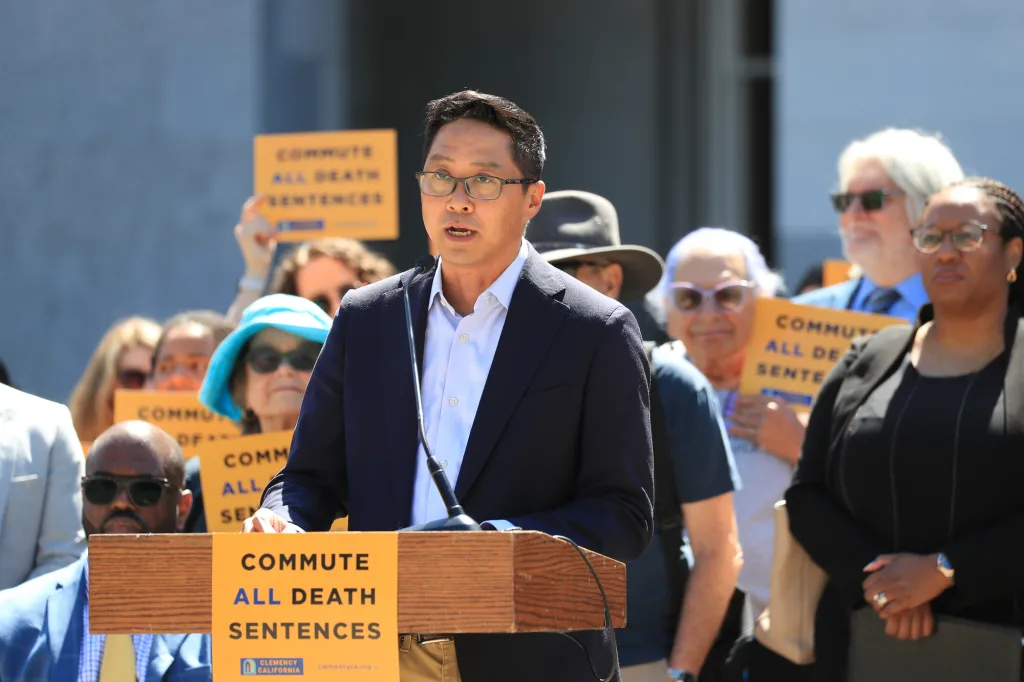
Vincent Pan, co-executive director of Chinese for Affirmative Action, stressed the importance of holding onto our shared humanity in moments of pain and fear. “It is precisely in these moments that we must hold tightly to our collective humanity by setting limits on what we are willing to do to one another,” he said. “The death penalty is one of those limits — one of those moral boundaries we must not cross.”
Pan called the system “deeply flawed, error-prone, and haunted by wrongful convictions.” He concluded, “Commuting death sentences is not to forget harm — it is to affirm that we will not meet violence with violence.”
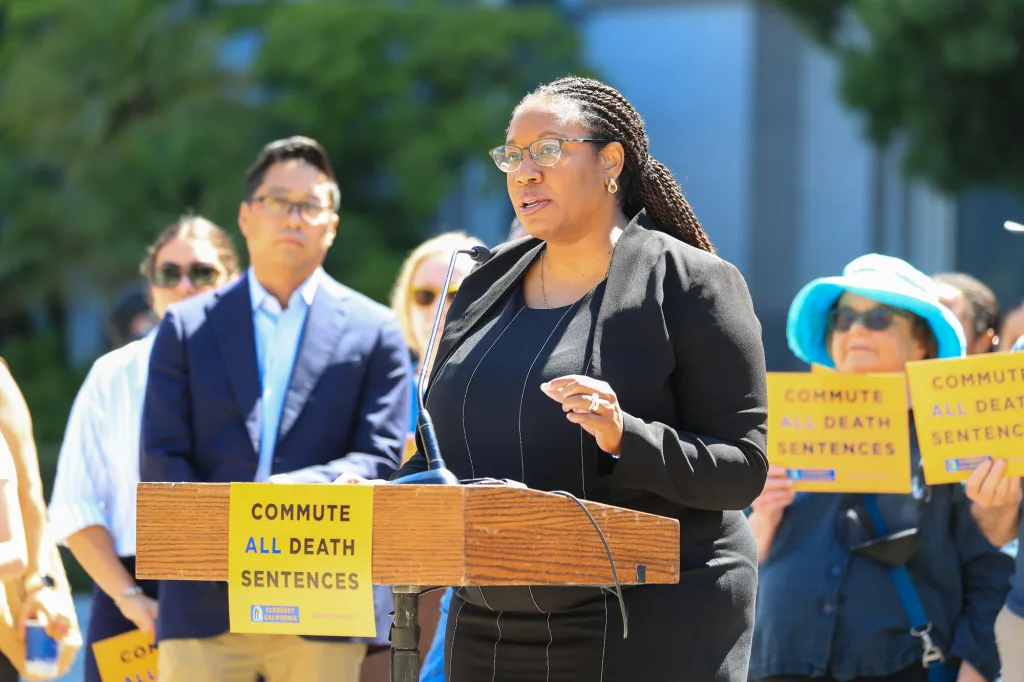
Imani Rupert-Gordon, president of the National Center for LGBTQ Rights, drew attention to the structural bias within jury selection and death penalty prosecutions. “LGBTQ people, people with disabilities, people of color, and people with low incomes are disproportionately targeted by the racial and anti-LGBTQ bias that permeates every level of the criminal legal system,” she said.
Rupert-Gordon cited recent revelations in Alameda County, where prosecutors systematically removed gay and lesbian jurors in death penalty cases. “This is not justice,” she said. “Californians are proud of our reputation as proponents of justice. The death penalty flies in the face of that. It’s discriminatory, dehumanizing, and out of step with the global community.”
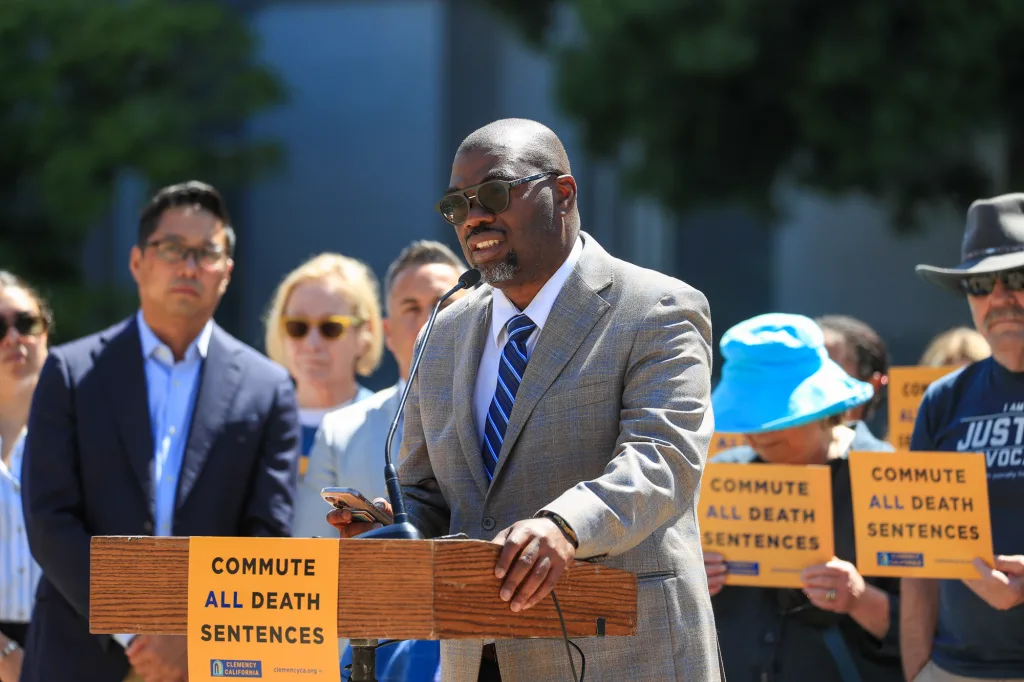
Robert Rooks, CEO of One for Justice and a veteran organizer against capital punishment, invoked the memory of Troy Davis, a Georgia man executed despite widespread doubts about his guilt. “There is nothing more inhumane than to speak to someone one day and go to their funeral the next,” he said.
Recalling the pain of telling Davis that his execution would proceed, Rooks said, “Troy told us, ‘Don’t worry about me — just make sure the fight does not stop with me.’”
“Governor Newsom, do the right thing,” Rooks urged. “Commute the row. We need to step into our values, the morals that we proclaim.”
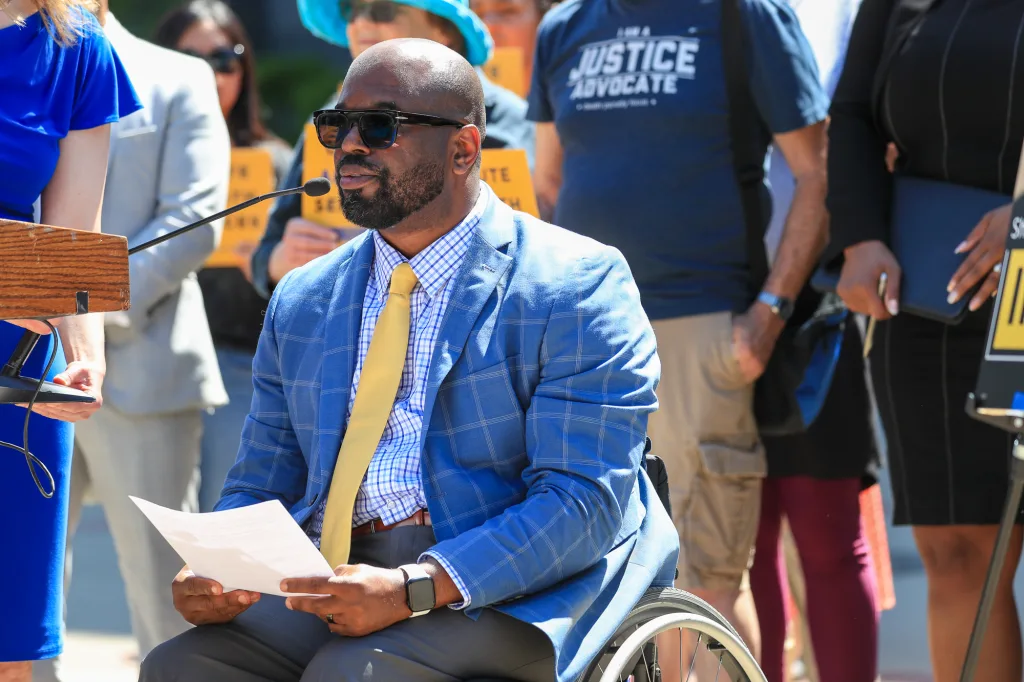
Eric Harris, associate executive director of Disability Rights California, spoke to the often-overlooked plight of disabled individuals on death row. “Disabled people — especially disabled people of color — are overrepresented on death row,” he said. “People with intellectual and developmental disabilities are more likely to falsely confess, to struggle in understanding their rights, and to face barriers in preparing their defense.”
Harris noted that courts, jails, and prisons remain largely inaccessible, and that accommodations for disabled defendants are frequently insufficient. “The actual number of people with disabilities on death row is even higher than reported due to underdiagnosis,” he said. “It is most crucial to do the right thing when it’s most difficult to do the right thing.”
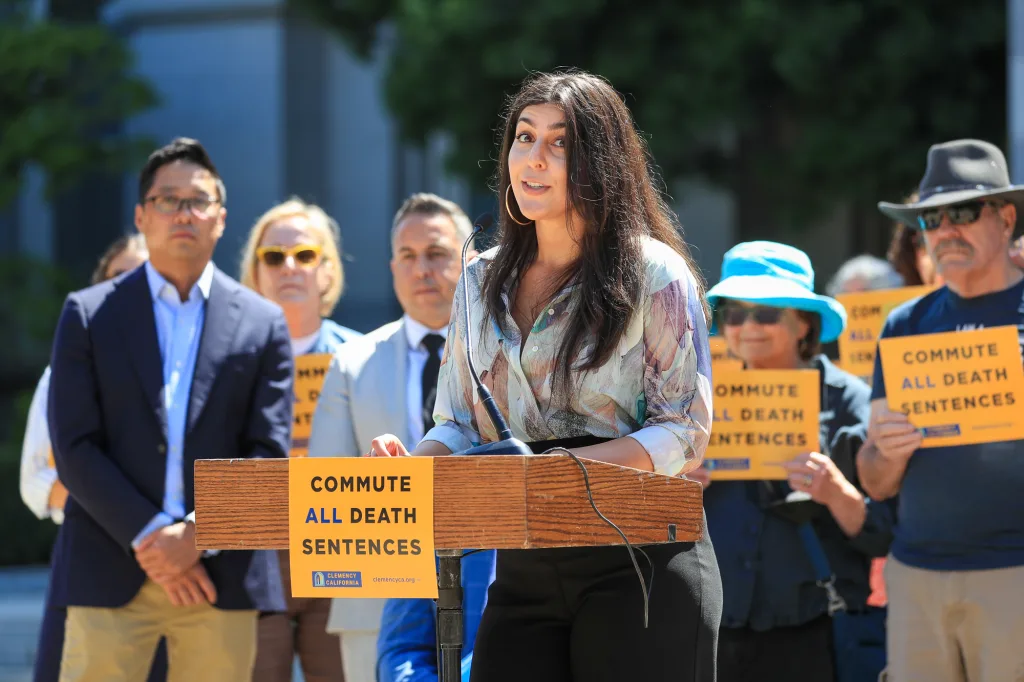
Morgan Zamora, prison advocacy manager at the Ella Baker Center for Human Rights, concluded the event with a sweeping call for moral clarity and structural change. “Despite the promise of the Racial Justice Act, justice has continued to be denied — especially to those with death penalty convictions,” she said.
Zamora noted that 188 organizations — from Amnesty International to Muslim and Jewish religious coalitions — have endorsed the campaign for universal clemency. “This is a nonpartisan moral call to action,” she said. “Commute the sentences of every individual condemned in the state of California without delay, because the time to act is now.”
As the speakers concluded, Natasha Minsker of the California Anti-Death Penalty Coalition led the crowd in a chant that echoed through the Capitol steps: “Commute the row now. Commute the row now.”
Whether Governor Newsom will answer the call remains to be seen. But on this day, a broad coalition of voices — united across faith, race, profession, and experience — made it clear that California’s death penalty, in their view, is not just unjust. It is untenable.

I don’t see this happening while the Governor is preparing to run for President.