
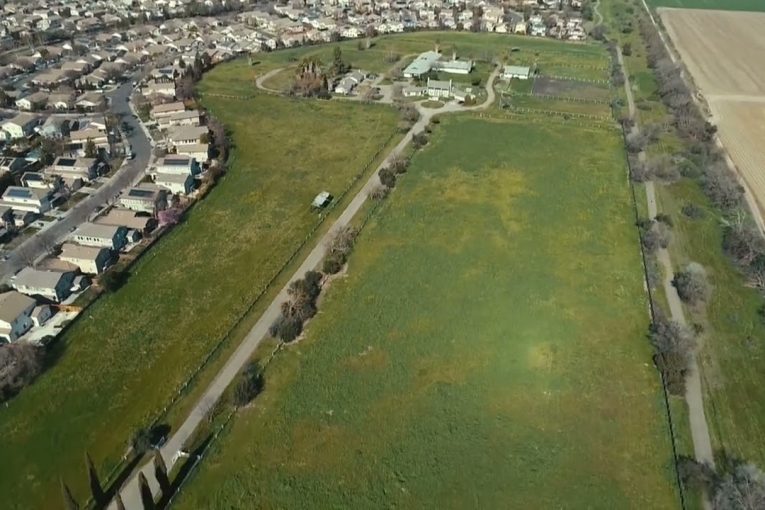
by David Taormino
By now, the discerning reader will have grasped both the essence of this litigation and the principles which animate it. I have formally challenged the newly imposed school fee—and soon, I shall contest the very foundation upon which any school fee purports to stand. The future homeowners of Palomino Place are not yet here to speak in their own defense. As the Developer, I am left to speak for them.
I am acutely aware that, as a developer in Davis, I occupy a role seldom celebrated—particularly when I question the actions of trustees of our widely cherished, even venerated, Davis educational institution.
Day after day, across this great state, in the pages of our newspapers and in City Council chambers, the refrain rings loud and clear: “Housing in California is too expensive.” That refrain is not a lament of the discontented few—it is a clarion call grounded in economic truth. California homes are approximately 50% more costly than in other western states. We are entangled in a crisis of affordability and supply, seemingly insurmountable, yet all too real.
And what has been our collective response? Politicians sermonize. Bureaucrats study. Committees convene. Words multiply. But action—the type that lowers unnecessary housing costs—remains a scarce and elusive species. In nearly five decades as a developer, not once have I been asked by the Davis City Council or Planning Commission to answer a question both practical and urgent: How do we reduce the cost of housing? In reality there is little political appetite to reduce housing costs at all.
Cost-cutting is no fun—it is arduous, uncomfortable, and unpopular work. It must begin with the recognition that no category of cost is sacred. No institution, no agency, no fee—however well-intentioned—can be held beyond scrutiny.
A typical developer’s cost ledger lists some ninety categories. Of these, four tower above the rest:
1. Neighborhood Infrastructure
2. Local Government Fees and Exactions—some lawful, others of dubious legality
3. Land Acquisition Costs
4. Zoning and Entitlement Expenses
Of these, three are almost entirely within the control of government—municipal, county, or state. Together, they set the stage for the ultimate cost of land and housing. The so-called “free market” operates only after these leviathans have taken their toll.
In the case of Palomino Place, we have sought through the Housing Accountability Act—colloquially known as the Builder’s Remedy—to change the typical dynamic. The City of Davis, through a negotiated settlement, has worked in a timely and collaborative fashion, enabling an entitlement process that is both cost-effective and prompt. Typically, fees and exactions were examined closely by all of us. This stands in stark contrast to the usual gauntlet of delay and bureaucratic attrition that so often defines Davis development. Every harmony is disrupted by a discordant note. In this case, that note is struck by the Davis Joint Unified School District.
As I stated at the outset: our school district, for all its noble mission, operates as though it were conducting God’s work on Earth—and by implication, not bound by the mundane limitations that govern the rest of us.
The criteria for imposing school impact fees are governed by state law, not the discretion of local districts. These fees are imposed not to fund salaries, programs, or curriculum—but exclusively to mitigate the physical facility impacts created by the residents of new residential development within the District. That is the law.
The District, in breach of a prior agreement with Palomino Place, LLC, saw fit to impose an additional $1 million fee upon the homeowners of Palomino Place—I contend that imposition is not merely unjust, but legally indefensible and unsupported by the District’s Nexus study. And in doing so, the District has placed an estimated $40 million in future, otherwise uncontested fees on new developments which will now be open and visible to the public and builder examination. That once “invisible” exaction now visible doesn’t make it legally permitted, but it does invite close scrutiny by other developers and future builders, who otherwise would not have looked, but for the District’s decision against Palomino Place homeowners.
I ask plainly: What reason, what rationale, could justify the District wagering forty times as much in potential uncontested fees, however illegal the basis for such fees, for the sake of collecting one million dollars from Palomino Place—especially when the legal basis is, by all accounts, flimsy at best and had already been settled between myself and the District through early on negotiations.
Is this wisdom? Or is it hubris in official dress?
I suspect the District was led astray—lulled by its expensive, well-heeled legal firm in search of a fresh revenue generating theory. My dispute had been quietly resolved through negotiation: including the District’s own attorney who agreed that our basis was grounded in California law. Then came the legal cavalry, brandishing fresh theory. The result?
Litigation and now its wider expansion in a second lawsuit challenging the underlying fee.
The District’s own Nexus study—the legal backbone of the fee—was weak to begin with. It ignored a glaring fact: over 1,200 outside students commute daily into the district, propping up Davis schools that otherwise face closure. The arithmetic for new school and thus an expanded fee does not add up. The legality is worse.
One cannot help but wonder—doing God’s work on Earth may at times blind one to the earthly constraints of man’s law.
In conclusion my aim is not to undermine our schools, but to uphold the principle that no institution, however revered, stands above legal accountability. And that when we pretend otherwise, it is not just detrimental to home prices, it opens the door wide to investigate what else lurks out there, undisclosed or hidden by the District.

Only a developer could simultaneously complain about (and sue) an entity in regard to a problem that they themselves caused. (At least, with a straight face.) I kind of admire that ability, in a way.
Our president (also a developer) has that same innate ability. (Reminds me of Dave Chappelle’s comments regarding Trump.)
Apparently, it does lead to financial success, at least.
I didn’t read either if your opinion articles but imagine it’s the same thing this town has been complaing about since I moved in and Valley Oak Elementary closed.
Not enough affordabe housing to young professional families and we’ll have yo close more of our schools…blah, blah, blah, blah, blah. And the school district leaders complain and then we raise taxes because everyone wants to support education (not a complaint…just reality).
If the school district really wanted to adress this issue then why didn’t you accept the planning commissions recommendation to increase the density at your property at B&5th? How much property in town does the district own that can be developed as a mixed use development meeting your administrative needs as well as our residential needs?
Solutions are here, our leaders just need to be more bold and make harder decisions that might just upset those that really control those town…the so called 200. Who are they? And why can’t they figure out how to fix this ailing town?