
- “Healing is not secondary to safety. Healing is safety.” – Tinisch Hollins
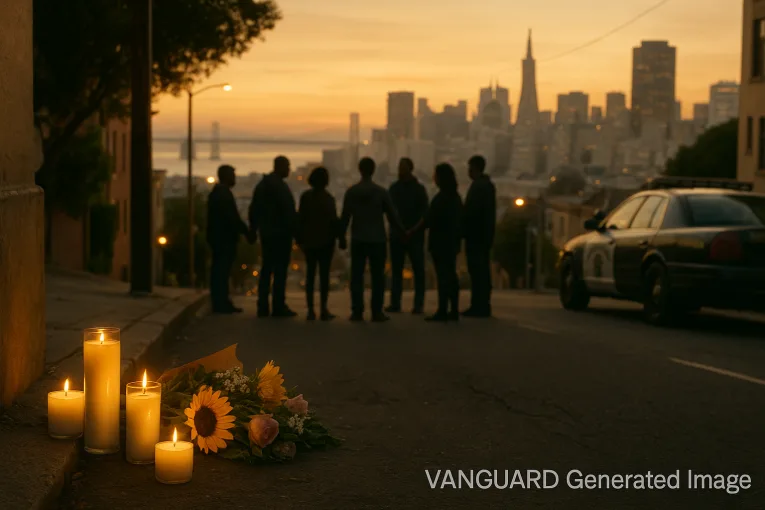
Last month in San Francisco, an 8-year-old boy witnessed his father, Robert Paul Byrd II, get fatally stabbed at a crosswalk as they were walking home from Commodore Sloat Elementary School. In the days after the tragedy, law enforcement announced a suspect had been arrested, that there was “no imminent threat” and justice would be served. I received numerous calls from community members, including Mr. Byrd’s grandmother, about where to get victim services.
As a crime survivor who has lost three brothers — two to gun violence and one to a mental health crisis — I know the anguish and pain Mr. Byrd’s family is experiencing. I was born and raised in San Francisco, and my life’s work is creating real solutions to community safety. I know what it means when trauma is ignored, when families are left to piece together healing with no roadmap, no resources, no relief.
When a person is a victim of violence, the family and the communities that surround the victim — the students, teachers, and witnesses on the street — are directly impacted. Their pain will not end with an arrest. Further, survivors like Mr. Byrd’s son and family are unaware of their rights and are likely to be retraumatized and victimized by the very system meant to deliver justice, and abandoned without the answers or support to begin healing. Without immediate, sustained support, their trauma will ripple forward, shaping lives, choices, and communities for years to come.
I am heartened that over 1100 people were moved to donate to Mr. Byrd’s family. In times of tragedy, communities have a way of stepping up and providing support to those who have been harmed. I just wish our public safety system operated with the same vigor, compassion, and results.
The senseless act of violence that killed Mr. Byrd is something no child should ever see. But the reality is we are living in a time where violence has become a part of our daily lives. From the highly publicized killings that dominate social media, to rising gun violence in San Francisco, Vallejo, and Compton, to violent robberies in Oakland and the South Bay, to aggressive immigration raids tearing families apart — Californians are experiencing repeated shocks to our nervous system and our sense of safety. Each unhealed wound compounds the last.
What California needs is comprehensive victims’ services and a trauma recovery infrastructure. Mr. Byrd’s family can apply to the state’s victim compensation program, but that process is slow, bureaucratic, and requires victims to front the cost of services they desperately need now. Counseling, relocation assistance, emergency housing, funeral costs — none of these can wait months. And yet, for most victims, waiting is the only option.
The state’s primary response to public safety concerns has been to deploy more California Highway Patrol officers. Yet, no plan exists for how those officers will be used, or how their presence addresses what is fundamentally a crisis of violence, trauma, and broken trust. Accountability is a critical part of the puzzle, but enforcement cannot heal. Arrests cannot restore safety. Additionally, any progress we have made in creating more trauma recovery centers and expanding victim services in California has been stalled due to budget cuts.
What’s urgently needed is a Shared Safety strategy — one that invests as much in healing as in enforcement. That means ensuring cities and counties collaborate across regions, resourcing trauma recovery centers and mental health providers, supporting violence interrupters and reentry workers who prevent harm before it happens, empowering faith and community leaders who are credible messengers to help families stay grounded, and addressing California’s untreated mental health and housing crises as the public health emergencies they are.
This is not an abstract policy. It is about ensuring that an 8-year-old boy who watched his father’s murder does not have to navigate that trauma alone and his family has resources for therapy, safe housing, and grief support immediately — not months from now, if ever. It is about breaking cycles of violence that otherwise carry forward from one generation to the next.
Our communities deserve more than patrol cars circling blocks after tragedy strikes. We deserve accessible pathways to dignity, safety, and recovery. Trauma recovery centers — places where survivors can walk in and immediately connect with counseling, case management, relocation assistance, and legal advocacy — must become a cornerstone of California’s public safety strategy. San Francisco’s Trauma Recovery Center was the first in the nation and is a proven model. When there is access to trauma recovery, victims can start their healing journey, communities can begin to stabilize, and cycles of harm are interrupted.
The choice before us is clear: continue pouring billions into enforcement that arrives too late, or finally invest in the healing infrastructure that can prevent violence from repeating.
We must declare a Shared Safety Initiative for California. Local governments, state agencies, community organizations, faith leaders, and violence prevention specialists must come together now. Healing is not secondary to safety. Healing is safety.
Robert Byrd’s son will carry the weight of what he witnessed for the rest of his life. The question is whether we, as a state, will carry our share of that weight with him.
If California is serious about public safety, then the time to invest in trauma recovery centers and expand victim services is now.
Tinisch Hollins is executive director of Californians for Safety and Justice.
Follow the Vanguard on Social Media – X, Instagram and Facebook. Subscribe the Vanguard News letters. To make a tax-deductible donation, please visit davisvanguard.org/donate or give directly through ActBlue. Your support will ensure that the vital work of the Vanguard continues.
