
In the early morning hours on July 4, 2025, as young campers were fast asleep at Camp Mystic, catastrophic floodwaters from Guadalupe Creek in the Texas Hill Country rose to a level that was deemed unimaginable. Seventy-five children lost their lives that day. No parent would have ever knowingly put their children in harm’s way. They trusted their government — local planning departments — to do their jobs to protect public health and safety.
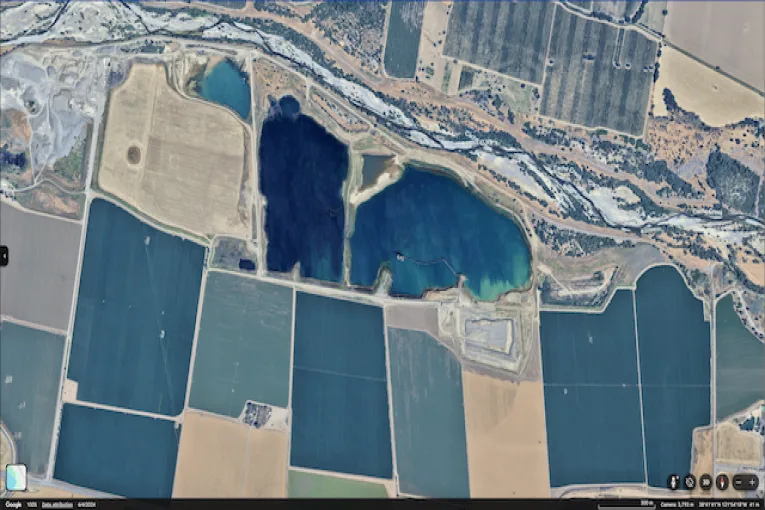
This week, the Yolo County Planning Commission is considering a permit application to extend deep pit gravel mining across more than 500 acres of the Cache Creek floodplain. In 1996, the county hitched Cache Creek’s future to a long-term plan that involves granting permits to mine just outside the creek’s main channel in exchange for net gain “gifts” of land for a proposed 14-mile recreational parkway. In the case of the CEMEX permit being reviewed by the Planning Commission at 9am on Thursday, Nov. 13, the mined-out land would be reclaimed and returned to the public by 2052.
However, this stretch of Cache Creek is also the highest level of flood risk. In fact, it is a FEMA-designated floodway, meaning the creek channel and adjacent land areas must remain undeveloped to prevent any obstruction in the case of a major flood event. This is to protect upstream communities in the Capay Valley from being severely flooded.
Yolo County staff are already in the hot seat, under review, for their lax code enforcement that led to the deadly July 2 fireworks explosion in Esparto. The staff report recommending approval of the permit application filed by CEMEX — an $18 billion global cement company — is full of assurances. Yet are these plans really climate-proof?
In the last 30 years since the county’s Cache Creek Area Plan was envisioned, the world has entered a new, unprecedented geological era often referred to as the “Anthropocene.” This refers to the scale of human impact on global ecologies like the climate which have catastrophic impacts at the local level. Intense atmospheric river storms, prolonged droughts, extreme wildfire, higher temperatures, erratic weather impacting growing seasons and biological diversity are all part of the “new normal” of climate change.
We the people of Yolo County now have a small window to convince the Yolo County Board of Supervisors to change course on the outdated, reckless Cache Creek Parkway Plan. Instead of relying on highly-paid, outside consultants to tell us what is best for the future of Cache Creek, it’s time for community-members to speak up for a climate-smart alternative to CEMEX’s obsolete reclamation plan.
Creekside resident Jim Barrett has proposed such an alternative: instead of leaving behind marginally restored farmland and mercury-polluted artificial “lakes” (impoundment pits), why not connect the mined-out areas to the main creek channel and restore the lower Cache Creek floodplain?
CEMEX — with three miles of creek-adjacent property just one mile North of Madison and seven miles west of Woodland — is an ideal site to restore biodiverse, carbon-sequestering wetland habitats. Beaver —nature’s riparian engineers — build dams that help trap and slow winter flows.
Rather than adding more strain on the aquifer with groundwater-filled, deep pits, a restored floodplain could assist with its recharge. This will be critical so that when we experience prolonged droughts, like we did in 2011-2017 when dozens of local wells went dry and no surface water from Cache Creek was delivered to farmers for irrigation.
Only a flood of public pressure can rescue the creek and our future from the clutches of the county’s cozy relationship with the mining-development industrial complex. Now is the time to contact your supervisor and tell them to direct county planners to work with local community members to fix or or nix the Cache Creek Parkway Plan, starting with amending the CEMEX reclamation plan to restore a more natural, climate-resilient Cache Creek floodplain. Remind them that a $1 investment in climate resilience now will save $13 in emergency assistance when disaster strikes.
Follow the Vanguard on Social Media – X, Instagram and Facebook. Subscribe the Vanguard News letters. To make a tax-deductible donation, please visit davisvanguard.org/donate or give directly through ActBlue. Your support will ensure that the vital work of the Vanguard continues.
