
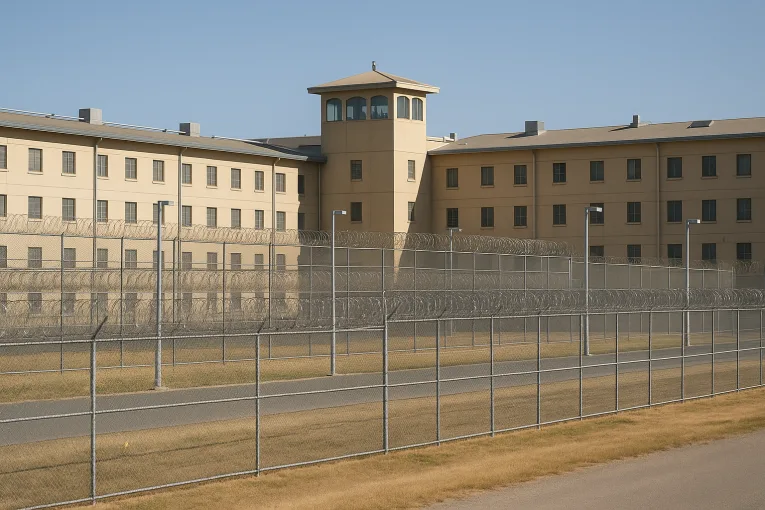
The Sentencing Project has released a new study warning that U.S. prisons are increasing their incarcerated populations even as crime rates continue to fall, raising concerns about a resurgence of mass incarceration despite decades of data showing its ineffectiveness. The organization reports that after a 25 percent decline in incarceration between 2009 and 2021, “39 states increased prison populations in 2023, despite violent and property crime rates hitting historic lows.”
The Sentencing Project explains that past decades show lower imprisonment rates correspond with lower crime in communities. A return to imprisonment levels from earlier eras would represent an 87 percent reduction in the current prison population, as the number of incarcerated individuals has grown dramatically.
The brief also notes that the U.S. youth justice system has already shown that dramatic reductions are possible: “the number of youth held in juvenile justice facilities fell from a peak of 108,800 in 2000 to 27,600 in 2022, a 75 % decline.”
The brief adds that “states that reduced their incarceration witnessed greater declines in crime rates. From 1999-2023, New York cut its prison population by over 50%—and during that same period, violent crime dropped by 34%, outpacing the national decline of 28%.”
Even with this data, dangerous overcrowding continues to worsen in many counties, and some policymakers are pursuing policies that expand imprisonment. For example, in 2019, Alaska’s state legislature—under pressure from the governor—repealed several components of a major criminal justice overhaul. In 2022, the brief reports that “Tennessee legislators expanded the state’s ‘truth in sentencing’ law, requiring some individuals to serve 100% of their sentences.”
The Sentencing Project warns that the United States has made little progress toward ending mass incarceration, even as crime falls. The brief states that “by year end 2024, violent crime rates reported to the police had plummeted to half of their 1990s levels, and property crime rates fell even further—just as crime rates have fallen in many other countries that did not increase imprisonment levels.
But U.S. imprisonment levels continued to increase for nearly two decades while crime rates fell, and the “modest level of decarceration since appears to be in jeopardy.”
A major contributor to the recent increase in incarceration is the length of sentences, according to the report. The brief states that one in six people in U.S. prisons is serving a life sentence, amounting to about 16 percent of the prison population. The continued use of extreme sentences contradicts evidence showing that long terms mostly remove older individuals who pose little public safety threat.
To end mass incarceration and prevent future crime spikes, the report emphasizes the need for local governments to reduce sentence lengths, particularly for lower-level offenses or individuals who pose minimal risk.
Supplementing these findings, the brief paints a broader picture of the American incarceration system’s trajectory and current hazards. Between 1972 and 2009, the prison population grew nearly 700 percent while crime rates peaked in 1991 and then declined. The imprisonment rate increased from 93 per 100,000 residents in 1972 to 506 in 2008 and then, despite recent declines, reached 360 per 100,000 as of 2023.
At the current pace, it would take until the year 2085 for the imprisonment rate to return to 1972 levels. The recent decarceration pace—averaging 1.7 percent annually since 2009—lags sharply behind the 5.8 percent average annual rise seen during the buildup (1972–2009). Moreover, between 2021 and 2023 the prison population actually grew by 4 percent, demonstrating that decarceration momentum has stalled.
Significant variation exists across states. Some states such as Alaska, Connecticut, New Jersey, New York and Vermont have reduced their prison populations by more than 50 percent since their peak years.
Twenty-one states and the federal system have reduced by more than 25 percent. In contrast, ten states have reduced by less than 15 percent since their peak, and five states (Arkansas, Idaho, Montana, Nebraska, North Dakota) reached peak imprisonment levels in 2023—putting them at risk of reversing progress entirely.
The brief cautions that in states like Alabama—with serious constitutional problems in its prison system—the population is expected to grow by nearly one-third over the next five years, and a billion-dollar mega-prison is already underway.
The researchers underscore that meaningful decarceration requires not just cutting admissions but reforming extreme sentences. While the number of people imprisoned for drug offenses dropped 46 percent from its peak in 2007 to 2022, and property-offense imprisonment fell 50 percent in that same span, those imprisoned for violent offenses declined only 11 percent between their peak in 2009 and 2022—despite violent crime falling by 50 percent between its peak in 1991 and 2022.
This stagnation is largely due to dramatically increased sentence lengths, including life sentences. As the brief notes: “One in six people in U.S. prisons is serving a life sentence … The reluctance to scale back extreme sentences is at odds with evidence that long sentences incapacitate older people who pose little public safety threat, produce limited deterrent effects, and detract from more effective investments in public safety.”
The Sentencing Project outlines policy recommendations to reverse this trajectory: reduce reliance on incarceration for nonviolent and low-risk offenders; shorten standard sentence lengths; expand “second look” review mechanisms to allow judicial reconsideration of long sentences; invest in proven community-based violence prevention and reentry support; and redirect funds away from prison expansion toward community safety infrastructure.
Without such steps, the brief concludes, the U.S. risks undoing decades of progress and returning to punitive models that have proven costly, ineffective and inequitable.
Follow the Vanguard on Social Media – X, Instagram and Facebook. Subscribe the Vanguard News letters. To make a tax-deductible donation, please visit davisvanguard.org/donate or give directly through ActBlue. Your support will ensure that the vital work of the Vanguard continues.
