
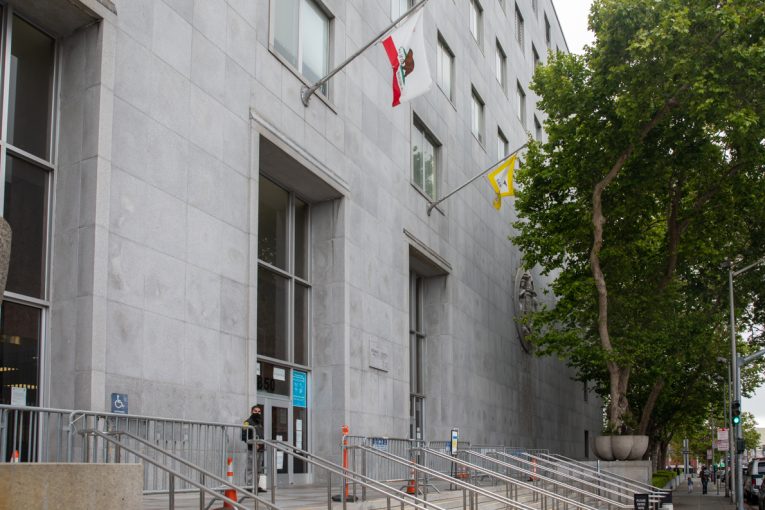
SAN FRANCISCO — Ongoing hearings before San Francisco Superior Court Judge Harry Dorfman revealed extensive coordination between the city’s conflict defense panel and the Public Defender’s Office, as court officials grapple with mounting caseload pressures, ethical obligations and the court’s responsibility to ensure timely and qualified legal representation for people charged with felonies.
Julie Traun, who oversees the conflict panel, testified that communication between her office and the Public Defender’s Office predates the formal declaration of unavailability and reflects shared concern about the strain placed on defense attorneys across the system.
“Even before the public defender declared unavailability, we had been talking among ourselves how overloaded everybody was,” Traun told the court.
Traun said those conversations have intensified as the crisis has continued, with repeated meetings aimed at addressing the growing number of cases that must be reassigned when the public defender cannot accept new appointments.
“We’ve had many meetings, judge, we’ve all been meeting,” she said, noting that she had spent several hours in discussion with Public Defender Mano Raju since the prior court session.
Throughout the hearing, Judge Dorfman emphasized the court’s legal obligation to ensure that every felony defendant has counsel, particularly those held in custody. He acknowledged that conflict panel attorneys have frequently stepped in to accept cases even when not required to do so, crediting them for ensuring proceedings could move forward.
At the same time, the judge repeatedly raised concerns about whether the current approach is sustainable or consistent with long-term constitutional guarantees.
Traun echoed those concerns, warning that the informal reliance on attorneys stretching beyond normal expectations cannot continue indefinitely.
“What we are doing now doesn’t seem to be working for anybody,” she said.
As a possible path forward, Traun proposed exploring mediation as a way to resolve the impasse between institutional capacity, ethical duties and judicial obligations.
She told the court that she and Raju had spoken with Richard Zitrin, a nationally recognized legal ethics expert, and suggested that facilitated discussions could help chart a viable solution.
“We need an off ramp and I think handing off a significant number of cases is not sustainable for any of the justice partners,” Traun said.
Judge Dorfman responded cautiously to the idea, stating that while he is open to hearing proposals, he cannot delegate judicial authority or delay decisions indefinitely while defendants remain without representation. He stressed that any interim solution must be real, timely and capable of ensuring that qualified attorneys are available every day court is in session.
Matt Gonzalez, chief attorney of the San Francisco Public Defender’s Office, clarified that Zitrin’s anticipated involvement would focus on explaining the ethical dimensions of the public defender’s unavailability declarations rather than mediating operational details.
Gonzalez told the court that Zitrin would address “the ethics of making sure that defendants have quality representation,” framing the issue as one grounded in professional responsibility and constitutional standards.
Gonzalez noted that the public defender’s position is rooted in ethical limits on attorney workloads and the obligation to provide effective assistance of counsel, rather than administrative convenience.
Judge Dorfman indicated that he already understands and accepts that ethical framework but expressed uncertainty about how mediation would function in practice or whether it could resolve the immediate pressures facing the court.
Throughout the exchange, the judge reiterated that his focus remains on defendants who are waiting in custody, noting that they may be less concerned with long-term structural reform than with having a lawyer assigned promptly. He stated that he continues to evaluate the good-faith efforts of all parties and has not yet reached a final decision regarding how the court should respond to the public defender’s ongoing unavailability.
Judge Dorfman scheduled additional discussions with Traun and Gonzalez later this week, signaling that the court expects concrete proposals in the near term. He said any pause in the court’s decision-making process would depend on whether stakeholders demonstrate a realistic and immediate path toward resolving the crisis without compromising defendants’ rights.
Further hearings are expected as the court weighs whether mediation, interim adjustments or formal rulings are necessary to address the strain on San Francisco’s indigent defense system while longer-term funding and staffing questions remain unresolved.
Follow the Vanguard on Social Media – X, Instagram and Facebook. Subscribe the Vanguard News letters. To make a tax-deductible donation, please visit davisvanguard.org/donate or give directly through ActBlue. Your support will ensure that the vital work of the Vanguard continues.
