
- “At the end of the day, all of this means we need houses that people can afford.” – Assemblymember Buffy Wicks
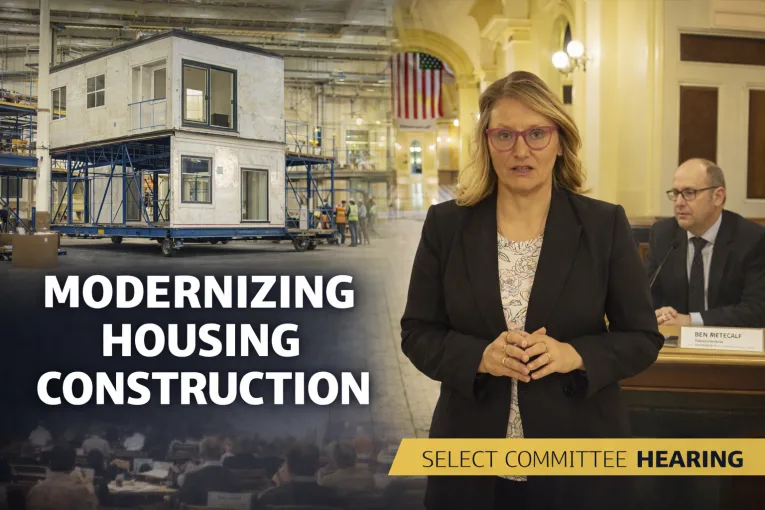
SACRAMENTO, Calif. — Assemblymember Buffy Wicks on Tuesday convened the first hearing of the California Assembly’s new Select Committee on Housing Construction Innovation, launching a legislative effort aimed at reducing housing costs by modernizing how homes are built across the state.
“California has made real progress in land use and permitting — but we still aren’t building housing at the scale we need,” Wicks said in remarks shared ahead of the hearing. “One reason is the way we build homes hasn’t kept pace with innovation.”
The hearing marked the committee’s initial public examination of why housing construction productivity has declined even as other industries have become more efficient, a trend lawmakers and experts say is driving high costs and limiting supply. Wicks said the committee’s charge is to understand how construction methods, regulatory structures and financing systems interact to either enable or stifle innovation.
“I spent the fall touring different factories that do modular prefab construction,” Wicks said in a video statement released Tuesday. “I’ve learned a lot. I still have a lot of questions. Our whole committee has a lot of questions.”
Wicks said the panel would hear from experts about whether modular and prefabricated construction are viable options in California, how those models could be expanded and whether other construction approaches could help bring down costs. She emphasized that the focus is affordability, not novelty.
“At the end of the day, all of this means we need houses that people can afford,” Wicks said. “Low-income folks, middle-income folks, working-class folks. People have to be able to afford the roof over their head.”
Testimony at the hearing highlighted that the U.S. housing construction sector has experienced declining productivity for decades, even as manufacturing, logistics and technology industries have become faster and more cost-effective. Witnesses said housing construction continues to rely heavily on labor-intensive, site-built methods that are vulnerable to delays, weather disruptions and fragmented oversight.
Ben Metcalf of the Terner Center for Housing Innovation testified that building innovation can lower housing costs and shorten timelines, but only when policy is aligned to allow those approaches to scale. He said a dedicated legislative effort could help bridge the gap between research and implementation.
Developers who testified told the committee that factory-built housing can reduce costs and delivery times but warned that savings are inconsistent due to regulatory uncertainty, fragmented codes and financing systems designed for conventional construction. According to testimony shared during the hearing, one affordable housing project saved $18 million in public funds, while a market-rate project was completed 35% faster at lower cost.
Wicks said those examples underscore both the promise and the fragility of construction innovation in California.
“Facts don’t lie, but housing offers real opportunity if we can create the enabling conditions,” she said. “It doesn’t have to mean that every house is built in a factory — just that there’s more options on the table.”
Industry representatives from the manufacturing side told lawmakers that innovation in construction cannot succeed without parallel reforms to codes, standards, inspections and financing. Apoorva Parashar of Cloud Apartments said companies are innovating but face regulatory environments that have not evolved to accommodate new methods.
“As a company we are innovating, but we also recognize that the regulatory environment has to evolve with us in order for us to achieve our mission of building more housing,” Parashar said.
Supporters of housing reform welcomed the committee’s focus on construction as a necessary complement to recent land-use and permitting changes.
California YIMBY said in a statement on X, “Modernizing construction will be key to ensuring that California gets the homes we need to be an affordable place to live and raise a family. We are excited to see where this goes!”
The committee’s creation follows years of legislative action to expand zoning capacity and streamline approvals, reforms that have opened more land for housing but have not produced the level of construction state leaders say is required to meet demand. Lawmakers involved in the new panel argue that without addressing how homes are built, those earlier reforms will continue to fall short.
Assembly Speaker Robert Rivas, who appointed Wicks to chair the committee, has said Californians need housing that is affordable “full stop,” and that means building faster while embracing new construction techniques without abandoning worker protections or job quality.
The Select Committee on Housing Construction Innovation plans to hold additional hearings through the winter to examine developer experiences, manufacturing challenges and workforce implications, including claims that factory-built housing can offer safer working conditions and more predictable employment.
The committee is expected to publish a white paper in early 2026 summarizing its findings and proposing legislative changes aimed at reducing construction costs and accelerating housing delivery statewide.
Follow the Vanguard on Social Media – X, Instagram and Facebook. Subscribe the Vanguard News letters. To make a tax-deductible donation, please visit davisvanguard.org/donate or give directly through ActBlue. Your support will ensure that the vital work of the Vanguard continues.
