
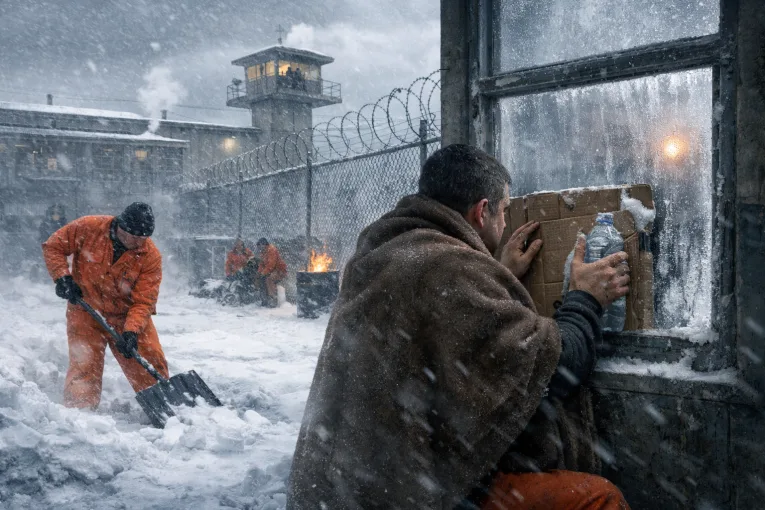
As a wave of extreme cold swept across large parts of the country, unsafe conditions inside aging jails and prisons intensified, exposing incarcerated people to serious risks amid power failures, water shortages and disrupted medical care. As reported by The Marshall Project, a winter storm affecting facilities in Mississippi and the Midwest left many people without heat, reliable electricity, or consistent access to food and water.
The report found that freezing temperatures compound existing health risks, including asthma and sickle cell disease, and can contribute to hypothermia. A government-commissioned study cited in the article linked prolonged cold exposure in prisons to increased mortality rates and higher suicide levels.
In Ohio, people incarcerated at Pickaway Correctional Institution described near-freezing water and failing heat after a boiler outage. State officials confirmed extra blankets were distributed, and visitation was temporarily suspended due to the storm.
In Mississippi, The Marshall Project reported that power was lost for several days at the Delta Correctional Facility and the Mississippi State Penitentiary at Parchman. Families and advocacy groups said incarcerated people faced shortages of drinking water, missed meals and an inability to make phone calls.
Kristi Coker, whose family member is incarcerated at Parchman, told reporters she went nearly four days without contact. She said some people set fires inside housing units to try to stay warm after the heat failed.
State emergency officials attributed some of the problems to aging infrastructure and unreliable backup generators. Advocacy groups countered that warnings about the storm came well in advance and said correctional agencies should have ensured systems were operational before temperatures dropped.
In Missouri, advocates reported that some incarcerated men were required to shovel snow in subzero conditions. State officials responded that only those assigned to labor crews were expected to report, not that they were forced to work.
Several people incarcerated in the state described using cardboard and heated water bottles to block drafts from windows. One man at Crossroads Correctional Center said the clothing and gloves issued offered little protection from the cold.
Medical advocates quoted in the report said facilities rarely track indoor temperatures, making it difficult to document unsafe conditions. They called for formal extreme weather plans, especially for people with chronic illnesses or disabilities.
The article also noted growing concern over federal detention facilities as enforcement expands. Researchers cited by The Marshall Project said the number of detention beds has increased sharply, raising questions about whether infrastructure and staffing can keep pace with demand.
Advocates argued that the broader solution lies in reducing incarceration rates rather than expanding physical capacity. They also urged agencies to allow families to provide warm clothing, blankets and other basic supplies during extreme weather.
As winter storms continue across large parts of the country, families and civil rights groups say the conditions inside jails and prisons remain largely hidden from public view. They are calling for greater transparency and oversight to ensure that basic standards of care are met even during emergencies.
Follow the Vanguard on Social Media – X, Instagram and Facebook. Subscribe the Vanguard News letters. To make a tax-deductible donation, please visit davisvanguard.org/donate or give directly through ActBlue. Your support will ensure that the vital work of the Vanguard continues.
