
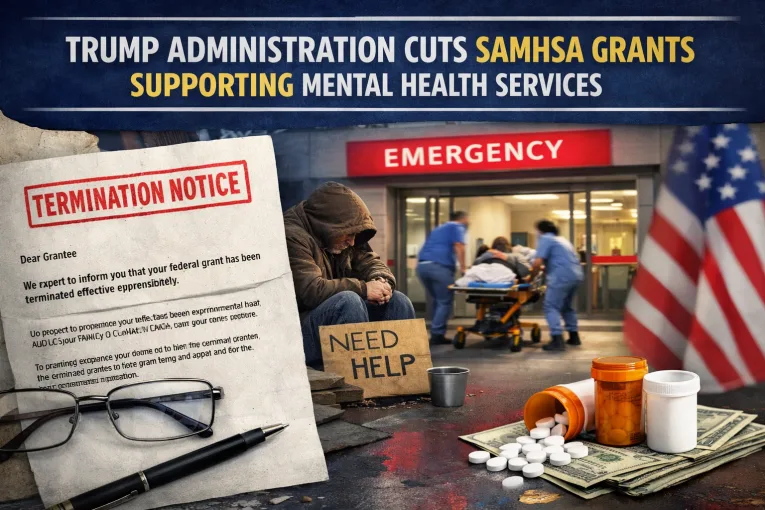
WASHINGTON, D.C. — The Trump administration abruptly moved this week to end hundreds of federal grants supporting behavioral health and mental health services, a decision that advocates say threatens addiction treatment, homelessness services and care for people with serious mental illness nationwide.
On Jan. 13, the administration issued hundreds of termination letters ending federal grants that support key behavioral and mental health services. The decision was made by the U.S. Substance Abuse and Mental Health Services Administration (SAMHSA) and affects programs that deliver direct care for people suffering from addiction, homelessness and serious mental illness.
These actions have had negative consequences on the nation’s mental health and addiction treatment services, according to the Steinberg Institute, which says the programs are essential to preventing overdoses, supporting recovery and promoting public safety.
The Steinberg Institute’s press release describes the move as a shift in federal priorities that will result in severe consequences for people who rely on these grants to fund services. According to National Public Radio’s reporting on the press release, the Trump administration sent shockwaves through the U.S. mental health and drug addiction system late Tuesday by sending “hundreds of termination letters, effective immediately, for federal grants supporting health services.”
NPR reported that the action illustrated a lack of effort to phase out the grants and instead terminated them without prior warning.
The Steinberg Institute’s press release notes that the abrupt funding cuts will “destabilize services that communities depend on every day,” highlighting the risks facing federally funded behavioral health programs. Grantees and advocacy groups have expressed serious concern about the scope of the cuts described in the press release.
NPR reported, “Three sources said they believe total cuts to nonprofit groups, many providing street-level care to people experiencing addiction, homelessness, and mental illness, could reach roughly $2 billion.”
The massive reduction in funding represents significant financial losses and a lack of care for countless individuals who are critically dependent on federally funded programs. NPR reported that the loss of essential behavioral health services could result in people “ending up in emergency rooms, jails, or on the streets.”
According to NPR’s review of the termination letters, they “signal that SAMHSA officials no longer believe the defunded programs align with the Trump administration’s priorities.” The Steinberg Institute’s press release notes that federal funding priorities are shifting, though it remains unclear where future investments will be directed.
Neither NPR nor the press release specifies which priorities would replace the defunded programs, leaving the public and medical providers uncertain about future federal support. Providers interviewed by NPR described immediate concerns about service disruptions following receipt of the termination letters.
“We are definitely looking at severe loss of front-line capacity,” said Andrew Kessler of Slingshot Solutions, underscoring the potential reduction in care for people experiencing addiction and mental illness.
Organizations directly affected by the funding cuts reported sudden and significant financial losses. NPR reported that Mobilize Recovery lost approximately “$500,000 overnight” after receiving a termination notice.
Mobilize Recovery founder Ryan Hampton said, “This cruelty will be measured in lives lost, as recovery centers shutter and the safety net we built is slashed overnight.”
Political leaders also criticized the abrupt termination of the grants, describing the move as chaotic and harmful to public health infrastructure. AP News reported that “uncertainty and confusion” resulted from cutting nearly $2 billion in substance abuse and mental health funding.
Rep. Rosa DeLauro said, “He [Trump] must be cautious when making decisions that will impact Americans’ health.”
Following backlash, NPR reported that the Trump administration reversed its decision and reinstated the grants, saying the “sweeping cuts to mental health and addiction programs” had been reversed. The Steinberg Institute responded, “This was the right decision,” emphasizing the importance of continued advocacy for “mental health and substance use services that save lives.”
Follow the Vanguard on Social Media – X, Instagram and Facebook. Subscribe the Vanguard News letters. To make a tax-deductible donation, please visit davisvanguard.org/donate or give directly through ActBlue. Your support will ensure that the vital work of the Vanguard continues.
