
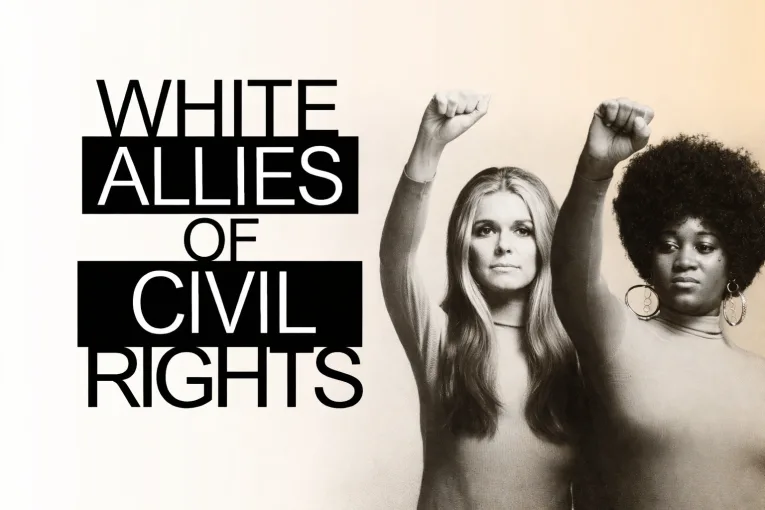
There has been a growing awareness among white individuals about the need to “be better” and “learn” about the struggles faced by people of color (POC). While this newfound awareness is a step in the right direction, it often feels like a luxury that many POC cannot afford. The time for learning is over; the time for action is now.
Many white individuals have been content to sit back, listen, and learn. They treat the fight for justice like a lifelong elective, as if there is infinite time to grow, reflect, and evolve. Meanwhile, POC are dealing with policies that actively shorten their lives, bullets that take their loved ones, cages that imprison their communities, poverty that stifles their potential, and early graves that rob them of their futures.
The privilege of taking time to learn and grow is a luxury that POC do not have. They are fighting for their lives, their liberties, and their futures. They are dealing with systemic racism that permeates every aspect of their lives, from education to employment, from healthcare to housing. They are facing policies that are designed to keep them down, and they are fighting back with every ounce of strength they have.
As white allies, it is our responsibility to stand with POC in this fight. We must move beyond the learning phase and into the action phase. We must use our privilege to amplify the voices of those who are often silenced, to challenge the systems that oppress, and to fight for a more just and equitable society. For once, we can use our privilege for the positive, turning a system that has benefited us into a force for good.
But how do we do this?
- Recognize the Urgency:
- Justice is not a hobby; it is a deadline. We must act with a sense of urgency, understanding that every day we delay is another day that POC are paying the price with their bodies and their lives.
- Educate Ourselves Continuously:
- While the learning phase should not be the end goal, it is an essential starting point. We must educate ourselves about the history of racism, the current state of affairs, and the ongoing struggles of POC. This education should be ongoing, as the fight for justice is a marathon, not a sprint.
- Amplify POC Voices:
- Use our platforms, whether it’s social media, blogs, or community gatherings, to amplify the voices of POC. Share their stories, their struggles, and their victories. Give them the space to speak and be heard.
- Challenge Systemic Racism:
- We must challenge the systems that perpetuate racism. This means advocating for policy changes, supporting organizations that fight for racial justice, and holding our leaders accountable.
- Support POC-Led Initiatives:
- There are many organizations and initiatives led by POC that are doing incredible work. We must support these initiatives financially, through volunteering, and by spreading the word.
- Stand in Solidarity:
- When POC are fighting for their rights, we must stand with them. This means showing up at protests, signing petitions, and using our voices to demand change.
Some may argue that learning is still necessary and that rushing into action without proper education can be harmful. While it’s true that education is important, the time for learning has passed. The urgency of the situation demands immediate action, even as we continue to educate ourselves.
According to recent studies, the average lifespan of Black Americans is significantly lower than that of white Americans due to systemic racism. This disparity is not just a statistic; it represents real people whose lives are cut short by policies and practices that perpetuate inequality.
The time for learning is over. The time for action is now. We must move beyond the privilege of sitting back and listening, and into the urgency of fighting for justice. We must recognize that justice is not a hobby; it is a deadline. And we must act with the same urgency that POC are fighting with every day.
As white allies, we have a responsibility to stand with POC in this fight. We must use our privilege to challenge the systems that oppress, to amplify the voices of those who are often silenced, and to fight for a more just and equitable society. For once, we can use our privilege for the positive, turning a system that has benefited us into a force for good. The future of our communities depends on it.
Follow the Vanguard on Social Media – X, Instagram and Facebook. Subscribe the Vanguard News letters. To make a tax-deductible donation, please visit davisvanguard.org/donate or give directly through ActBlue. Your support will ensure that the vital work of the Vanguard continues.

Probably should have written this article 5 years ago, since the movement has passed.
Matt Walsh pretty much put the nail in the coffin when he cajoled/fooled the “White Fragility” author to pay his black assistant “reparations” on the spot, with whatever cash she was carrying. Pretty hard to come back from that embarrassing incident.
It was actually quite an ingenious stunt, as was his entire film (I’ve seen clips of it).
Also, the re-election of Donald Trump has put this nonsense to bed. You’re not going to see him apologize for being white and male, so to speak.
Claiming that a broad intellectual or political movement ended because of one heavily edited, gotcha-style exchange is post hoc nonsense. The validity of an idea isn’t settled by a staged clip designed for humiliation, and serious social movements don’t rise or fall on bad interviews.
Just saying that the George Floyd movement is over-and-done with (on a mass scale, at least).
Perhaps the better example of this is the re-election of Trump. He told us exactly what he was going to do, and won anyway. And this despite his conviction (with his mug shot hung proudly in the White House), his involvement in the Janurary 6th “protest”, his refusal to accept the result of that election, etc.
Though as I recall, he did implement some kind of incarceration reform during his first term – which corresponds to what someone like you and the author of this article would like to see more of.
But the problem behind it remains – record number of police killings last year
And someone like Trump would say that the problem is people committing crimes, not following orders from authorities, etc. (No one likes to be “ordered” by authorities, but those aren’t “requests”.)
We just saw the result of failing to understand that in Minneapolis (especially the first shooting). With both of the recent victims (fortunately?) being white – presumably there on “behalf of” non-white people, I guess.
And as it turns out, the second guy wasn’t exactly “peaceful” (at an earlier confrontation – when he kicked out the taillight of a vehicle with federal agents inside of it). Amazingly, he wasn’t even arrested (and had a gun in his waistband at that time, as well).
But hey – what do I know – I’m still alive (even after being ordered out of a rental truck I was driving, having to put my hands on my head, etc.). A misunderstanding was behind that incident.
The race of the victims doesn’t vindicate the behavior—it underscores that unchecked authority harms broadly once normal restraints collapse.
I agree, but the article notes that it’s race-based.
I’d say that about 95% of the police shootings (and there aren’t that many nationwide) are the result of some dummy threatening officers and/or the public. The type of people who don’t understand what an “order” means.
The type of people who think there won’t be any dangerous consequence from accidentally driving toward an agent while trying to escape. With a smarmy smile (immediately prior to that) in response to an order to get out of a vehicle. Clueless people, though at least she wasn’t aggressively hostile (which is usually the case when police shoot someone).
It’s not the authorities who are a danger to the public; it’s the people whom authorities target who are causing most of the damage to the public.
“ It’s not the authorities who are a danger to the public; it’s the people whom authorities target who are causing most of the damage to the public.”
Strongly disagree
The evidence does not support your belief, in regard to whom the police are usually shooting. Almost always – someone who has caused harm to someone else, and is likely to continue doing so.
The type of people who should be in prison (and would be on there way back there, if they weren’t also threatening authorities).
It’s not the police that people need to be afraid of (and that includes those having to put up with nonsense in high risk communities). People already know this, even if it’s not always openly acknowledged.
Part of the reason that there’s a focus on police is that police departments have funds that attorneys can go after, unlike your average street thug. Hence, the bias in focus.
The Vanguard itself is providing a training ground (in a sense) for the next round of attorneys who are bankrupting cities.
This is a much more involved conversation, but by focusing only on shootings, you are analyzing a very tiny subset of police interactions.
The biggest problem is that while the criminal legal apparatus may be flawed, we have a basic agreed upon structure to address situations where a citizen breaks the law. On the other hand, we keep struggling to find a way to hold the authorities accountable when they transgress. And the police are only one layer of that.
Some of what you advocate is valid. The proliferation of cameras is also helping (both in terms of what authorities are doing, as well as criminals).
But one thing that has surprised me is the bias that some people bring/conclude, even in the face of clear video evidence. And then there’s the fact that videos don’t always capture everything. (An example of the latter occurred regarding the shooting of Renee Good. The initial video was highly concerning. Subsequent videos helped clarify how/what occurred, which seemed to justify the “legal” aspect of that shooting at least.)
And then there was the fact that the agent was recently injured as a result of a vehicular escape. (At that point, he probably should have been placed on paid leave or something.)
I’m not advocating anything in this discussion, just pointing out the problems. The first step is to understand the nature and enormity of the problem. For example, millions of arrests each year. What happens when they arrest the wrong person? Nothing. At least most of the time. And yet that’s an incredible power that the government has, there is limited to no accountability, and the costs both in terms of tax money and in terms of harm are enormous.
I’ll add one more point – my previous post looked only at the perspective of mistakes rather than design and priority. That’s another issue to consider, especially since an exceedingly low percentage of people who commit crimes are actually arrested. And those who are arrested are the result of strategic prioritization by the authorities as well as being low hanging fruit.
“That’s another issue to consider, especially since an exceedingly low percentage of people who commit crimes are actually arrested.”
Yes – that’s the biggest problem of all. Though eventually (as they continue to commit crimes), they probably are arrested. (But not until they’ve already caused a lot of harm to others).
“. . . and the costs both in terms of tax money and in terms of harm are enormous.”
Yes – it’s unfortunate that those who harm others generally don’t have to reimburse their victims, AND continue to cost taxpayers enormous sums of money.
Now, maybe what you advocate lessens all of that harm, but I’m not aware of any system which does.
But one thing I do know is that police shootings are not causing a lot of deaths of innocent people (or deaths in general).
“But hey – what do I know – I’m still alive (even after being ordered out of a rental truck I was driving, having to put my hands on my head, etc.). A misunderstanding was behind that incident.”
I had something similar – though not quite as bad – happen with a Davis cop maybe a decade ago, where I thought they were pulling me over for a traffic stop (even though I hadn’t done anything), but apparently a security guard who didn’t like my talking back to him (because he was being a total arse-face) had reported me and my license number and must have said something to make me appear dangerous.
And suddenly all the rules changed and I’m thinking I might get shot if I make one wrong move.
I never reported this to DPD management, and I should have, if for no other reason than to understand WTF happened behind the scenes to get to that level of tension.
Or, it’s possible it was a case of DWJ (driving while Jewish).
Now imagine that same encounter didn’t involve a college-educated white man who knew the rules, knew his rights, and could narrate the experience afterward.
Imagine it was someone with a third-grade education, in the middle of a mental health crisis, without the language, confidence, or social armor to interpret what was happening.
The sudden escalation, the commands, the implicit threat of violence don’t become a moment of fear followed by reflection—they become panic, noncompliance, and then justification after the fact.
That’s the point everyone keeps skirting: the system routinely turns confusion and vulnerability into “danger,” and then congratulates itself for surviving an encounter it helped manufacture.
David, this is a deflection—pure and simple. Each enforcement action stands or falls on its own facts, not on whether you can dredge up a different controversy from another political universe and yell “hypocrisy.”
Maybe next time you can make your own arguments
What, you don’t like having your own words thrown back at cha?
“Now imagine that same encounter didn’t involve a college-educated white man who knew the rules, knew his rights, and could narrate the experience afterward. Imagine it was someone with a third-grade education, in the middle of a mental health crisis, without the language, confidence, or social armor to interpret what was happening.”
‘Imagine no possessions, I wonder if you can’. First of all, I’m not white, only white-appearing. And yes, I know that comes with its own privilege. And yes, I did imagine and gain appreciation for being in that situation. It was night, and she approached from behind yelling semi-intelligible commands. It was quite a lesson in what it was like to be treated as a assumed criminal rather than an assumed California-stop offender. And the rules are different – she was giving different commands than what I’d been told to do for a traffic stop. Which was confusing AF.
“The sudden escalation, the commands, the implicit threat of violence don’t become a moment of fear followed by reflection—they become panic, noncompliance, and then justification after the fact.”
‘noncompliance’ is never a good idea, but if you mean not complying because of panic, that makes some sense. Like my take on the R. Good actions was a cop was yelling at her in a few seconds of escalation that should have ended with her stopping, but when her partner in that same moment jumped in and commanded her to drive, she focused on that. Confusion and panic.
“That’s the point everyone keeps skirting: the system routinely turns confusion and vulnerability into “danger,” and then congratulates itself for surviving an encounter it helped manufacture.”
I don’t know if I’d call it ‘the system’, I know a lot of cops get de-escalation training, I’ve seen them use it and I’ve had it used on me. I think a lot of police cultures don’t focus on that, and I think there’s always a percentage of cops who are going to be bad cops, and I wish there was a way to build-in processes to remove them. I don’t think we totally disagree, just rather than ‘the system’, I’d more say there are situations where the cops do justify encounters where the danger was manufactured by the law enforcement themselves, and some departments have worse cultures than others.
I would just point out that Lennon’s song was more of a utopian fantasy and my point was more of a counter-factual narrative on the actual state of the world.
“It was night, and she approached from behind yelling semi-intelligible commands. It was quite a lesson in what it was like to be treated as a assumed criminal rather than an assumed California-stop offender.”
I suspect that it wasn’t a coincidence that the highway patrol officer who stopped me (and was very aggressive) was also female.
The guy she called in as a backup helped de-escalate the situation.
I once experienced this type of thing in the workplace, as well. A female supervisor out to “prove” that she was in command. (She was in command, and didn’t need to prove it. But she didn’t seem to understand that you can’t “command” respect – which is a pesonal feeling/response, and is something that’s earned.)
Those in authority (whether male or female) sometimes seem to confuse the “fear” they can instill in others vs. “respect”.
Respect is given willingly, in response to how one treats others. Fear can also make one comply, but unwillingly and likely with resentment.
“ I suspect that it wasn’t a coincidence that the highway patrol officer who stopped me (and was very aggressive) was also female.”
Based on the known data, it absolutely would be coincidence
That’s not the coincidence I’m referring to.
I’m referring to overly-aggressive if one feels they have something to prove (aka, the “Barney Fife Syndrome”). “Andy”, on the other hand, had nothing to prove.
Size makes a difference in regard to how much others fear you (at which point, you don’t need it to command compliance). And likely causes those who have it to use more restraint at times.
Take away an officer’s weapon, and most men will win a fight with a woman. And even I could have beaten Barney Fife (I hope).
If I see an officer fighting some bad guy, I’m going to be more concerned for the officer’s safety if female.
Personally, I think the police should generally be men for this reason (larger men than I am – and obviously younger as well). If I call the police, I want someone showing up who can kick someone’s arse more than I can, without even having to use a weapon.
Same with firefighters, roofers, etc.
My god
Apparently, not a Don Knotts fan.
One of my earliest memories has to do with him being a fish (or maybe a dolphin) who wears glasses – and ends up saving America and the allies with his unusual fish roar (which confuses torpedoes).
“Mr. Limpfish” – something like that.
But seriously, that is an early memory.
Apparently I should have flagged my disbelief…. “ Personally, I think the police should generally be men for this reason (larger men than I am – and obviously younger as well). If I call the police, I want someone showing up who can kick someone’s arse more than I can, without even having to use a weapon.”
I’m actually serious about that, due to the physical demands of those positions.
Same with soldiers, etc. (though they may rely more upon weaponry/technology, and aren’t usually wrestling people to the ground).
If you can restrain someone without resorting to weapons, that’s obviously preferable. And if you can intimidate them to some degree into complying, that’s also preferable in some situations.
This is also one of the reasons I avoid road rage incidents. Pretty sure that anyone who wants to engage me is already confident in their physical ability, more than I am.
I realize there are incidents with women who get out to “kick someone’s arse”, but that’s not going to end very well for them, most of the time. At least, not if they single out a man. (Or at least, maybe 90% of the time.)
Of course, we’d also have to start defining “men” and “women” if we’re going to discuss this.
“Serious about that”. —>> That’s what scares me…
It shouldn’t – it’s just a biological observation. Men are stronger (way stronger) than women, on average. And that’s true throughout all species. It’s not an opinion, and is probably among the most evidence-based fact that exists.
It’s also true that strength declines (for both sexes, and all animals) as one ages. Again, a fact – not an opinion. (This is likely related to the reason that police/fire/construction workers, etc., retire earlier).
Though there is a pretty episode of South Park, where Cartman is forced into fighting a girl who he’s been harassing. As I recall, he did inflict some damage, but probably lost in the end.
But just think – he was probably the worst example of just about everything in a male character (fat, weak, cowardly, full of fake bluster), and still almost won.
And if one actually wants to be honest about differences, there are also differences between races.
“Biological differences exist in the body composition of blacks and whites. We reviewed literature on the differences and similarities between the 2 races relative to fat-free body mass (water, mineral, and protein), fat patterning, and body dimensions and proportions. In general, blacks have a greater bone mineral density and body protein content than do whites, resulting in a greater fat-free body density.”
https://pubmed.ncbi.nlm.nih.gov/10837277/
Of course, it’s generally “forbidden” to talk about any of this. If it wasn’t for periodic anomolies like Larry Bird, we might conclude that black athletes always have a consistent advantage over other races.
We might even conclude that “White Men Can’t Jump”.
Personally, I don’t care if they do or don’t, as I’m not planning to compete in the Olympics.
“Probably should have written this article 5 years ago, since the movement has passed.”
I know. I’ve been thinking that about most of the subject-takes in these suddenly-daily articles from this author: “2020 called and it wants its politics back”.
“There has been a growing awareness among white individuals about the need to “be better” and “learn” about the struggles faced by people of color (POC).”
What about Jews? Is there a growing awareness among Jews, too?
No – and that goes for Asians, as well -despite both of those groups generally having “privilege”. It used to be that Jews were the only ones blamed for having “privilege”, but times have changed.
Hispanics/Latinos increasingly have privilege, as well.
They’re all apparently using white supremacy to get ahead, according to someone like the recalled school board member in S.F. (Or at least, Asians are.)
Asians are using it more effectively than whites are, at this point. We (referring to “whiteys”) should have applied for a patent, when we had a chance – at least to collect royalties.
Near the top of the article: “For once, we can use our privilege for the positive, turning a system that has benefited us into a force for good.”
Near the bottom of the article: “For once, we can use our privilege for the positive, turning a system that has benefited us into a force for good.”
What happened, did the A.I. burp?
Its referred to as a “Call Back”, and it is used in writing to reenforce main points. Suggesting that award winning authors/journalist are using AI, can be considered slanderous, and people should be very careful about throwing out such accusations.
Just wondering if suggesting that others are racist can be considered slanderous.
I’ll guess yes, but I guess we’ll find out a few things about journalistic and commenteristic legal limits in Yolo Superior Court. Or we could just call it a slander tie and live another day.
“Its referred to as a “Call Back”, and it is used in writing to reenforce main points.”
Alrighty then, it’s a call back.
“Suggesting that award winning authors/journalist are using AI,”
Award winning authors and journalists are using AI. I recently read an article by one who said any journalist not using AI today was a fool, and gave some examples of how it can be used ethically and usefully.
“can be considered slanderous, and people should be very careful about throwing out such accusations.”
It could also be considered a joke, and people should be very careful about not getting so wound up; but I’ll take that as a threat, and we can move on . . . :-|
I, myself, said, “Alrighty then, it’s a call back.”
I’m going to withdraw that; actually, I’m familiar with a callback both in journalism and in comedy, but never thought about the definition. So I googled it, and it said a callback is a reference to a subject, and specifically not an exact word-for-word repetition of a sentence. After digging a bit deeper, I did find two possible definitions of exactly replicating a sentence, it’s called either ‘rhetorical hammering’ which is bludgeoning a point, or more likely here an ‘editing artifact’, defined as when an author forgets they already used the sentence.