
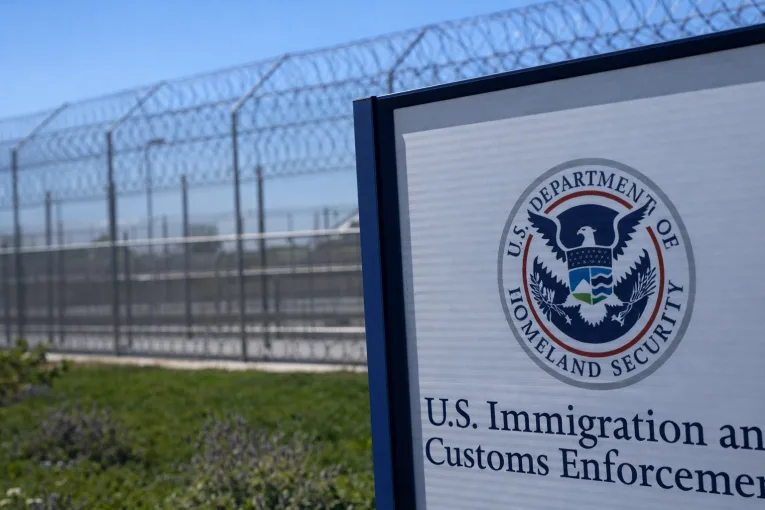
NEW YORK — On Jan. 29, 2026, the American Civil Liberties Union of Virginia and the American Civil Liberties Union of North Carolina released newly obtained documents indicating that Immigration and Customs Enforcement is considering the development of seven new immigration detention centers across the Eastern Seaboard.
The 98-page document was produced following a lawsuit filed by the ACLU and its affiliates in October 2025 after ICE failed to respond to a Freedom of Information Act request seeking records related to the agency’s plans to expand detention capacity.
According to a press release issued the same day by the ACLU of North Carolina, at least two of the seven proposed sites are former correctional facilities with long histories of abuse. Eunice Cho, senior counsel at the ACLU’s National Prison Project, said in the release, “Six people have already died in ICE custody in the first three weeks of the year. ICE has given us no reason to believe that these detention centers would be any safer than the abusive facilities it already operates.”
The two former correctional facilities under consideration are the Augusta Correctional Center in Craigsville, Virginia, and the Rivers Correctional Facility in Winton, North Carolina. The Craigsville facility is proposed to be run by a private operator after closing in 2024 amid widespread reports of sexual assault and drug smuggling. The Winton facility similarly has a documented history of sexual assault, violence and contraband, according to the release.
Addressing the findings, Sophia Gregg of the ACLU of Virginia said in the release, “The Trump administration cannot be allowed to continue its weaponization of immigration detention in secret. As we have seen, abuse and civil rights violations are rampant in these facilities, and the public has a right to know where and how the government intends to expand its use of these deadly facilities.”
During President Donald Trump’s second term, ICE has faced growing criticism for its lack of transparency, with some advocates characterizing the agency as a “secret police.” Organizations such as the ACLU say their FOIA (Freedom of Information Act) requests to ICE are routinely ignored or delayed, leaving them, in their words, with little more than the “brush-off.”
News organizations have reported similar obstacles. Outlets including Investigative Post have received heavily redacted records or no documents at all in response to FOIA requests, according to reporting by Dave Levinthal for the Columbia Journalism Review.
ICE has also drawn criticism for restricting media coverage of its operations, particularly video recording. In the same article, Levinthal described an incident during June protests in Los Angeles in which Australian reporter Lauren Tomasi was struck by a rubber bullet fired by an ICE agent. Another journalist was shoved to the ground by an ICE agent while filming at a New York City immigration court proceeding in October.
“ICE has made clear that it relies on secrecy. The heavily redacted documents we obtained through litigation expose disturbing expansion plans,” said Michele Delgado, a staff attorney at the ACLU of North Carolina, in the release. “When North Carolinians must fight for basic information about federal enforcement in their own state, the public cannot trust that these decisions are in their best interest.”
Follow the Vanguard on Social Media – X, Instagram and Facebook. Subscribe the Vanguard News letters. To make a tax-deductible donation, please visit davisvanguard.org/donate or give directly through ActBlue. Your support will ensure that the vital work of the Vanguard continues.
