
How Marc Fishman’s Fight Exposes a Quiet Civil Rights Crisis Inside New York’s Justice System
By Malik Washington, Destination Freedom Media Group & The Davis Vanguard
In earlier reporting, I documented how New York State can formally identify police officers with patterns of misconduct—then allow prosecutions tied to those officers to continue untouched. That reporting centered on Marc Fishman, a disabled Bronx father whose arrest involved an officer later flagged by the Attorney General as a Pattern Misconduct Officer, yet whose case remains intact.
When The State Knows You’re Innocent.pdf
What has become increasingly clear since then is this: the accountability failure did not begin at arrest. It began earlier—inside the courtroom itself.
Newly reviewed court records, disability-rights correspondence, and administrative denials reveal a parallel story running beneath the police misconduct narrative: a disabled litigant repeatedly denied the tools required to understand and participate in his own legal proceedings, even when those tools already existed inside the courthouse.
This is not a story about unavailable technology.
It is a story about withheld access.
Access Promised — Then Denied
In 2018, Marc Fishman formally requested a specific accommodation while navigating Westchester County Family Court: real-time transcription (CART) and same-day transcripts. His request was grounded in documented disabilities, including post-concussion syndrome, tinnitus, occipital neuralgia, and cognitive impairments affecting memory and comprehension.
The accommodation was neither novel nor speculative.
At the time of Fishman’s request:
- CART technology was publicly advertised on NYcourts.gov as an available accommodation. https://ww2.nycourts.gov/Accessibility/CourtUsers_Guidelines.shtml
- Westchester County Family Court—particularly in Yonkers—already had the technology installed.
- Disability Rights New York (DRNY), the state’s federally designated Protection and Advocacy organization, confirmed in writing that the request was a reasonable ADA modification, not an undue burden.
And yet, the court denied it.
The denial hinged on a narrow and troubling rationale: that real-time transcription was an accommodation intended for hearing impairments—not cognitive or neurological disabilities—even as the court simultaneously acknowledged Fishman’s diagnoses in writing.
This internal contradiction sits at the heart of the problem.
WHEN DISABILITY IS ACKNOWLEDGED — THEN REWRITTEN
The official denial forms present a striking tension. On the one hand, they describe Fishman’s medical conditions. On the other, they check boxes asserting he is “not disabled” for purposes of the requested accommodation.
This was not a medical finding.
It was an administrative determination with legal consequences.
Federal ADA law does not require disabled people to fit into narrow silos. It requires effective communication. It requires courts to modify procedures when necessary to ensure meaningful participation—unless doing so would impose an undue burden or fundamentally alter the service.
In Fishman’s case, the technology existed. The cost barrier was minimal. The legal obligation was clear.
Instead of granting the accommodation, the court offered substitutes: pause proceedings, take handwritten notes, rely on others. At one point, a compliance issue was attributed not to memory impairment, but to Fishman’s alleged “misinterpretation” of a court order.
This is where accommodation quietly turns into discipline—where disability is reframed as personal fault.
A DIRECT EXCHANGE: JOURNALIST AND LITIGANT
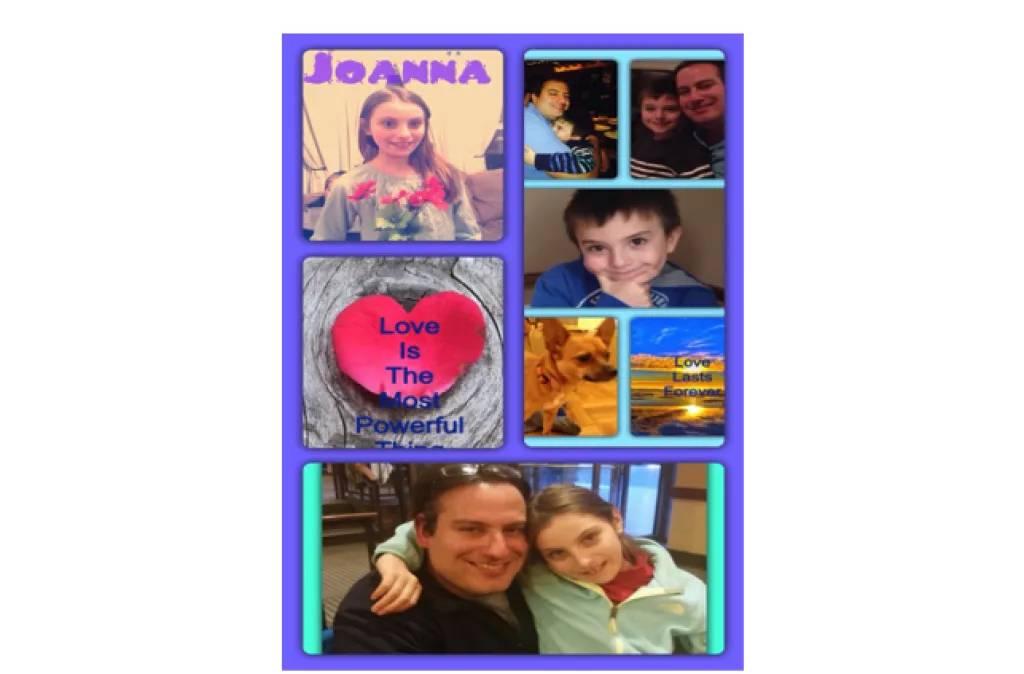
To understand the human weight of these records, I asked Marc Fishman directly about his experience. What follows is an excerpted exchange from our communications, included here deliberately—to make clear that this reporting is grounded in direct dialogue, not secondhand narrative.
Malik Washington: “When you look back at the court’s denial of real-time transcription, what stands out to you now?”
Marc Fishman: “What stands out is that the court knew the technology existed. Disability Rights New York told them it existed. The Unified Court System’s own website advertised it, and yet I was told it wasn’t available—or that I didn’t qualify. That wasn’t confusion. That was a choice.”
Malik Washington: “The court acknowledged your diagnoses but still concluded the accommodation wasn’t appropriate. How did that affect you in real time?”
Marc Fishman: “It meant I couldn’t reliably register what was being said. I live with tinnitus and traumatic brain injury. Without real-time transcription, I was effectively excluded from my own proceedings. And then when something went wrong, it was blamed on me—on ‘misinterpretation.’ That’s how disability gets erased.”
Malik Washington: “Why do you believe this matters beyond your own case?”
Marc Fishman: “Because if a court can decide which disabilities count, then access to justice becomes discretionary. Pro se litigants, disabled parents, people without resources—we’re the first to feel that. But it doesn’t stop with us.”
FROM ACCOMMODATION DENIAL TO ACCOUNTABILITY CRISIS
This access failure cannot be viewed in isolation. It sits upstream from everything that followed: the arrest, the prosecution, the withheld evidence, the refusal to revisit cases tied to a pattern-misconduct officer.
When a court denies a disabled litigant the ability to meaningfully understand proceedings, it distorts the entire record. When that denial is later shielded from review—by judicial immunity, by administrative opacity, by prosecutorial inaction—the damage compounds.
Fishman’s case exposes how administrative gatekeeping can override federal civil-rights law long before a jury ever hears a case.
It also underscores why Fishman’s push to amend New York law—through his ProtectNewYorkers.com campaign—has gained traction. His proposed LEMIO amendment would require prosecutors to act when the State itself acknowledges misconduct. But the logic extends further: accountability must also reach the procedural decisions that quietly determine who gets heard.
WHY THIS MOMENT MATTERS
Courts are not merely venues where justice is decided. They are institutions that must be accessible for justice to exist at all.
When access exists on paper but not in practice, civil rights become conditional. When disability is acknowledged and then administratively dismissed, the law’s promise rings hollow. And when these failures are allowed to accumulate without correction, public trust erodes—not because of outrage, but because of silence.
Hearing Disabilities in the Workplace and the Americans with Disabilities Act
“This document uses ADA statutory terminology for its legal meaning and to refer inclusively to individuals who are deaf or hard of hearing, as well as those who have other hearing conditions, such as tinnitus and sensitivity to noise.”
Tinnitus as an ADA Disability
https://www.lexology.com/library/detail.aspx?g=cca795e4-b327-4810-89f6-d6552950e920
“On 2/7/17, a federal court concluded that an employee had presented sufficient evidence to prove that her tinnitus was a disability under the ADA because it substantially limited her hearing. The employee testified that she had difficulty hearing in loud environments and that she had a constant ringing in both ears. Other employees had to repeat things to her and she could not hear someone speaking to her from two to three feet away. The case is McKay v. Vitas Healthcare Corporation of Illinois (N.D. Illinois 2/7/17).”
Marc Fishman’s legal fight is no longer just about what happened to him. It is about whether New York is willing to confront how easily access can be denied without spectacle—and how urgently that must change.
Here’s our song/video for this article:
Tom Petty And The Heartbreakers – I Won’t Back Down (Official Music Video)
ABOUT THE AUTHOR
Malik Washington is a San Francisco-based journalist and co-founder of Destination Freedom Media Group, an independent nonprofit newsroom dedicated to accountability reporting at the intersection of civil rights, public integrity, disability justice, structural accountability within American institutions, and community survival. He has been a published journalist for over 14 years.
His work—published in partnership with the Davis Vanguard—focuses on government power, criminal justice, environmental justice, and the human consequences of policy decisions too often insulated from public scrutiny. Washington’s reporting amplifies the voices of impacted communities while insisting on documentary evidence, transparency, and the unvarnished truth—especially when institutions demand silence.
His work appears on platforms such as Muck Rack and Black Voice News, examining the intersection of justice, governance, and community.
You can reach him via email: mwashington2059@gmail.com or call him at (719) 715-9592.
Suggestions or leads on stories are always welcome.
Please follow us on:
Facebook: https://www.facebook.com/destfreedom13
Instagram: https://www.instagram.com/destinationfreedom13/
Follow the Vanguard on Social Media – X, Instagram and Facebook. Subscribe the Vanguard News letters. To make a tax-deductible donation, please visit davisvanguard.org/donate or give directly through ActBlue. Your support will ensure that the vital work of the Vanguard continues.
