
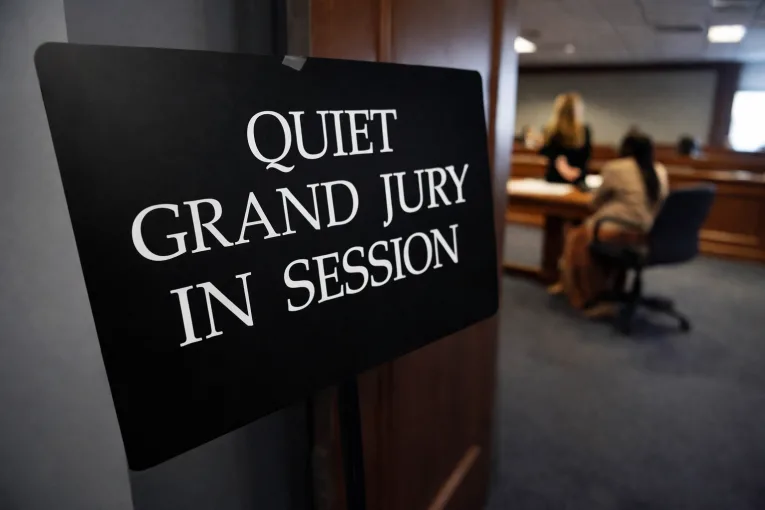
WASHINGTON — A D.C. grand jury’s decision Feb. 10 not to indict six Democratic lawmakers accused of advising military and intelligence officials to refuse illegal orders is the latest in what observers describe as a growing pattern of grand jury resistance to Trump administration prosecutions.
The Cato Institute characterized the trend as a “reclaiming of their constitutional power as a shield” against what it called the Justice Department’s “horrific abuses of power.”
A grand jury is one of two types of juries used in federal courts. It consists of 16 to 27 jurors who review preliminary criminal cases and determine whether prosecutors have established sufficient evidence, or “probable cause,” to bring charges and place an accused person on trial. If jurors find the evidence sufficient, they issue an indictment.
Historically, grand juries have been widely viewed as deferential to federal prosecutors. New York Court of Appeals Chief Judge Sol Wachtler famously remarked that “a grand jury would indict a ham sandwich,” a phrase often cited to illustrate the perception that indictments were nearly automatic.
However, the Cato Institute argued that in the face of what it described as the Trump administration’s “more partisan prosecutions,” grand juries have begun “dismantl[ing]” that image of passivity.
“[T]he community stood in the way,” wrote Mike Fox, author of the Cato Institute article.
The institute pointed to what it described as a “deepening rift” between the Justice Department and the broader community, citing cases from last summer, including a grand jury’s refusal to indict former DOJ employee Sean Charles Dunn for throwing a sandwich at a federal officer.
According to the Cato Institute, similar indictment denials followed, with grand juries declining to “escalate” or accept what the article described as a “government narrative” rooted in political motives or “state-sponsored intimidation.” The institute said the cases carry “historical echoes” that are “unmistakable” and resemble the concerns that led to adoption of the Grand Jury Clause in the Constitution.
The reported pushback from grand juries has not been met with acceptance. The Cato Institute stated that the Justice Department has been “indignant” in response, with high-ranking officials instructing prosecutors to “simply impanel new grand juries until they arrive at the ‘correct’ result.”
In Dunn’s case, U.S. Attorney Jeanine Pirro pursued misdemeanor charges after the grand jury declined to indict. Although the case proceeded to trial, it ended in what the Cato Institute described as a “swift acquittal,” which it said signaled the “public’s refusal to validate [the Justice Departments] vindictive, targeted prosecutions.”
The Cato Institute called the grand jury the “first line of defense against the weaponization of the law, the trial jury remain[ing] the last.” The article stated that Americans are finding their voice and recognizing what it described as a “vengeful executive” that criminalizes “defiance” protected under the First Amendment.
Follow the Vanguard on Social Media – X, Instagram and Facebook. Subscribe the Vanguard News letters. To make a tax-deductible donation, please visit davisvanguard.org/donate or give directly through ActBlue. Your support will ensure that the vital work of the Vanguard continues.
