
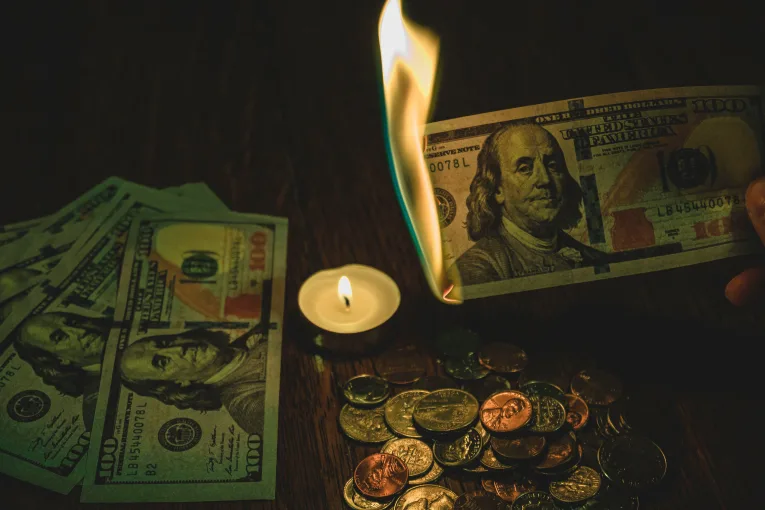
The billionaire is not a sign of a thriving economy. He is a tumor. A grotesque growth on the body of our society, a symptom of a sickness that has nothing to do with left or right. It is a sickness of wealth itself, a moral cancer that takes root when a man is allowed to accumulate enough money to buy his own reality. It severs him from the earth, from the flesh, from the social contract that binds the rest of us. It convinces him he is a god, and we are the dust.
The Epstein files are not an anomaly. They are the biopsy report, slid under the door of a nation in denial. They are a terrifying, real-time autopsy of what this sickness produces when it is allowed to metastasize. The true horror is not just one monster’s depravity, but the existence of a clientele so powerful, so insulated in their wealth, that they believed they could indulge in the most heinous crimes without consequence. Epstein was not the disease; he was the facilitator, the high priest of a bipartisan club of the morally bankrupt who believe the rules are for lesser beings. The client list, a rogues’ gallery of power from every corner of the establishment, is the final proof. This rot is not ideological. It is a function of the god-complex that wealth breeds.
This is a sickness of the soul, not of the party. The human mind was not built to withstand this kind of power. It is a poison that erodes empathy, inflates ego, and warps the spirit until all that remains is a black hole of entitlement. It convinces its carriers that their whims are the natural order, that their desires are a form of prayer. This is a bipartisan affliction, shared by the tech titans of Silicon Valley who play savior with stolen futures, the hedge fund managers of New York who treat the economy like a casino, and the oil barons of Texas who see the planet as their private fire. The problem is not their vote. The problem is that they no longer live in our world.
We have been here before. The Gilded Age, with its robber barons and its obscene, gluttonous wealth, bled directly into the Great Depression. The response was not a gentle plea; it was a tourniquet. The New Deal, coupled with a top marginal tax rate that soared above 90%, was a deliberate, violent act of political surgery to amputate a growing aristocracy before it killed the patient. It was not a partisan victory. It was a grim, bipartisan consensus. The leaders of that time, from both parties, looked at the rot and saw it for what it was: an existential threat. They were not punishing the rich; they were trying to save capitalism from its own gluttony and save democracy from the kings it creates.
But we have a short memory. We have spent the last forty years meticulously undoing that work, suture by suture. Tax cuts for the wealthy, deregulation, the slow poisoning of the social safety net—we have led ourselves, willingly, back to the Gilded Age. And with it, the return of the Epstein-level moral rot. We are now living in a Second Gilded Age, with all the same decadent corruption and all the same risk of collapse.
The only cure is fire. A radical, aggressive re-taxation of the wealthy. This is not a radical idea; it is a return to sanity. A modern-day New Deal is the only proven chemotherapy for a cancer this advanced. The money to fix our crumbling roads, to fund our schools, to heal our people, and to save our planet is not missing. It is being hoarded. It is sitting in offshore accounts and stock portfolios, a mountain of stolen resources. Every dollar not taxed from a billionaire is a dollar that is actively being used to build walls between us. It is a choice we make every day to fund their private kingdoms instead of our common salvation.
This is not class warfare. It is pest control. You do not negotiate with a plague. You do not ask a cancer for permission to cut it out. This is a necessary act of public health, a burning of the infestation to save the body.
This should be the great unifying fire of our time. The real divide in this country is not between left and right. It is between the 99.9% and the 0.1% who see us as their fuel. Taxing them is not a partisan act. It is an act of national self-preservation. A society that allows its children to go hungry while a handful of men own more than they could spend in a thousand lifetimes is a society that has lost its soul. A society that allows the wealthy to prey on the vulnerable with impunity is a society that is begging for a reckoning.
Taxing them is not an economic policy.
It is a moral imperative.
It is the fire we must use to cauterize the wound before we all bleed out.
Follow the Vanguard on Social Media – X, Instagram and Facebook. Subscribe the Vanguard News letters. To make a tax-deductible donation, please visit davisvanguard.org/donate or give directly through ActBlue. Your support will ensure that the vital work of the Vanguard continues.

Some people who are wealthy may be sick but wealth itself is not a sickness.
There are sick individuals in all walks of life, rich or poor.
Wealthy business owners create jobs and opportunities for others to have a chance to prosper.
Seems like this never works. And may push billionaires out of the country entirely (still enabling them to be billionaires).
Although not the wealthiest individual, I wonder if this is a reason that Tina Turner renounced her U.S. citizenship.
California’s taxes are also pushing out some of the wealthiest to other states (along with some middle-income residents). It was a factor for someone I know, who was suddenly able to work remotely (from Nevada, in that case). No state income tax in Nevada.
Found it amusing that California put forth an effort to tax those who leave the state as well, under some circumstances. Not sure what became of that.
In any case – sure – sign me up for increasing the taxes on billionaires! I firmly believe that I’m being cheated out of “my” share of that. :-)
(Though I’m usually told that I’m already “privileged” based on skin color and sex.)
Yes Ron, the rich and others are already fleeing CA over higher taxation.
“California’s taxes are also pushing out some of the wealthiest to other states (along with some middle-income residents). It was a factor for someone I know, who was suddenly able to work remotely (from Nevada, in that case). No state income tax in Nevada.”
Then there’s N.Y. where Mamdani has caused an exodus of the rich to Florida.
“Meta CEO Mark Zuckerberg is reportedly relocating from California to Florida, purchasing a $150–$200 million waterfront estate on Miami’s exclusive “Billionaire Bunker” (Indian Creek Island). This move is largely driven by concerns over a proposed, strict 5% wealth tax on billionaires in California. “
What percent of the total income tax should the top 10% of earners pay? Right now it is about 72%.
The top 1% pay more than 40% of the income taxes. Is that not enough?
On the other end of the spectrum — 40% of US households pay no federal income tax. That seems like quite a large number.
What do you think it should be?
Matt,
You are looking at the ledger upside down. You cannot determine fairness by looking only at the percentage of the total tax bill paid without first looking at the percentage of the total wealth owned. If the top 10% control roughly 70% of the wealth, paying 72% of the income tax is not a penalty; it is merely proportional. They are paying a rate that aligns with what they have accumulated.
It is crucial to distinguish between federal income tax and the total economic burden. While 40% of households may pay no federal income tax, they are still heavily burdened by payroll taxes for Social Security and Medicare, as well as state and local sales taxes. These regressive taxes consume a much larger percentage of a working-class income than they do for the wealthy, who are largely insulated from daily costs. The mechanism of the tax system extracts heavily from labor while protecting capital.
Historically, the United States thrived under tax rates that were significantly higher than they are today. During the post-World War II economic boom, the era that constructed the American middle class, the top marginal income tax rate was consistently above 90%. It did not dip below 70% until the 1980s. This period of high taxation coincided with rising wages, low unemployment, and the greatest expansion of shared prosperity in our history. High rates were not a barrier to growth; they were the foundation of it.
As for the corporate sector, the data shows a clear divergence between corporate profit and corporate contribution. Corporate taxes have fallen from contributing 5.9% of GDP in 1952 to just 1.9% today, despite profits reaching record highs. In the specific case of Amazon, the statistics are stark. Between 2018 and 2020, the company paid an effective federal tax rate of less than 1% on over $20 billion in U.S. profits. In 2018 and 2019, they paid zero. And again, they are not an anomaly; between 2015 and 2024, the “Silicon Six” companies paid an average tax rate of just 18.8% on over $2.5 trillion in profits.
Or… a sickness of wealth