
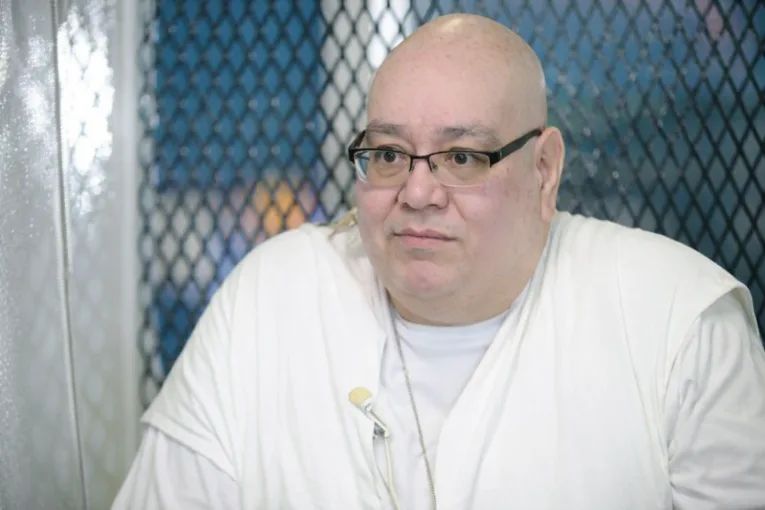
FARMERS BRANCH, Texas — A Texas death row case now before the U.S. Supreme Court is raising renewed concerns about investigative hypnosis, due process and the safeguards intended to prevent the execution of innocent people.
According to a press release, Charles Flores’ case is described as “an actual innocence death penalty case in which the conviction was obtained using a hypnotized witness.” The release explains that his case is currently on appeal to the United States Supreme Court and raises the question of whether the Texas Court of Criminal Appeals’ continued refusal to apply state laws designed to prevent the execution of innocent people violates due process under the United States Constitution.
A petition for writ of certiorari was filed on Feb. 6, 2026, on behalf of Flores, who is characterized as an innocent man sentenced to death in 1999 based on an in-court identification by a witness subjected to a highly suggestive “investigative hypnosis” session conducted by police involved in the murder investigation.
In 1998, Charles Flores was convicted of the murder of Betty Black, who was killed in her home in Farmers Branch, Texas, during an attempted robbery. Immediately after the crime, the eyewitness, who was the next-door neighbor of Betty Black, described seeing two men who “looked nothing like Mr. Flores” enter the victim’s home.
She also created a composite sketch that did not resemble Flores and failed to select his photograph from a lineup while her memory was still fresh. The press release states that the witness initially described two white men with long hair and similar builds and had already identified a white male with long hair as the driver of the Volkswagen parked in the driveway of Black’s house before the murder.
By contrast, Flores is Hispanic, overweight, and has always had short, shaved hair.
It was not until the trial, 13 months after the crime, that the witness claimed to be “100% sure” Flores was one of the men she had seen. This in-court identification followed an “investigative hypnosis” session in which officers had asked her whether one of the men had short, shaved hair and told her she might remember more details as time passed.
The press release also notes that Flores’ photograph had been repeatedly shown by the media as law enforcement’s preferred suspect and that he was the only Hispanic person in the courtroom when the identification was made.
The petition presented to the Supreme Court asks: “Where a state has created liberty interests that give death-sentenced prisoners with credible claims of innocence vehicles for proving their innocence in subsequent habeas proceedings, is the federal right to due process violated when the putatively innocent is arbitrarily denied permission to exercise the right to prove his innocence?”
The release states that the Texas Legislature has enacted statutory safeguards intended to protect innocent individuals, including a “changed science” writ under Article 11.073 and provisions that allow habeas corpus applications. However, the Texas Court of Criminal Appeals “has never granted relief to a death-sentenced prisoner” and has “repeatedly denied Mr. Flores even the opportunity to present the evidence of his innocence,” according to the release.
The release further explains that the Texas Legislature passed Senate Bill 338, which “bars the admissibility of hypnotically refreshed testimony pertaining to the offense that is the subject of the trial.” However, the law was enacted after Flores’ conviction and thus does not automatically apply to him retroactively.
Additionally, the release characterizes the case as involving prosecutorial misconduct. It states that the case relied heavily on the hypnotized witness’s identification and included a “secret plea deal” with Richard Childs, who allegedly admitted to being the shooter.
According to the release, the agreement required Childs to admit that he had been the shooter and was not disclosed to the jury. The jury was also unaware that Childs was the “son of a local police officer and that his brother seemed to be an informant for narcotics investigators,” which, the release states, led to Childs receiving minimal punishment throughout his criminal record.
Moreover, the document states that no credible evidence linked Flores to the crime other than the midtrial “epiphany” of the hypnotized eyewitness. The release also alleges that certain witnesses were threatened or offered undisclosed deals, and that Flores’ fiancée was arrested and threatened to prevent her from testifying that he was with her at the time of the crime.
Throughout the two decades that Flores has spent on death row, he has maintained his innocence while expressing regret for previously being involved with drugs. The release highlights his participation and leadership in a faith-based program and his founding of a book club called “Words That Sustain Me.”
Overall, the release portrays Flores’ case as a broader challenge involving due process and the reliability of “investigative hypnosis” in criminal trials. It highlights systemic concerns about wrongful convictions in capital cases while calling for urgent judicial review and reconsideration of Flores’ conviction.
Follow the Vanguard on Social Media – X, Instagram and Facebook. Subscribe the Vanguard News letters. To make a tax-deductible donation, please visit davisvanguard.org/donate or give directly through ActBlue. Your support will ensure that the vital work of the Vanguard continues.
