
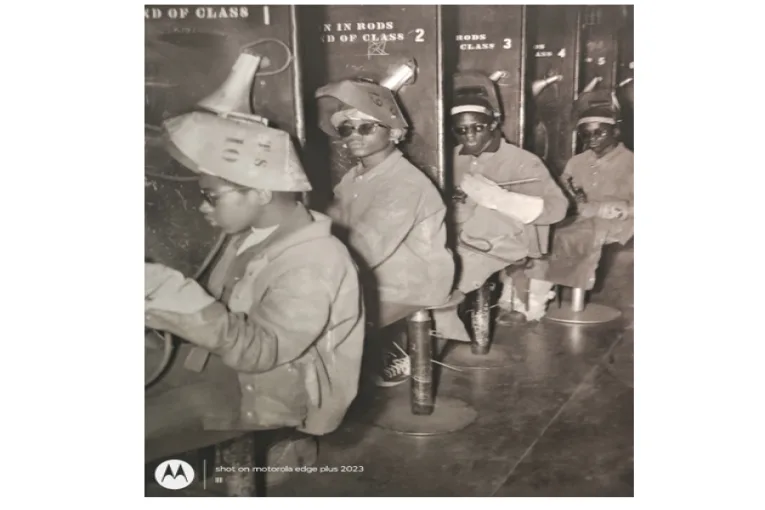
How environmental racism was formally acknowledged — and why oversight now matters more than ever
A MALIK WASHINGTON INVESTIGATION for Destination Freedom Media Group and the Davis Vanguard – Part 1 of 2
EDITOR’S NOTE
This is the first of a two-part investigation into environmental racism in San Francisco’s Bayview–Hunters Point neighborhood, the documented history of contamination and health disparities, and the City’s current policy direction regarding environmental oversight. Part 1 establishes the historical and documentary record. Part 2 will examine enforcement, transparency, and accountability mechanisms.
They hung the sign right there on the wall.
Not outside.
Not on a fence down the block.
Inside.
Inside the place where children sleep. Where elders prepare meals. Where families are told redevelopment means renewal.
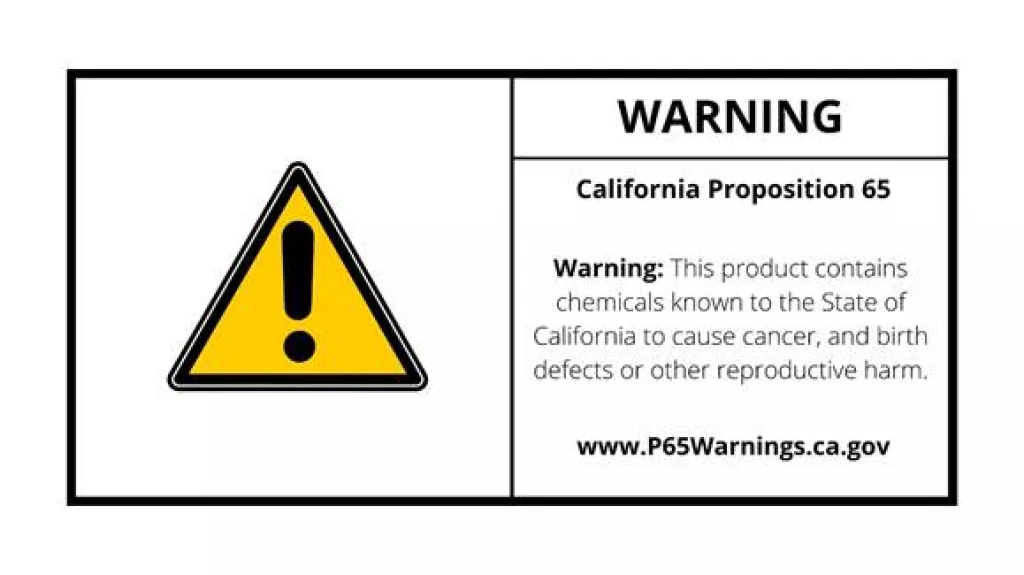
Photo credit: Prop 65 Warning sign
Photo: Proposition 65 warning sign posted inside Alice Griffith Apartments, Bayview–Hunters Point. Image provided by resident.
The sign reads:
PROP 65 WARNING
“Entering this area can expose you to chemicals known to the State of California to cause cancer and birth defects or other reproductive harm, including silica and asbestos (in the concrete walls), and tobacco smoke, lead and lead components, carbon monoxide and gasoline components (from ambient sources).”
For clarity:
A Proposition 65 warning does not automatically render a building unsafe. It is a disclosure mechanism triggered when certain chemical exposure thresholds are met under California law.
But disclosures do not exist in a vacuum.
This sign is posted inside newly redeveloped public housing in a neighborhood that the City of San Francisco formally identified as suffering from environmental racism.
That context matters.
Because this is not a story about a warning placard.
IT IS A STORY ABOUT WHAT WAS DOCUMENTED — AND WHAT POLICY CHOICES FOLLOWED
2003: THE CITY’S OWN FINDING
In December 2003, the San Francisco Human Rights Commission issued a report titled:
“Environmental Racism: A Status Report & Recommendations.”
The focus was Bayview–Hunters Point.
The language was explicit.
The City acknowledged structural environmental inequities — not isolated incidents.
That report is part of the public record.
Twenty-three years later, the central question is whether public policy has aligned with that acknowledgment.
BEFORE IT WAS POLICY, IT WAS PROTEST
Long before environmental racism appeared in an official report, Bayview residents were organizing.
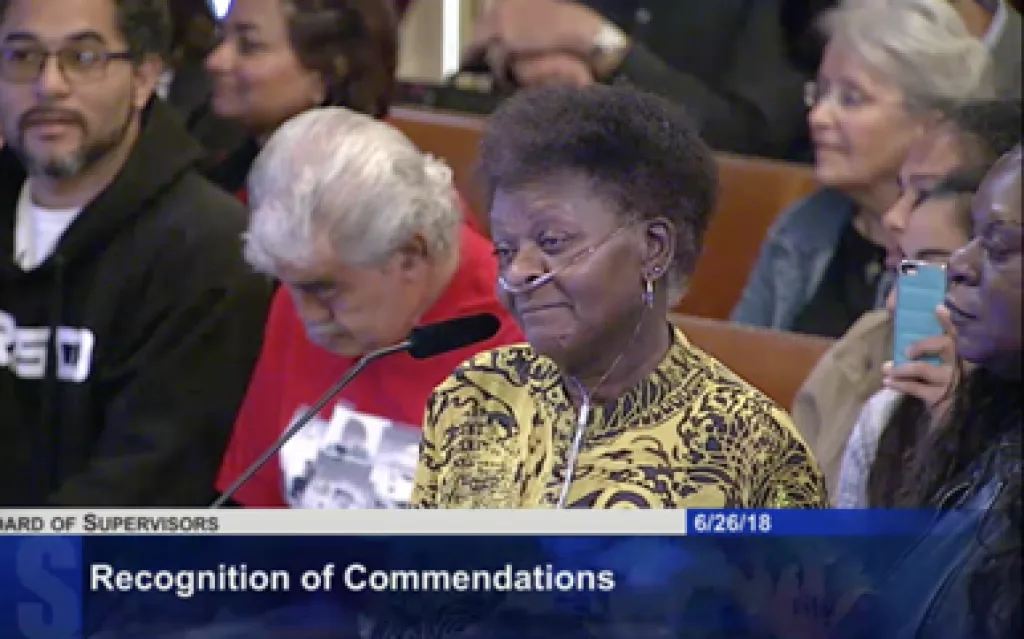
Marie Harrison — widely regarded as a foundational figure in San Francisco’s environmental justice movement — demanded what she described as a basic human right: clean air, clean water, clean land.
She fought the PG&E power plant.
She challenged radiological cleanup practices.
She demanded independent retesting during the Tetra Tech scandal.
In 2016, amid revelations that radiological soil samples had been falsified by cleanup contractors, Harrison warned that leaving radioactive material along a rising shoreline was “a disaster ready to happen.”
She did not frame her fight as partisan.
She framed it as moral.
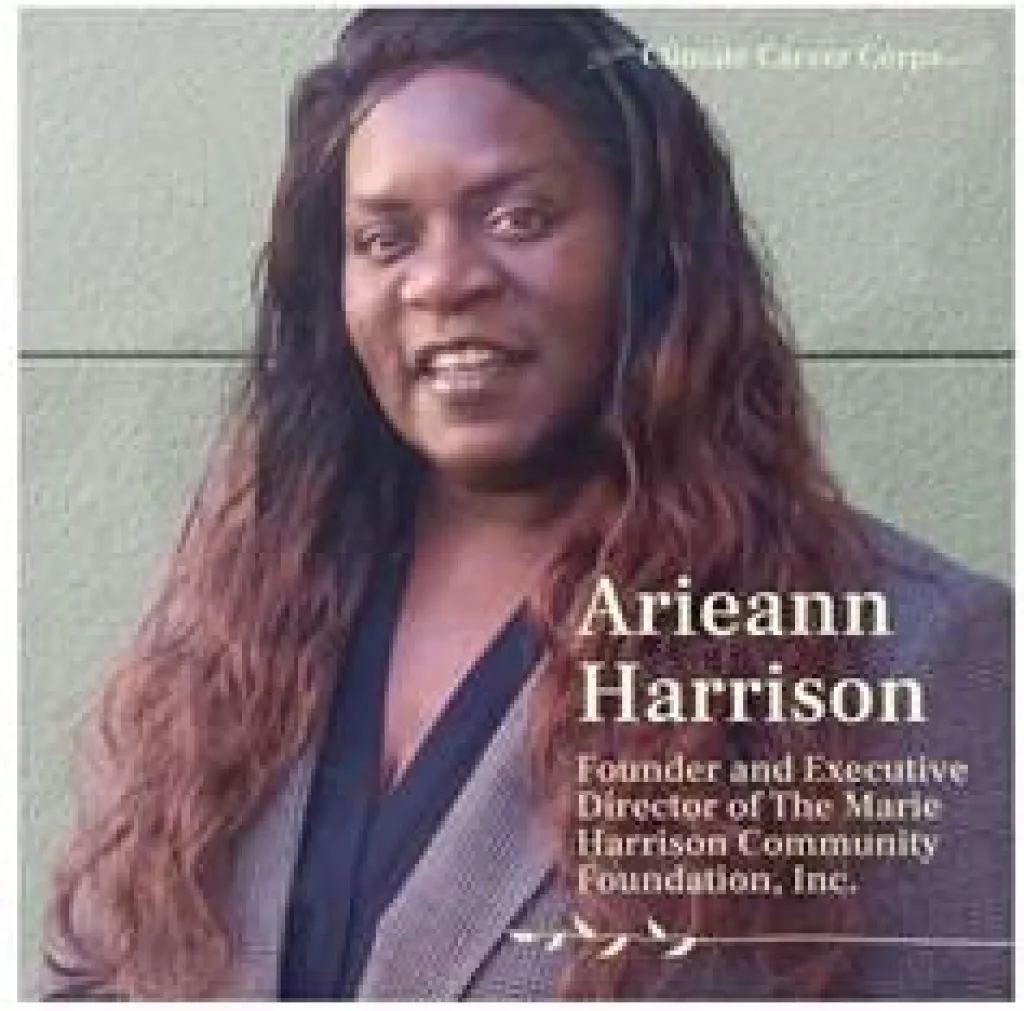
Today, her daughter Arieann Harrison continues that work through the Marie Harrison Community Foundation — advocating for community monitoring, environmental education, and enforceable oversight.
History shows that official acknowledgment often follows community pressure — not the other way around.
2004: THE HEALTH DATA
The 2004 environmental health assessment titled:
“The State of the Environment in Bayview Hunters Point”
documented:
Cancer rates significantly above regional averages
Chronic disease hospitalizations approximately three times the statewide average
A disproportionate share of San Francisco’s infant deaths
Elevated asthma and birth defect rates
A concentration of hazardous waste sites and fuel leaks
These findings were not anecdotal.
They were empirical.
2018: CLEANUP INTEGRITY
In 2018, federal prosecutors charged supervisors from Tetra Tech — the Navy’s primary cleanup contractor — with falsifying radiological testing data.
Two supervisors pleaded guilty.
The Navy initiated retesting of affected areas.
This episode raised legitimate concerns regarding remediation integrity at a federal Superfund site.
It did not end redevelopment.
PARCEL G: DEMOLITION AND MEMORY
The U.S. Navy has announced plans to demolish buildings in Parcel G of the Hunters Point Shipyard.
Demolition of aging naval infrastructure is not unusual in redevelopment zones.
But Hunters Point is not an ordinary redevelopment zone.
It is a federally designated Superfund site with a documented history of radiological testing and contamination.
As demolition plans move forward, artists working within the Shipyard have begun memorializing the site’s history — creating installations and public works that acknowledge contamination, protest, and community struggle.
It is a powerful juxtaposition:
Artists preserving history while structures are removed.
Community members acknowledging radiological legacy through public expression — even as redevelopment advances.
Artists: Left to right: Nikki Vishmara and Sean Karlin
At the same time, the City and County of San Francisco are reducing funding for the San Francisco Department of Environment.
That Department is responsible for:
Air quality monitoring
Environmental complaint response
Climate enforcement
Oversight of mitigation commitments
The contrast is difficult to ignore.
Federal demolition proceeds.
Private redevelopment continues.
Local oversight capacity contracts.
No accusation is required to observe the policy tension.
If Hunters Point’s contamination history is well documented — by courts, by federal agencies, by academic researchers, and by artists — then oversight would logically require strengthening, not reduction.
This is not a personal critique of any individual.
It is a policy question.
PRESENT DATA: BURDEN REMAINS
California’s CalEnviroScreen ranks Bayview–Hunters Point in the top decile statewide for pollution burden.
Diesel particulate matter.
Groundwater threats.
Asthma prevalence.
Low birth weight rates.
These indicators remain elevated.
The burden has not disappeared.
POLICY CHOICES MATTER
Mayor Daniel Lurie inherited these conditions.
He did not create the contamination.
But policy decisions regarding budget allocations, enforcement staffing, and environmental oversight fall squarely within municipal leadership.
Reducing environmental oversight capacity in a neighborhood with a documented contamination history invites scrutiny.
Strengthening oversight would invite confidence.
The difference is not rhetorical.
It is measurable.
There remains time — and opportunity — for corrective policy action.
Environmental justice is not achieved through acknowledgment alone.
It requires institutional vigilance.
THIS IS OUR MOMENT
Bayview–Hunters Point has always been a frontline community.
It has also always been a movement community.
The organizing that led to the 2003 report did not begin in City Hall.
It began on blocks, in churches, in tenant meetings, in living rooms.
On Wednesday, February 25, 2026, at 12:00 PM at San Francisco City Hall, residents will gather again.
From the Hill to the Flatlands.
Homeowners.
Tenants.
Youth.
Elders.
Workers.
This is not about partisanship.
It is about policy.
It is about whether oversight keeps pace with redevelopment.
No voice is too small.
No testimony is insignificant.
History shows that when Bayview–Hunters Point moves in unity, institutions respond.
A special “Thank you” to Nikki Vishmara for inviting me to attend this spectacular art exhibit.
As we always include in each of our articles, here’s the song/video for this one:
ARRESTED DEVELOPMENT – PEOPLE EVERYDAY
As part of Black History Month, we honor the memory and dedication of these two individuals who both fought for the protections and rights of their community members. Their lives were cut short because of the environmental hazards brought about by the Bayview Hunters Point Naval Shipyard disaster that continues to be ignored today.
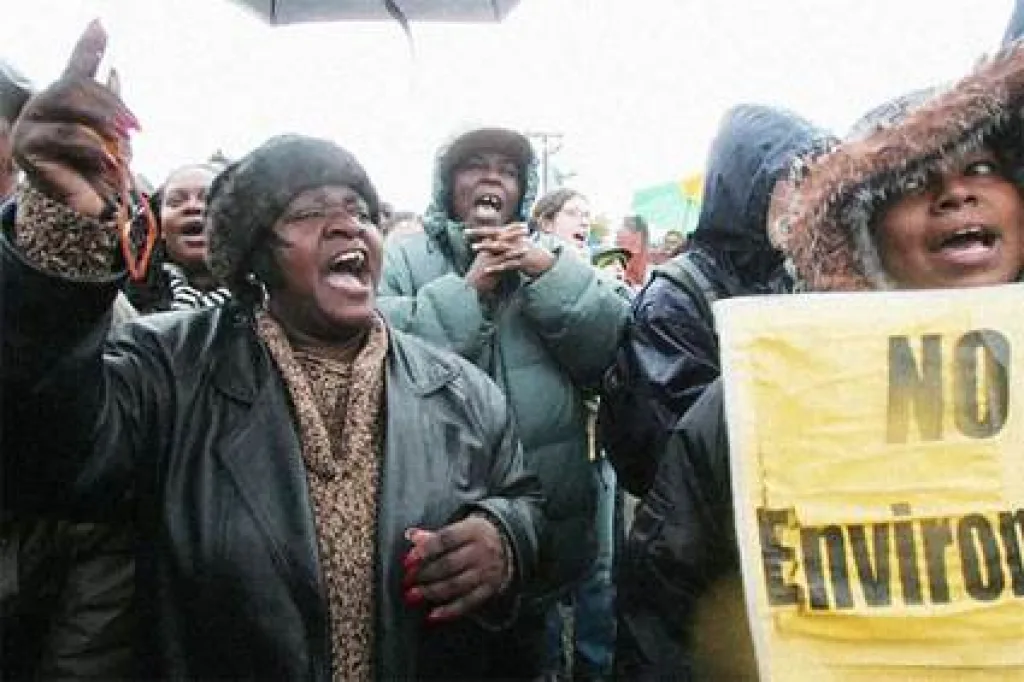
Photo credit: Marie-Harrison-leads-protest-ag-PGE-plant-2004-by-Mike-Kepka-SF-Chron
“Carpenter was fired following a physical altercation with an angry supervisor notified the hilltop community of dangerous dust emissions. Carpenter sued contractor Gordon N. Ball in Superior Court for whistleblower retaliation in a lawsuit that documents his complaints about unsafe work conditions that violated BAAQMD and city Health codes. He died in 2016 of a rare cancer called peripheral T cell lymphoma.
“’I wanted to do the right thing as far as exposing the company of its wrongdoings. What I’ve learned from this is that no one cares about our community. They were exposing us to asbestos without any warning and they didn’t care.’ Christopher Carpenter – Toxic Terror in San Francisco Final Call – January 29, 2008.”
SOURCE LIST
RESOURCE LIST – PART 1
(Chronological and Documentary Record of Environmental Conditions and Policy Context in Bayview–Hunters Point)
FOUNDATIONAL GOVERNMENT DOCUMENTS
1.) San Francisco Human Rights Commission (December 2003).
“Environmental Racism: A Status Report & Recommendations.”
Official City document acknowledging structural environmental inequities in Bayview–Hunters Point.
2.) Arc Ecology & Bayview Hunters Point Community Advocates (September 2004).
“The State of the Environment in Bayview Hunters Point.”
Community-based environmental health assessment documenting elevated cancer rates, asthma prevalence, infant mortality disparities, hazardous waste concentration, and fuel leaks.
FEDERAL CLEANUP & CONTRACTOR ACCOUNTABILITY
3.) U.S. Department of Justice (2018).
United States v. Tetra Tech EC, Inc. Supervisors — federal criminal case involving falsification of radiological soil testing data at Hunters Point Naval Shipyard.
(Press releases and court records confirm guilty pleas by supervisors.)
4.) U.S. Navy, Hunters Point Shipyard Superfund Site Documentation.
Federal Environmental Protection Agency (EPA) Superfund designation and remediation records for Hunters Point Naval Shipyard.
5.) EPA Superfund Program – Hunters Point Naval Shipyard.
Comprehensive federal site history, remediation plans, and parcel designations.
HEALTH AND ENVIRONMENTAL BURDEN DATA
6.) California Environmental Protection Agency (CalEPA).
CalEnviroScreen 4.0 Data.
State environmental screening tool ranking Bayview–Hunters Point in approximately the 90th percentile statewide for pollution burden, including:
Diesel particulate matter (99th percentile)
Asthma prevalence (98th percentile)
Low birth weight (99th percentile)
Groundwater threats (98th percentile)
7.) San Francisco Department of Public Health (SFDPH).
Community health data reports reflecting elevated asthma and chronic disease burdens in Bayview–Hunters Point relative to city averages.
HOUSING CONDITIONS & LOCAL REPORTING
8.) Mission Local (2024–2025).
Reporting on 129 Housing Authority inspection failures at Alice Griffith Phase I, including electrical hazards, elevator failures, rodent infestations, and fire safety deficiencies.
9.) California Office of Environmental Health Hazard Assessment (OEHHA).
Proposition 65 (Safe Drinking Water and Toxic Enforcement Act of 1986).
Regulatory disclosure requirements for chemical exposures including asbestos, silica, lead, and other listed substances.
HISTORICAL & INVESTIGATIVE JOURNALISM
10.) SFGate – Gregory Dicum.
“GREEN / Marie Harrison and the Fight for Bayview–Hunters Point.”
Profile and reporting on Marie Harrison’s environmental justice activism.
11.) Mission Local (May 2019).
“Marie Harrison, tireless fighter for environmental justice, dies at 71.”
Obituary and documentation of her advocacy history.
12.) San Francisco Public Press (Chris Roberts, 2024).
Reporting on radiological history and Navy disclosures regarding contamination at Hunters Point Naval Shipyard.
13.) Exposed Podcast (Rebecca Bowe, SF Public Press, 2025).
Investigative audio series examining human radiation experiments and naval radiological testing history in the Bay Area.
FEDERAL SITE HISTORY & RADIATION DOCUMENTATION
14.) Kevin Chen – Nuclear History of the Bay Area Briefing Book.
“Radiological and Redevelopment History of Hunters Point and Treasure Island.”
Archival research documenting Cold War-era radiological operations and cleanup efforts.
15.) Washington State Department of Health (Fact Sheet 320-080, 2002).
Plutonium-239 Health Effects Fact Sheet.
Technical background on radiological exposure risks referenced in discussions of contamination concerns.
CURRENT POLICY & BUDGET CONTEXT
16.) San Francisco Commission on the Environment (2026 Public Testimony & Budget Materials).
Documentation reflecting reductions in general fund support for the San Francisco Department of Environment.
17.) San Francisco Department of Environment (SFE).
Agency responsibilities including air quality monitoring, CEQA mitigation enforcement, climate program oversight, and environmental complaint response.
COMMUNITY ORGANIZING & LEGACY
18.) Marie Harrison Community Foundation (canwelive.org).
Mission, environmental justice advocacy programs, and AB 617-related community engagement efforts.
19.) Greenaction for Health and Environmental Justice (greenaction.org).
Community-based environmental justice advocacy organization active in Hunters Point contamination oversight.
NOTE ON SOURCE INTEGRITY
All sources listed above are:
Government publications
Court records
Federal agency documentation
Established news organizations
Academic or research-based analyses
Publicly accessible regulatory data.
ABOUT THE AUTHOR
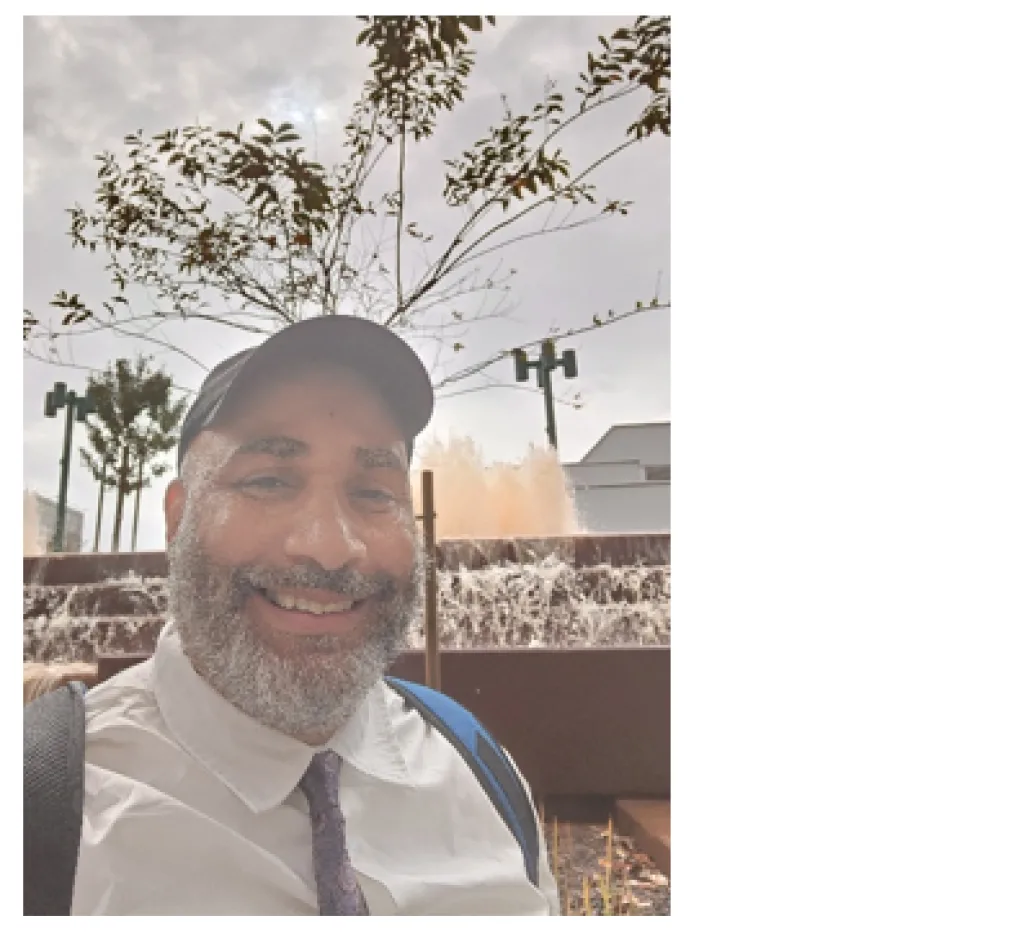
Malik Washington is a San Francisco-based journalist and co-founder of Destination Freedom Media Group, an independent nonprofit newsroom dedicated to accountability reporting at the intersection of civil rights, public integrity, disability justice, structural accountability within American institutions, and community survival. He has been a published journalist for over 14 years.
His work—published in partnership with the Davis Vanguard—focuses on government power, criminal justice, environmental justice, and the human consequences of policy decisions too often insulated from public scrutiny. Washington’s reporting amplifies the voices of impacted communities while insisting on documentary evidence, transparency, and the unvarnished truth—especially when institutions demand silence.
His work appears on platforms such as Muck Rack and Black Voice News, examining the intersection of justice, governance, and community.
You can reach him via email: mwashington2059@gmail.com or call him at (719) 715-9592.
Suggestions or leads on stories are always welcome.
Please follow us on:
Facebook: https://www.facebook.com/destfreedom13
Instagram: https://www.instagram.com/destinationfreedom13/
Follow the Vanguard on Social Media – X, Instagram and Facebook. Subscribe the Vanguard News letters. To make a tax-deductible donation, please visit davisvanguard.org/donate or give directly through ActBlue. Your support will ensure that the vital work of the Vanguard continues.
