
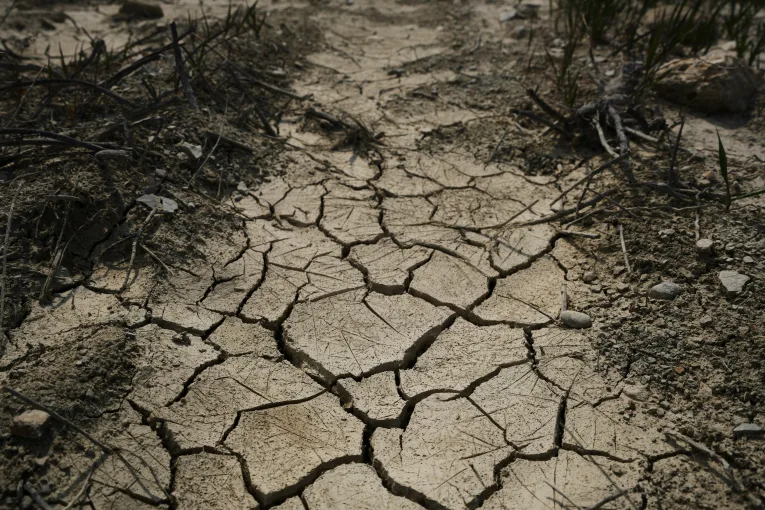
Among the many dangers humanity has faced, climate change presents a peculiar challenge: it unfolds in fragments—a brutal heat wave here, a once-in-500-year flood there, a wildfire season that refuses to end—only to be followed by a deceptive return to normalcy that invites the dangerous conclusion that nothing fundamentally different is happening at all.
This week, the Trump administration took a blowtorch to the legal foundation of American climate policy.
The Environmental Protection Agency moved to revoke the 2009 “endangerment finding,” the scientific determination that greenhouse gases “threaten the public’s health and welfare” and therefore can be regulated under the Clean Air Act, effectively dismantling the core authority used for federal limits on vehicle and industrial emissions.
At the same time, the administration signaled opposition to a United Nations climate proposal and renewed rhetoric dismissing climate science, marking one of the most sweeping climate reversals in modern U.S. history.
The rollback lands at a moment when global temperatures continue to set records and extreme weather events increasingly define daily life.
For years, climate advocates warned that international agreements like the Paris accord, while imperfect, at least established a framework for coordinated reduction of emissions.
Now even that modest scaffolding looks fragile.
State leaders, including California Gov. Gavin Newsom, have vowed resistance, but the federal retreat sharply alters the balance of power in global climate diplomacy.
The developments underscore a deeper tension that writers like David Wallace-Wells have long identified: the distance between scientific warning and political response.
His argument that even two degrees of warming would be “catastrophic enough” was written before the latest round of federal reversals, and before the legal architecture of U.S. climate regulation was once again placed in jeopardy.
If anything, this week’s actions make the central question more urgent: why, in the face of escalating evidence and now escalating retrenchment, does the climate crisis still struggle to command sustained national alarm?
David Wallace-Wells, in The Uninhabitable Earth: Life After Warming, argues that this pattern is not an accident of weather or media attention but a feature of the crisis itself.
Climate change, he writes, is not a single catastrophe but a set of cascading catastrophes that interact with one another, unfold on multiple timelines, and intensify one another’s damage.
The result is a threat large enough to alter the basic conditions of civilization but diffuse enough to be habitually discounted.
“In fact, all but the one that killed the dinosaurs involved climate change produced by greenhouse gas,” Wallace-Wells writes of the planet’s past mass extinctions.
He points readers to the most notorious example, 250 million years ago, when “carbon dioxide warmed the planet by five degrees Celsius, accelerated when that warming triggered the release of methane, another greenhouse gas, and ended with all but a sliver of life on Earth dead.”
The point is not that today is fated to replay the Permian extinction in full, but that the mechanism of runaway warming and feedback is not speculative.
It is embedded in Earth’s deep history, yet modern life—organized around elections, quarterly profits, school years and careers—conditions us to think in short human timescales, allowing climate change to turn “later” into a political weapon that makes sustained alarm easy to avoid.
Wallace-Well’s work illustrates just how far outside historical precedent the atmosphere already is.
“And there is already, right now, fully a third more carbon in the atmosphere than at any point in the last 800,000 years—perhaps in as long as 15 million years,” he writes. “There were no humans then. The oceans were more than a hundred feet higher.”
It is a reminder not only of what is changing, but of what has already changed.
“The truth is actually much scarier,” Wallace-Wells writes. “That is, the end of normal; never normal again. We have already exited the state of environmental conditions that allowed the human animal to evolve in the first place, in an unsure and unplanned bet on just what that animal can endure.”
If the atmosphere is now charged with risks that look geologically abnormal, the political story is, in his telling, even more troubling because it is recent.
“More than half of the carbon exhaled into the atmosphere by the burning of fossil fuels has been emitted in just the past three decades,” he writes. The emotional refuge of blaming the distant past, he argues, is both convenient and false. “This means we have now done as much damage to the environment knowingly as we ever managed in ignorance.”
One reason the crisis does not provoke proportional alarm is that it allows nearly everyone a plausible escape hatch from responsibility.
In this sense it is like many other slow moving tragedies, the parable of the frog in boiling water if you will.
Those alive today can dismiss climate change as a legacy problem left by earlier industrialists and governments, fossil-fuel interests can frame it as a regrettable externality, and the powerless can treat it as inevitable—a moral fable Wallace-Wells explicitly rejects.
“But that is a fable about historical villainy that acquits those of us alive today—and unfairly,” he writes. “The majority of the burning has come since the premiere of Seinfeld. Since the end of World War II, the figure is about 85 percent.”
His alarm reaches beyond emissions arithmetic to the way rising temperatures intensify pressure on borders and strain political institutions.
“Beginning in 2011, about one million Syrian refugees were unleashed on Europe by a civil war inflamed by climate change and drought—and in a very real sense, much of the ‘populist moment’ the entire West is passing through now is the result of panic produced by the shock of those migrants,” he writes.
The projections, he notes, rise into numbers so large they risk becoming meaningless.
“The U.N. projections are bleaker: 200 million climate refugees by 2050,” Wallace-Wells writes.
He adds that the United Nations warned of “a billion or more vulnerable poor people with little choice but to fight or flee.”
Quantified in such sweeping projections, the threat risks being heard as apocalyptic rhetoric, inviting skepticism instead of mitigation.
The book’s central argument is that the comfort of optimism has repeatedly failed.
Wallace-Wells writes of “considering the optimists have never, in the half century of climate anxiety we’ve already endured, been right.”
He cautions readers not to mistake the Paris Agreement’s targets for safety, writing that “two degrees looks more like a best-case outcome,” and later adding, “two degrees is catastrophic enough. It is also, practically speaking, inevitable.”
Notably, these warnings were written before Donald Trump withdrew the United States from the Paris Agreement and unraveled large parts of the federal climate policy framework, a reminder that even the more modest international commitments were framed as insufficient long before political retrenchment made them harder to achieve.
The language is intentionally stark, and rather than softening it for political comfort, perhaps the moment calls for amplifying it to match the scale of what is at stake.
For instance, “the foreign minister of the Marshall Islands offered another name for that level of warming: ‘genocide,’” Wallace-Wells writes.
The term points to a moral reality that scientific framing often avoids: small island nations and poor regions did little to create the problem, yet face existential consequences from it.
Climate change is often described as an environmental issue but Wallace-Wells insists it is also a social sorting machine
. “Most of the world is not Santa Barbara,” he writes, “and in the coming decades many of the most punishing climate horrors will indeed hit those least able to respond and recover.”
He notes that this is commonly discussed as environmental justice, but he argues for blunter language. “a sharper, less gauzy phrase would be ‘climate caste system.’”
Even that framing, he cautions, cannot protect wealthy countries from spillover.
“The devastation of global warming cannot be easily quarantined in the developing world,” he writes. “Climate disaster is too indiscriminate for that.”
The consequences arrive through commodity prices, migration, conflict, supply chains, and political shocks, and they will arrive through the climate system itself, which does not respect national boundaries.
Part of the challenge is that the crisis resists ordinary understanding, what Wallace-Wells, citing the theorist Timothy Morton, describes as a “hyperobject,” “a conceptual fact so large and complex that, like the internet, it can never be properly comprehended.”
When confronted with what it cannot fully comprehend, the brain reflexively simplifies, and politics follows suit by gravitating toward the least demanding response.
“But time is perhaps the most mind-bending feature,” Wallace-Wells writes, “the worst outcomes arriving so long from now that we reflexively discount their reality.”
That reflex, he argues, becomes a kind of self-soothing that makes catastrophe more likely.
He warns against an unspoken assumption embedded in many climate models and political conversations: that the story ends at 2100.
“The assaults of climate change do not end at 2100 just because most modeling, by convention, sunsets at that point,” he writes, noting that some call the period after “the ‘century of hell.’”
It is also a crisis with nonlinear risks.
Wallace-Wells points to research that suggests “our current climate models may be underestimating the amount of warming we are due for in 2100 by as much as half.”
He adds, “In other words, temperatures could rise, ultimately, by as much as double what the IPCC predicts.” He cites probabilistic thinking as well, noting that analysis “as Gernot Wagner and Martin Weitzman do in their book Climate Shock, yields an 11 percent chance we overshoot six degrees.”
Those projections are hard to convert into political action because politics is calibrated to certainty—legislatures favor confident forecasts, voters prefer clear villains and immediate remedies—yet climate change offers neither, and as Wallace-Wells argues, its uncertainty is not grounds for complacency but a warning to prepare for extremes.
The human tendency to look away becomes easier when many harms appear incremental.
Wallace-Wells describes how adaptation, while necessary, can also deepen the trap.
For example, air conditioning provides relief, but increases electricity demand.
“Air conditioners and fans already account for fully 10 percent of global electricity consumption,” he writes. “Demand is expected to triple, or perhaps quadruple, by 2050; according to one estimate, the world will be adding 700 million AC units by just 2030.”
Food, too, becomes a site where warming converts into scarcity.
Wallace-Wells offers a rule of thumb: “for every degree of warming, yields decline by 10 percent.”
He warns that yield declines will collide with population growth—leaving more people with less grain—while ecological limits beyond temperature intensify the strain, noting that “soil, believe it or not, is literally disappearing—75 billion tons of soil lost each year,” so that the pressures compound rather than cancel out.
At the level of public feeling, Wallace-Wells argues that despair can masquerade as realism. He rejects what he calls “withdrawal” and “surrender.”
“Climate change means some bleak prospects for the decades ahead,” he writes, “but I don’t believe the appropriate response to that challenge is withdrawal, is surrender.” He cites the Canadian activist Stuart Parker’s label for one version of despair, calling “climate nihilism” “another of our delusions.”
But he also insists that individual virtue is not an adequate substitute for structural change.
“The climate calculus is such that individual lifestyle choices do not add up to much, unless they are scaled by politics,” he writes. He adds that the future turns on collective decisions, not private guilt: “What happens, from here, will be entirely our own doing.”
Why, then, aren’t people more alarmed?
Wallace-Wells’ answer, threaded through his accounts of heat, hunger, drowning, smoke and political backlash, is that the crisis is almost perfectly calibrated to exploit human frailty—too vast to hold in a single frame, too gradual to trigger instincts built for immediate peril, too unequal in its impacts to compel solidarity, and too entwined with the energy systems of daily life to confront without sacrifice.
The consequence is a culture that absorbs a civilizational threat as if it were ambient noise, recasting emergency as background condition.
“Between that scenario and the world we live in now lies only the open question of human response,” Wallace-Wells writes. That line captures the book’s unsettling premise: that the distance between the present and far worse futures is not primarily a mystery of science, but a test of will.
Follow the Vanguard on Social Media – X, Instagram and Facebook. Subscribe the Vanguard News letters. To make a tax-deductible donation, please visit davisvanguard.org/donate or give directly through ActBlue. Your support will ensure that the vital work of the Vanguard continues.

The Vanguard has become such a Debby Downer lately.
The oil industry has owned the Republican party at least since Nixon, who brought into his government Nelson Rockefeller’s protege, Henry Kissinger.
Wallace-Wells would not be my go-to guy for articles about climate science.
https://science.feedback.org/review/scientists-explain-what-new-york-magazine-article-on-the-uninhabitable-earth-gets-wrong-david-wallace-wells/
Which of the points in my essay are factually wrong?
Wallace-Wells writes about climate change with a focus on extreme outcomes. He is not a climate scientist. His writings have often not reflected the broadly held views of climate scientists, and he has been subject to considerable criticism of his approach by reputable researchers. I suggest you read the comments on the link that I provided. They reflect the tension between alarmism and accuracy.
Michael Mann, reviewing Wallace-Wells book, stated “The evidence that climate change is a serious challenge that we must tackle now is very clear. There is no need to overstate it, particularly when it feeds a paralyzing narrative of doom and hopelessness.”
Daniel Swain’s comment about Wallace-Wells widely read The Uninhabitable Earth is apt: “This is an unusual piece in that it accurately describes some of the most dire consequences of unabated global warming but focuses almost exclusively on worst case scenarios. In doing so, it provides a compelling narrative of what could happen in the future, but does not accurately characterize the likelihood of particular outcomes relative to what is justifiable based upon existing scientific evidence.”
Swain is a UCD alumnus and might be open to an interview. His blog, Weather West, is outstanding, and he has quite a public presence.
So, using Michael Mann to address your basic question of why we are collectively paralyzed to inactivity, the answer may be that the narrative of doom and hopelessness engendered by overstatements about hypothetical worst-case scenarios may be a factor.
As to “Which of the points in my essay are factually wrong?” I will just cite two as examples of the problem. Given his track record, I wouldn’t take any of his data points at face value but evaluating each one requires nuance and context.
“for every degree of warming, yields decline by 10 percent.”
There is no context provided for this assertion and it does not appear to be evidence-based.
“… soil, believe it or not, is literally disappearing—75 billion tons of soil lost each year”
More recent research:
https://www.globalsoilbiodiversity.org/blog-beneath-our-feet/2018/1/9/how-much-soil-is-lost-every-year
“We have developed an unprecedentedly high resolution (250 × 250 m) global potential soil erosion model, using a combination of remote sensing, GIS modeling and census data. The model result, an estimated 36 billion tons of soil eroded per year, is at least two times lower than previous annual soil erosion reference values.”
and…
“Our study estimated that, if applied correctly, conservation practices could save over a billion tons of soil per year.”
Overstating conditions and only addressing worst-case scenarios does little to further climate policy. If anything, it makes people less likely to feel that anything they do can make any difference.
Yes, the US should rejoin the Paris accords, return to support for renewable energy sources, and much more. Congress may have to restore the endangerment finding by legislation, as it has always been vulnerable to change as a regulatory finding. Climate policy is but one of many areas where the next administration will have to work hard to return to positive policies and try to repair the damage that has been done to our international reputation. But in my opinion, individuals can be most effectively motivated to address climate change by taking positive action in their own communities to make those places more habitable for the next generations.
“Food, too, becomes a site where warming converts into scarcity.”
Apparently, from someone who didn’t read the YIMBY “Abundance” book.
In any case, I haven’t noticed any change. Pretty cold and foggy this past winter, for example.
Could it be that global warming is “this” generation’s Paul Ehrlich?
(Yes – I’m aware that it’s occurring – just don’t see that it will necessarily have the societal impact described in this article.)
As for immigration, that’s a choice that the host governments have made (opposed by their own constituents) – and it’s not necessarily the result of climate change.
“ Apparently, from someone who didn’t read the YIMBY “Abundance” book.‘
Particularly since the book predates it by a number of years
Ron O
Wow, what a short memory! In 2024, we had a record stretch of 20 days over 100 degrees: https://www.capradio.org/articles/2024/07/18/sacramento-temperature-blanket-2024-june-july-see-record-breaking-stretch-of-heat/
Warming is accelerating: https://www.washingtonpost.com/climate-environment/interactive/2026/climate-change-temperature-rate-accelerating/
Immigration increases globally have been tied to severe local climate changes due to global climate change. I guess if it’s all about “me, me, me” then you don’t care about what happens to people in other countries, even it has economic consequences here.
Did I say to “flush twice”?
I meant to say, flush three times to prevent sprawl. Why would I want to conserve water, gas, or anything else when the underlying cause isn’t addressed?
I am not willingly cooperative with the plan.
In fact, I’d encourage everyone to flush three times. (Actually, you sort of need to do so in regard to these new-and-improved low-flow toilets.)
Meanwhile, I had to replace the timing chain on my truck, since the manufacturer switched from a “double-row” chain to a single chain, probably at least partly due to “efficiency” (less friction).
So that was $1,500 or so wasted, and probably some additional greenhouse gasses created to replace it.