
CHICAGO — Federal immigration prosecutions tied to the Trump administration’s “Operation Midway Blitz” in Chicago are increasingly collapsing in court, though the legal battles have still taken a significant toll on those arrested.
“Operation Midway Blitz” was an operation set up through Immigration and Customs Enforcement (ICE) to honor Katie Abraham, who was killed by a drunk driver who was also an undocumented immigrant. During this operation, 1,600 people were arrested by ICE and later detained in 13 states at county jails, privately run detention centers and a rapidly constructed facility on a military base.
Cases against 17 of the 32 people charged during the operation have already fallen apart, and no one has been convicted, highlighting repeated setbacks for federal prosecutors involved in enforcement efforts tied to the immigration crackdown.
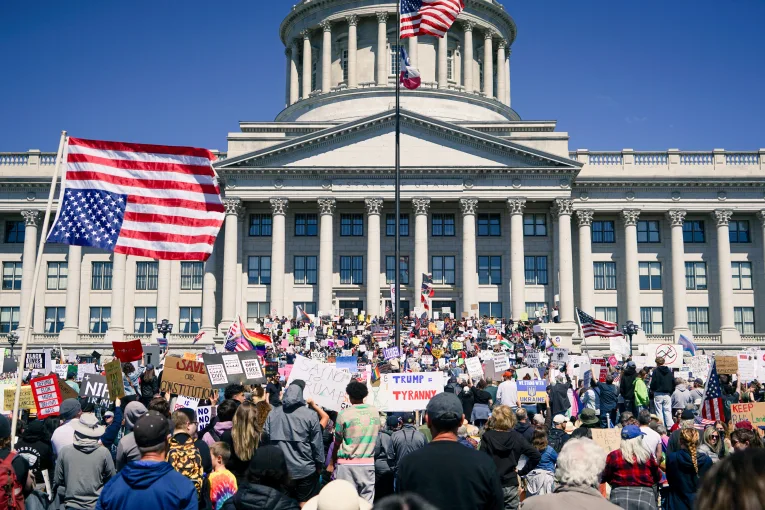
Among the people affected by the operation are protesters Jocelyne Robledo and Ray Collins, who were arrested outside an immigration processing center in Broadview shortly after the administration launched the deportation campaign in the Chicago area. Their case fell apart rapidly because the grand jury refused to indict them.
Even though they have won the case, they are still facing repercussions. Collins said he has still found himself being called “everything from a thug to a predator.”
Collins also has to tell future employers that when they look him up, he has been arrested for a felony.
Regardless of how this may seem from the outside, he said he remains resilient. This is what Collins had to say about his character: “I know myself and my character, that those things would never stick; they can’t tarnish what I’ve done in my community. They can’t tarnish who I am as a person.”
These are just two of the people whose lives have been changed after going head-on with the Trump administration in court and winning, though these wins do come at a cost.
There is still a real threat of punishment when it comes to federal prosecution. It is intimidating and carries the real possibility of prison time; freedoms are often restricted, reputations can be tarnished through the media, and lawyers are often needed, while going up against federal attorneys can be difficult.
Seventeen of the cleared defendants have spent a combined 150 days in federal custody.
Many others have not been as fortunate to be released from custody, including Juan Espinoza Martinez, who is still being detained. Marimar Martinez was also shot five times in the face by a Border Patrol agent earlier in October.
Then there are others who have been more fortunate, such as Jackie Guataquira, who did not need to spend a single night in jail or even physically appear in court.
“They’re really just trying to take people’s lives away, deport them out of this country, or at the … more minor level, paint people who are righteously protesting and standing up to this as ‘terrorists,’” she said about the situation.
Legal expert Laurie Levenson, a Loyola Law School professor, said the broader impact of these prosecutions goes beyond the individual defendants.
She warned that even unsuccessful federal cases can have serious consequences.
“Your life gets turned upside down when you’re charged with a federal case,” she said.
She also said repeated failed prosecutions can damage public confidence in the justice system, especially when arrests receive widespread publicity but dismissals receive less attention.
“What people first see is that you’ve been arrested,” she said, noting that reputational harm can persist even after charges are dropped.
Follow the Vanguard on Social Media – X, Instagram and Facebook. Subscribe the Vanguard News letters. To make a tax-deductible donation, please visit davisvanguard.org/donate or give directly through ActBlue. Your support will ensure that the vital work of the Vanguard continues.
