
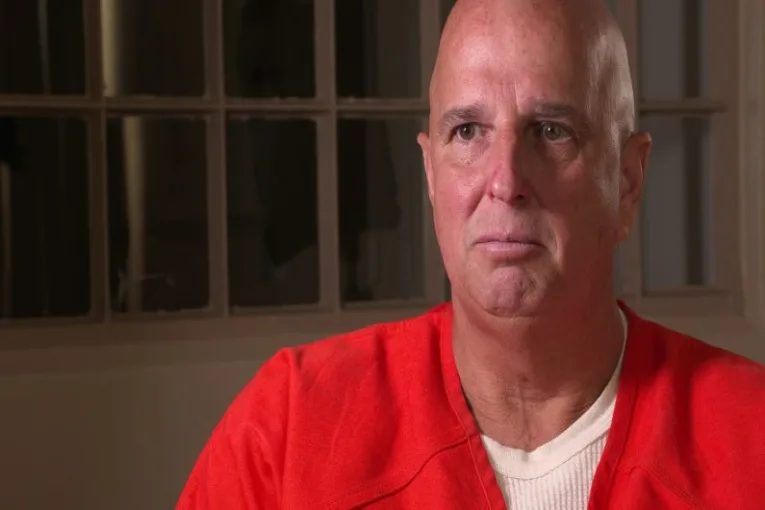
RAIFORD, Fla. — As a March 31 execution date approaches, attorneys for Florida death row prisoner James Duckett argue newly-revealed evidence and pending DNA testing raise serious questions about his conviction and the limited timeframe provided for post-conviction review.
James Duckett, a former Lake County police officer convicted of the murder and sexual battery of an 11-year-old girl in 1987, is scheduled for execution on March 31, 2026, at 6 p.m. According to the Substack newsletter Tracking Florida’s Death Penalty, his attorneys have filed a successive motion for post-conviction relief, arguing that he remains innocent after the court withheld evidence.
DNA testing in the case is currently pending and could potentially provide additional evidence related to his claim of innocence. The motion raises concerns about possible withheld evidence and the limited timeframe attorneys have to prepare and present claims. According to the filing, these issues form part of the argument that Duckett’s death sentence is unconstitutional.
According to CBS News, James Duckett was formerly a police officer in the Lake County city of Mascotte in May 1987. He was later convicted of first-degree murder and sexual battery in connection with the death of 11-year-old Teresa McAbee in 1987.
The victim was last seen getting into Duckett’s patrol car near a convenience store, and her body was later found less than a mile away in a nearby lake.
In the Substack newsletter, Duckett argued that he was unaware the state had withheld evidence to reexamine his case. On March 6, 2026, after an execution warrant was issued, Duckett received a Dec. 4, 2012, letter from the U.S. Department of Justice that had been sent to the State Attorney’s Office.
The Substack newsletter explains how the document requested more information about FBI Agent Michael Malone’s hair analysis testimony at Duckett’s trial and stated that the conclusions presented may have “exceeded the limits of science by overstating the conclusions that may appropriately be drawn from a positive association between evidentiary hair and a known hair sample.”
The motion, as reported by the Substack newsletter, reveals that Duckett has requested this type of evidence for more than 25 years, arguing that Malone’s testimony is critical and “will likely provide further evidence” that Duckett is innocent.
The defense has requested permission to amend its motion after the DNA testing is completed.
The filing explains that the central issue at Duckett’s trial was whether he alone sexually assaulted and killed the victim. According to the defense motion, the prosecution did not argue that multiple perpetrators were involved.
The Substack newsletter reports that Duckett’s attorneys argue that if DNA testing shows “he was not the source of the semen in the victim’s underpants, Mr. Duckett will show that someone else sexually assaulted and murder[ed] the victim.”
The motion states that if this information had been presented to the jury along with other evidence developed during trial and post-conviction proceedings, Duckett “would have been acquitted.”
Additionally, Duckett’s attorneys argued that Florida’s execution warrant process did not provide him a fair and equitable timeframe, which they contend violates his constitutional rights.
Duckett’s warrant period is 32 days, with attorneys required to request additional public records within two business days and file claims within five.
When the records were produced, his attorneys received more than 10,000 pages from four agencies just two days before the post-conviction filing deadline.
The motion also states that “counsel did not receive the unredacted records until 8:03 p.m. the night before having to file the instant motion.”
Additional challenges in the case arose because Duckett’s warrant was issued to an attorney who was already working on another death row case in Florida, Billy Kearse, which faced a similarly limited timeframe.
According to the Substack newsletter, Duckett’s attorney had difficulty “balancing her time and attention between two clients facing imminent execution for several days of their already compressed warrant periods.”
The motion argues that Florida’s warrant process places significant strain on the judicial system.
Courts must quickly adjust schedules for emergency hearings, while judges have limited time to review decades of records in “complex cases.”
Duckett’s case spans nearly 40 years and includes thousands of pages of material related to claims of innocence and the reliability of his sentence.
The filing also notes the demands on court staff, including reporters producing transcripts within hours and clerks compiling records for appeals in under six hours.
The newsletter reports that the Florida Supreme Court has reviewed execution warrant briefings continuously since early 2025, creating additional strain and potential delays for other cases.
Duckett’s attorneys have also filed a “renewed motion to stay his execution.”
Under the circuit court’s scheduling order, the state’s response is due Tuesday at 10:00 a.m., while DNA testing previously granted by the court remains pending.
Follow the Vanguard on Social Media – X, Instagram and Facebook. Subscribe the Vanguard News letters. To make a tax-deductible donation, please visit davisvanguard.org/donate or give directly through ActBlue. Your support will ensure that the vital work of the Vanguard continues.
