
MONTGOMERY, Ala. — The U.S. Supreme Court declined to hear Alabama’s appeal in Singleton v. Taylor, leaving in place a lower court ruling that found the state’s anti-solicitation laws unconstitutional under the First Amendment.
On March 2, 2026, the Southern Poverty Law Center issued a press release addressing the Court’s decision to deny review of the case, which challenged Alabama laws criminalizing requests for charitable assistance in public spaces.
According to the SPLC, the Court’s decision allows a ruling by the U.S. Court of Appeals for the Eleventh Circuit to stand. That ruling found Alabama’s anti-solicitation laws unconstitutional under the First Amendment.
The lawsuit centers on Alabama statutes that restricted requests for charitable assistance from others in public locations. Advocates argued that enforcement of such laws disproportionately affects individuals experiencing homelessness and effectively criminalizes visible poverty.
The Eleventh Circuit determined that these restrictions targeted protected speech and expressive conduct under the First Amendment.
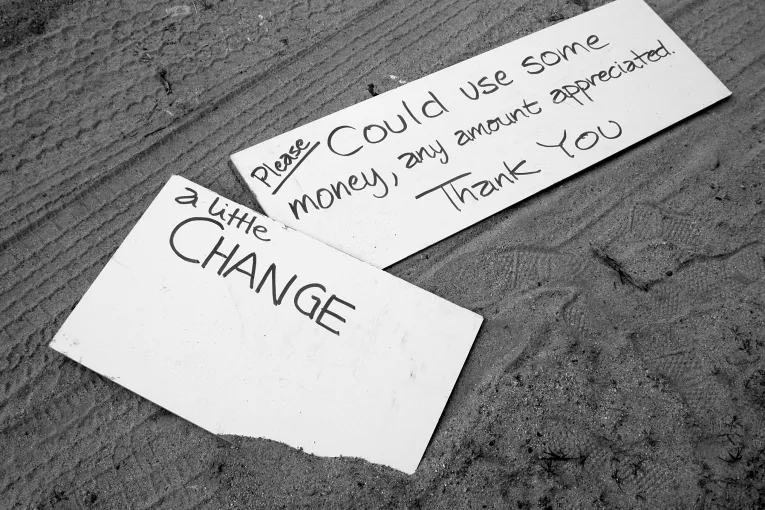
Prior to the court’s finding, the release notes that solicitation was punishable under Alabama law, with individuals experiencing homelessness prohibited from holding signage asking for help and financial assistance.
Micah West, a senior supervising attorney with the SPLC, explained that states cannot punish individuals for requesting assistance.
“The Supreme Court’s decision leaves in place a ruling that states cannot criminalize people simply for holding signs expressing that they are hungry and homeless,” West said.
The SPLC report explains that the case began after Jonathan Singleton, an unhoused resident in Montgomery, Alabama, was prevented from holding signs seeking charitable assistance, including one that read, “Homeless. Today, it is me. Tomorrow, it could be you.”
In 2020, the SPLC and the National Homelessness Law Center filed the lawsuit on Singleton’s behalf, arguing that the statutes violated constitutional free speech provisions.
“Everybody needs a little help from their neighbors sometimes—that’s not a crime,” said Will Knight, decriminalization director at the National Homelessness Law Center.
Before Alabama’s anti-solicitation laws were invalidated by the district court, those in violation were fined or sentenced to jail time.
The SPLC notes that in the two years leading up to the lawsuit, the city of Montgomery arrested or cited nearly 200 individuals for holding signs requesting aid from the public.
In 2020, Singleton and others reached a settlement with the city of Montgomery in which the city agreed to stop arresting or ticketing individuals for requesting assistance.
Pending charges in Montgomery Municipal Court were dismissed, and outstanding fines and court costs were waived, according to the release.
The lawsuit addressed enforcement in Montgomery, while the broader constitutional challenge to the state’s laws continued in federal court.
The SPLC explains that the agreement ensured that those previously cited under the city’s enforcement of anti-solicitation laws would not continue to face further penalties.
West signaled that the decision represents a step toward broader protections.
“Although we are pleased with the Court’s decision, we cannot move toward a truly inclusive nation if the right to freely express oneself—and in this case, advocate for basic needs—is a crime,” West said.
The release explains that because the Supreme Court declined to review the case, the Court did not rule on the constitutional issue directly.
Instead, the Eleventh Circuit’s earlier decision remains the controlling ruling on the legality of anti-solicitation statutes in Alabama.
The SPLC states that the Supreme Court’s refusal to hear Alabama’s appeal brings an end to a six-year legal battle over whether the First Amendment protects the right of those experiencing homelessness to publicly communicate their needs and call on the public for help.
Follow the Vanguard on Social Media – X, Instagram and Facebook. Subscribe the Vanguard News letters. To make a tax-deductible donation, please visit davisvanguard.org/donate or give directly through ActBlue. Your support will ensure that the vital work of the Vanguard continues.
