
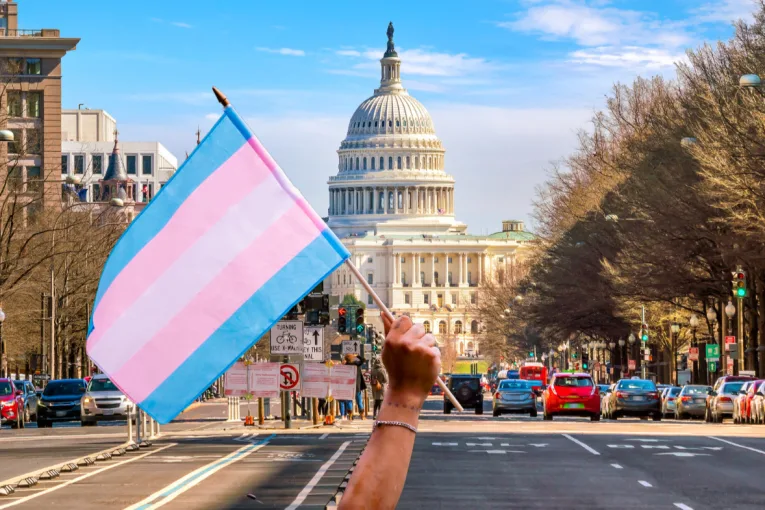
WASHINGTON, D.C. — A growing number of states, including Kansas, are advancing legislation that restricts the rights of transgender individuals in health care, public accommodations and school sports, prompting advocates to warn of sweeping national consequences, according to reporting from Vox.
Kansas lawmakers have passed measures targeting gender-affirming health care and limiting access to public spaces, including bathrooms. The legislation reflects a broader national trend in which states are increasingly regulating the lives of transgender people.
These laws often focus on restricting access to gender-affirming medical care for minors. According to the report, such care has been described by major medical organizations as essential and evidence-based, yet lawmakers in multiple states continue to pursue bans.
In addition to health care restrictions, the report highlights policies aimed at limiting access to public accommodations. According to the Vox article, bathroom bans require individuals to use facilities that correspond with their sex assigned at birth, raising concerns among advocates about safety and discrimination.
Critics argue these measures create what the article describes as “significant barriers” to everyday life for transgender individuals. Several states have also enacted laws preventing transgender students from participating in sports teams that align with their gender identity, which critics argue excludes students from important educational and social opportunities.
Supporters of these laws argue they are intended to protect fairness in sports and ensure privacy in public spaces. However, according to the report, opponents contend that such policies disproportionately target transgender individuals and contribute to stigma and marginalization.
Additional reporting and advocacy groups have raised questions about the scale of the issue these laws seek to address. According to a fact sheet from GLAAD (originally Gay and Lesbian Alliance Against Defamation), transgender athletes make up “a tiny fraction of all athletes,” with NCAA leadership reporting fewer than 10 known transgender college athletes among more than 500,000 competitors.
Similarly, other analyses, such as one conducted by the UCLA School of Law Williams Institute, estimate that transgender athletes represent less than 1% of college athletes, suggesting their participation is statistically rare.
According to the GLAAD report, existing athletic policies already require athletes to meet specific eligibility guidelines, and international standards state there should be “no presumed advantage” based solely on sex assigned at birth. The report also highlights broader issues within women’s sports unrelated to transgender participation, noting that women and girls continue to face “inequitable facilities, pay, and marketing,” as well as other systemic disparities.
These findings have led some advocates to question whether recent legislation is proportionate to the issue it seeks to address, while supporters maintain that such policies are necessary to ensure fairness and competitive balance.
The Vox article emphasizes that these legislative efforts are part of a rapidly expanding wave of state-level action. According to the report, hundreds of bills affecting LGBTQ+ rights have been introduced across the country in recent years, with many specifically focused on transgender communities.
Legal challenges to these laws are already underway. According to the report, civil rights organizations have filed lawsuits across the country arguing that such measures violate constitutional protections.
Many lawsuits, including United States v. Skrmetti, challenge restrictions on gender-affirming care for minors on the grounds that they violate the Equal Protection Clause. According to the Skrmetti case, the federal government argues that the law “denies adolescents medically necessary care based on their transgender status,” while supporters of the legislation maintain that states have the authority to regulate medical treatments for minors.
Advocates warn that beyond the immediate legal effects, such laws may have lasting impacts on the mental health, safety and well-being of transgender individuals, especially transgender youth.
Follow the Vanguard on Social Media – X, Instagram and Facebook. Subscribe the Vanguard News letters. To make a tax-deductible donation, please visit davisvanguard.org/donate or give directly through ActBlue. Your support will ensure that the vital work of the Vanguard continues.
