
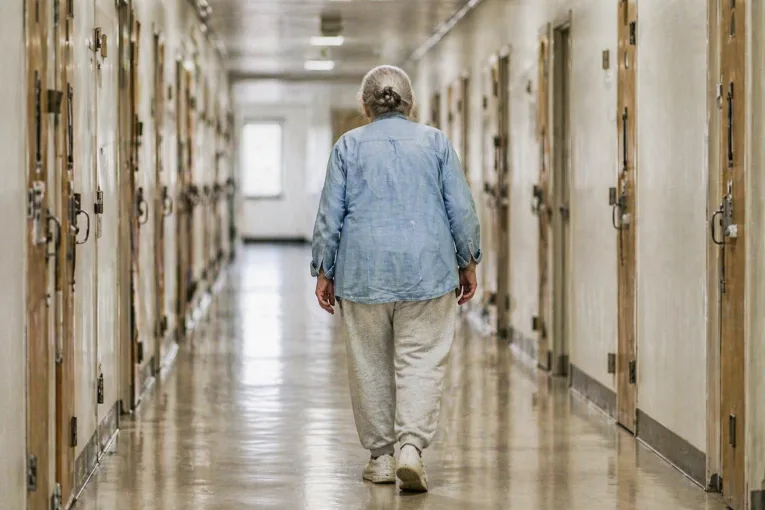
CALIFORNIA — Hundreds of elderly women remain in California prisons under inhumane and costly conditions because of what critics describe as inadequate consideration by commissioners with the Board of Parole Hearings.
According to a recent article published in the Sacramento Bee, despite laws passed to address the issue — including the 2014 elderly parole program, a California law specifically designed to facilitate the parole of older incarcerated people — elders behind bars continue to face denied medical care and are exposed to tragedies such as forced sterilization, staff sexual abuse and neglect. This creates a significant injustice for the approximately 740 people over 50 years old behind bars, some of whom cannot even remember their crime, much less commit another one.
According to the article, the systemic failures of elderly incarceration are remnants of “a bygone era of the state’s harsher sentencing laws,” and, “Data from the California Department of Corrections and Rehabilitation shows that re-arrest and re-conviction rates decline with age and are generally even lower for women.”
Older incarcerated people’s health issues make them especially vulnerable to harm in prison. According to the article, 88% of elderly incarcerated women reported experiencing medical abuse or neglect. They are not the only ones paying the price. “Californians pay close to $128,000 a year to incarcerate a younger person, and two to three times that amount for elderly individuals … Releasing elders would free up millions of dollars of funding for desperately needed social services.”
“No Time to Wait” is a new report co-authored by the California Coalition for Women Prisoners and UC Berkeley School of Law that documents the downsides of keeping elderly women incarcerated in California. According to the report, “Elders can be safely released … California could save $31 to $47 million per year by releasing everyone fifty years of age and older from its women’s prisons … Elders in women’s prisons face unique challenges that go unaddressed … Existing options for elderly parole largely exclude and deny women over fifty.”
Despite the large number of “legal, ethical, and financial reasons” to release many elderly incarcerated women in California, the real problem is the parole process and the lack of appropriate consideration by the Board of Parole Hearings, the Sacramento Bee reported. Although there are several ways to be released, the parole system remains one of the most prominent. Even with efforts to create easier pathways to parole, such as the elderly parole program, data show parole grant rates have remained consistently low.
According to the article, “Overly restrictive eligibility requirements exclude many women over 50 from even getting a hearing. The parole hearing process is a rigorous one and includes several rounds of psychological testing, risk assessments, and questioning by the Board of Parole Hearings.”
Although state law requires the parole board to take into account factors such as age, time incarcerated, and physical and cognitive decline, the article notes those requirements have not resulted in higher elderly parole rates. “Low grant rates suggest that Board of Parole Hearings commissioners are not adequately considering these criteria.”
To be clear, according to the article, the parole board can legally parole most of the elderly women applying for release but chooses not to. “The California legislature created a specific pathway for elder release and amended the program to increase eligibility twice in the last decade. The state’s decision-makers clearly understand that the problem of elder incarceration needs to be solved, but the Board of Parole Hearings is not effectively using the tools at its disposal.”
California stands at a crossroads: It can continue to mismanage a growing population of elderly incarcerated women, or it can honor the legislative pathways already in place. By amending elder release laws twice in 10 years, the Legislature has acknowledged that prisons cannot provide the specialized memory and medical care these individuals require. However, legislative intent alone is not enough. The parole board holds the key to solving this crisis and must now demonstrate the political will to use the tools it has been given to ensure prisons no longer serve as inadequate final homes for elderly women.
Follow the Vanguard on Social Media – X, Instagram and Facebook. Subscribe the Vanguard News letters. To make a tax-deductible donation, please visit davisvanguard.org/donate or give directly through ActBlue. Your support will ensure that the vital work of the Vanguard continues.
