
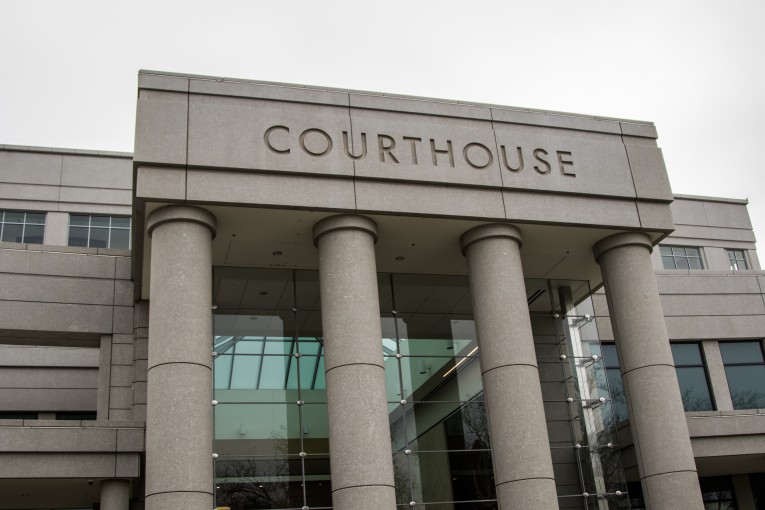
WOODLAND, Calif. — As California courts continue grappling with the implications of the state Supreme Court’s landmark ruling in In re Kowalczyk, a Yolo County Superior Court judge on June 10 reduced bail to $100 for an unhoused woman facing felony shoplifting charges and a probation violation.
The accused appeared in custody, facing the felony charges of shoplifting and violating her probation. The court appointed Deputy Public Defender Katie DeAnda, who argued that, because of the nonviolent nature of the offenses, the accused should be released on her own recognizance.
Deputy District Attorney Robin Johnson objected to the accused’s release. She argued that the court had repeatedly given the accused opportunities for nonrestrictive release.
DDA Johnson said in her objection, “[The accused] was given her opportunity. She was given the least restrictive means. She failed to appear in court. The Court did what it tried. It did not work.”
DPD DeAnda argued that the charges did not reflect a threat to public safety. She cited multiple circumstances that prevented the accused from appearing in court during her numerous failures to appear: she is unhoused and has no reliable way to get to court, she is unable to consistently charge her global positioning system (GPS) ankle monitor as required by her probation conditions, and she has no reliable means of income to improve her situation.
Judge Danette C. Brown said that “[t]he court is sympathetic to [the accused’s] situation… Ultimately the responsibility is really on her. Ultimately she fails to appear.”
Judge Brown ruled that, in order to ensure that the accused appears at future court dates, she would remain in custody.
The court then turned to the issue of the accused’s bail. DPD DeAnda argued that no amount of bail would be acceptable for her client.
She emphasized that her client was unhoused and unemployed.
DPD DeAnda concluded by arguing that In re Kowalczyk prescribed that the court assign no bail to the accused, based on her circumstances.
On April 30, the California Supreme Court ruled in In re Kowalczyk that bail cannot be set as a means of keeping a person accused of a crime in custody. Bail must be reasonably payable, even if it is not “affordable” or “convenient.”
DDA Johnson argued that Kowalczyk did not mean the court could assign “no bail” simply because an accused person has no money to pay. DPD DeAnda quickly replied, “That is the exact opposite of what Kowalczyk said.”
Judge Brown, seeking to reach a compromise, asked the court, “What does reasonably attainable mean?” when referring to the fallout from the Kowalczyk decision.
Judge Brown determined that, based on the accused having a public defender assigned and being unhoused, as documented in the probation report, she was in a financial situation that warranted bail of $100 across both pending cases.
The accused has a bail review hearing scheduled for Tuesday, June 16. She remains in custody until then.
Trial courts throughout the state are continuing to implement the precedent established earlier this year in Kowalczyk.
As Judge Brown stated quite literally, courts are still interpreting what reasonably attainable bail actually means.
Follow the Vanguard on Social Media – X, Instagram and Facebook. Subscribe the Vanguard News letters. To make a tax-deductible donation, please visit davisvanguard.org/donate or give directly through ActBlue. Your support will ensure that the vital work of the Vanguard continues.
