
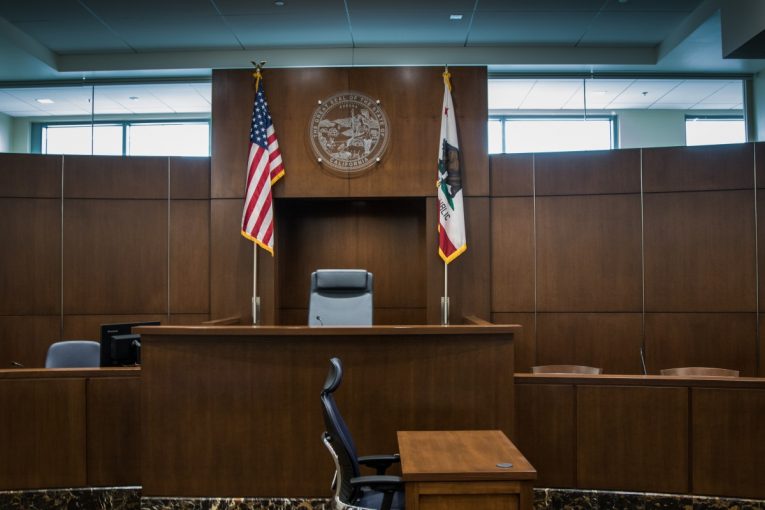
WOODLAND, Calif. — During a probation violation arraignment Thursday in Yolo County Superior Court, Judge Danette C. Brown ruled that the accused’s drug addiction did not justify repeated failures to appear in court, ordering the individual to remain in custody despite the defense’s request for release and treatment.
The accused appeared in custody, facing a misdemeanor charge of possession of a controlled substance, along with two separate counts for violation of probation and violation of post-release community supervision.
Deputy Public Defender David Muller requested that the court release the accused on his own recognizance with a promise to return to face the charges. DPD Muller suggested that the accused could be safely released with an electronic ankle monitor and, hopefully, placed into an outpatient or residential drug treatment program down the line.
Deputy District Attorney Robin Johnson strongly opposed noncustodial release for the accused and asked the court to deny release on the supervision holds and sentence the individual to 180 days in jail.
The prosecution pointed directly to the five prior failures to appear in court, noting the most recent occurrence dated back to October 2025. DDA Johnson argued the accused demonstrated a persistent track record of ignoring court orders and was a poor candidate to return to court.
Addressing the five previous failures, Muller argued that missing court dates is an incredibly common structural symptom of active substance use disorder.
DDA Johnson argued that a “general assumption should not be made” about the past failures “because of some drug addiction.”
Muller emphasized that if the state was truly confident the missed court dates were an intentional flight from justice, prosecutors would have filed a formal felony failure-to-appear charge. Because the state never filed those charges, the defense argued the prosecution could not claim the absences were deliberate.
Judge Brown stated that if the case involved only the minor misdemeanor drug possession charge, the court would have granted an own-recognizance release. She told the defense that while she recognized how much of a struggle active drug addiction can be for an individual, the court’s previous use of the least restrictive means is exactly what led to the five failures to appear.
Judge Brown concluded that the court had no real assurance the accused would return to face the charges if released or that the accused would follow court orders at all.
Utilizing what the court termed a “holistic view,” Judge Brown ruled that the accused would remain in local custody. She scheduled a trial readiness conference for July 22 and set the final jury trial for July 27.
DPD Muller requested that bail be set at $1,000 for the misdemeanor charge, to which Judge Brown agreed.
A $25,000 cash bail hold, however, was set on each of the remaining two supervision violations. The additional $50,000 ensures the accused remains in custody.
The court criminalizes addiction through a deceptive dual-track bail framework. Setting a low $1,000 bail on the minor drug charge is mere legal theater, providing a false appearance of fairness.
By adding a $50,000 hold for technical probation violations, the system bypasses pretrial protections to maintain raw administrative control.
This framework treats a health crisis as a compliance failure, substituting clinical rehabilitation with institutional isolation.
Follow the Vanguard on Social Media – X, Instagram and Facebook. Subscribe the Vanguard News letters. To make a tax-deductible donation, please visit davisvanguard.org/donate or give directly through ActBlue. Your support will ensure that the vital work of the Vanguard continues.
