
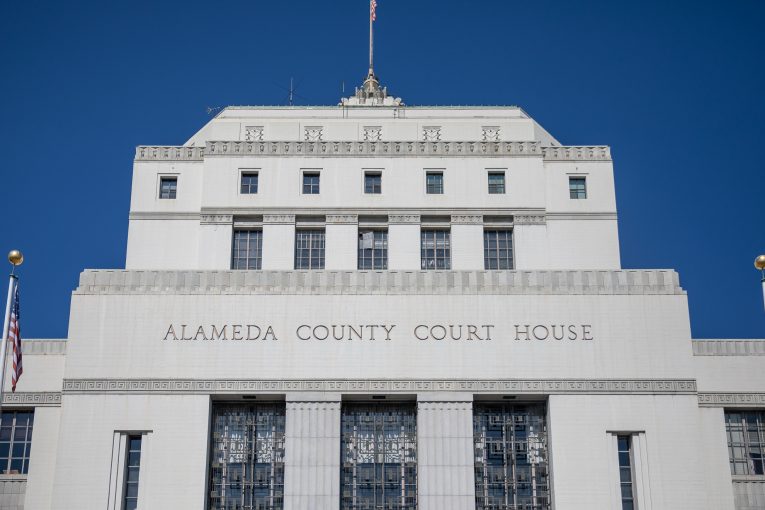
OAKLAND, Calif. — A man who has spent 15 years in prison maintained his innocence during a hearing Thursday as defense counsel urged the court to vacate his 2011 homicide conviction, arguing that hundreds of pages of investigative materials were withheld before trial in violation of the Brady disclosure rule.
The defense argued that the Alameda County District Attorney’s Office failed to disclose law enforcement records favorable to the defense, contending the nondisclosure undermined the fairness of the original proceedings.
The Brady disclosure rule stems from the 1963 U.S. Supreme Court decision in Brady v. Maryland, which requires prosecutors to disclose material and exculpatory evidence favorable to the defense.
The accused was convicted in connection with a homicide that occurred on April 15, 2011. The case involved a confrontation between two individuals: one identified by the moniker “C” and the other individual involved in the dispute. The confrontation began after person “C” allegedly accused the other individual of stealing an iPod. Shortly afterward, person “C” opened fire, killing the individual.
The accused was later arrested after a witness alleged that he was the individual identified as person “C.” The witness testified that he was present with person “C,” along with four others, during the confrontation and the shooting. As the only eyewitness to testify at trial, the witness ultimately identified the accused as the shooter.
In 2023, that same witness recanted his original testimony, stating that the accused was not, in fact, person “C.”
During the July 30 hearing, Deputy Defense Attorney Todd Alexander Pickles cross-examined the lead Oakland Police Department officer from the original investigation. The questioning centered on investigative materials concerning person “C” that the defense argued had not been disclosed before trial.
Because the accused’s fingerprints were not found in the vehicle and no firearm was ever recovered, Pickles asked the officer, “Is it in your practice to try and obtain the firearm in relation to the Taylor homicide?” The officer replied, “Yes.”
Referring to the witness’s original identification of the accused as the shooter, Pickles asked, “Once [the accused] was identified, did you continue to investigate person ‘C’ on this report?”
The officer replied no, adding, “The suspect was identified, there was no need to investigate person ‘C’ [as he] was already identified.”
According to the Association for Psychological Science, eyewitness testimony can contribute to wrongful convictions because memory is susceptible to outside influences and can be altered over time.
Later in the hearing, Pickles introduced the original investigation report that had been disclosed to the defense, along with what he described as the complete investigative report discovered 11 years later.
According to the defense, the complete report contained investigative material examining person “C” and additional pages of notes documenting potential leads. The specific information contained in the Oakland Police Department reports was excluded from the court record.
Despite the incomplete disclosure, the officer testified that he believed he had submitted the entire investigative report when the accused was first indicted.
The defense argued that the prosecution’s failure to disclose all investigative materials constituted a Brady violation, regardless of whether the omission was intentional or accidental.
To comment please go to one of these social media platforms:
Facebook: https://www.facebook.com/DavisVanguard
LinkedIn: https://www.linkedin.com/company/peoples-vanguard-of-davis-inc/
Instagram: https://www.instagram.com/davisvanguard/
X: https://x.com/davisvanguard
Bluesky: https://bsky.app/profile/vanguardnewsgroup.bsky.social
Subscribe to the Vanguard News letters. To make a tax-deductible donation, please visit davisvanguard.org/donate or give directly through ActBlue. Your support will ensure that the vital work of the Vanguard continues.
