
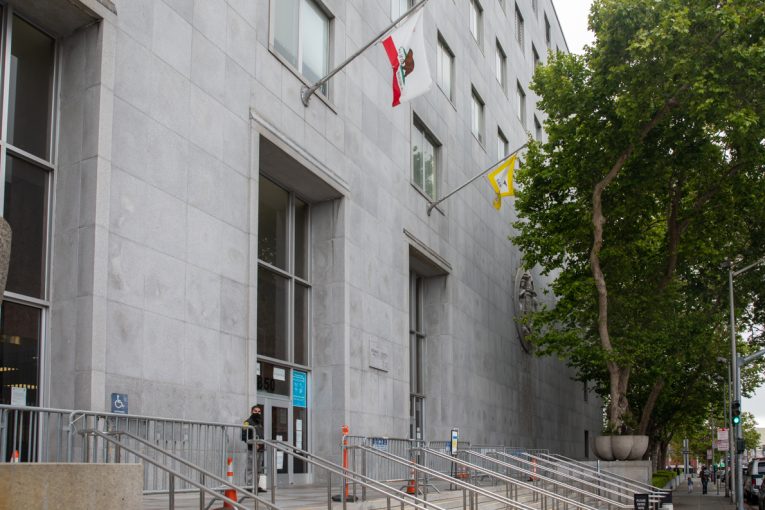
SAN FRANCISCO — Despite defense arguments that revisiting a carefully negotiated plea agreement would undermine judicial integrity and unfairly prejudice the accused, Judge Matthew Kahn accepted the negotiated disposition during a July 6 sentencing hearing in Department 11 of San Francisco Superior Court. Both the prosecution and defense told the court the agreement followed extensive deliberations focused on the accused’s rehabilitation after serving an unusually long period in custody for a DUI offense.
Deputy District Attorney Sarah Quinones urged the court to sentence the accused according to the negotiated arrangement, explaining that the agreement was the result of “extensive, well thought-out deliberation” between the prosecution and defense. She stated that the accused had already served 148 days in county jail, which she described as “above average” for similar DUI offenses, and argued the sentence was intended to reduce future offending while encouraging rehabilitation and accountability.
Quinones also noted that the accused had complied with strict release conditions before sentencing, including wearing a SCRAM monitoring device and participating in Alcoholics Anonymous and Narcotics Anonymous programs.
Deputy Public Defender Silas Geneson argued that “judicial integrity” was “an issue here,” explaining that “in a case like this,” there was “a lot of negotiation involved.” He argued that it would be “prejudiced… if [the] court were to undo this deal.”
Geneson explained that both sides had spent considerable time reaching the plea agreement and that changing its terms after it had been negotiated would be unfair to the accused. He emphasized that accepting the negotiated plea agreement would be the “fair” thing to do.
Judge Kahn disagreed that “judicial integrity” was at issue.
Geneson further argued that there were “no new facts” before the court that justified revisiting the negotiated agreement. Judge Kahn, however, did not agree with that argument.
Judge Kahn then proceeded to sentence the accused in accordance with the negotiated plea agreement.
The court sentenced the accused on the felony count to one year in county jail, with credit for the 148 days already served, followed by two years of formal probation. As conditions of probation, the accused must complete and attend 20 Alcoholics Anonymous classes, comply with all probation terms and submit to warrantless searches as required under probation.
On the misdemeanor count, Judge Kahn imposed a six-month county jail sentence with no probation. Geneson also requested that the court waive fines and fees, explaining that the accused remained incarcerated, with “no assets or property” and “no immediate source of income.” The court granted the request in part, waiving some fines and fees while leaving additional fines in place after considering the accused’s financial circumstances.
However, the accused still must pay several fines and fees, including a $300 probation-related fee, in addition to completing the required 20 Alcoholics Anonymous classes as a condition of probation.
Judge Kahn concluded the hearing by reviewing the conditions of probation on the record before formally imposing the negotiated sentence. Although the defense argued that reopening the negotiated agreement would raise concerns about judicial integrity and fairness, the court rejected that argument before imposing the sentence agreed to by both parties.
To comment please go to one of these social media platforms:
Facebook: https://www.facebook.com/DavisVanguard
LinkedIn: https://www.linkedin.com/company/peoples-vanguard-of-davis-inc/
Instagram: https://www.instagram.com/davisvanguard/
X: https://x.com/davisvanguard
Bluesky: https://bsky.app/profile/vanguardnewsgroup.bsky.social
Subscribe to the Vanguard News letters. To make a tax-deductible donation, please visit davisvanguard.org/donate or give directly through ActBlue. Your support will ensure that the vital work of the Vanguard continues.
