
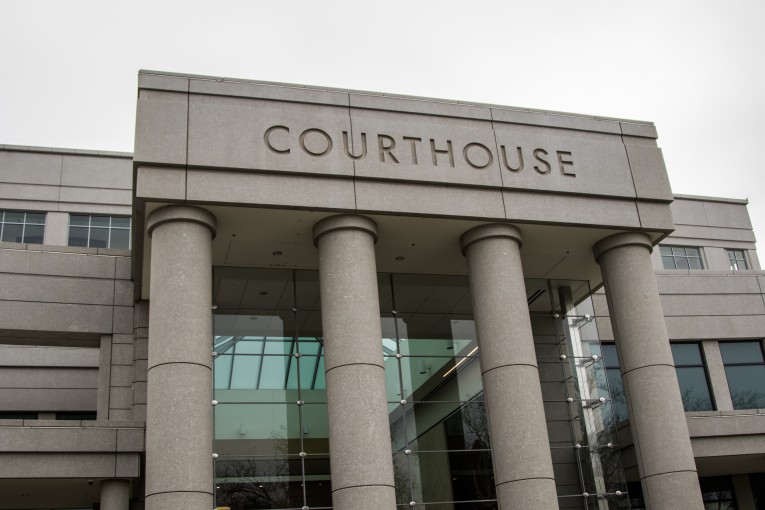
WOODLAND, Calif. — A Yolo County District Attorney investigator is facing allegations that key evidence was destroyed after defense counsel disclosed in court that text messages between the investigator and two central witnesses appear to have been deleted, prompting a judge to delay an ongoing preliminary hearing while the matter is investigated.
The dispute arose during the preliminary hearing in the felony fraud case against Jose Garcia Jr., where Deputy District Attorneys Madeline Warren and Rachel Moyo are prosecuting the case. Garcia is represented by Sacramento defense attorney Thomas A. Johnson.
The missing communications involve text messages between District Attorney Investigator Brett Hancock and Maricela “Mini” Garcia and Lucy Garcia, sisters of Jose Garcia Jr. and daughters of the complaining witness, Gloria Garcia.
Johnson previously filed a motion to compel discovery seeking all text messages between Hancock and Mini and Lucy Garcia, along with access to Hancock’s phone for an independent forensic examination.
The defense argued that the prosecution’s production of text messages appeared incomplete and requested an opportunity to determine whether additional communications had been deleted.
According to Johnson’s motion, the District Attorney’s Office produced text messages reflecting a multi-year relationship between Hancock and Mini Garcia but did not provide documentation identifying who extracted the messages, how they were retrieved or when the extraction occurred.
The defense also argued that there appeared to be missing communications.
During Tuesday’s hearing, Johnson told the court he was “astonished” to learn from prosecutors that the missing text messages appear to have been deleted. He argued that the loss of the communications was particularly troubling because they constituted evidence favorable to the defense.
Johnson further argued that Hancock had been allowed to extract data from his own phone rather than having another investigator conduct the forensic extraction. He requested that the defense be given access to Hancock’s phone for its own limited forensic examination.
According to the prosecution, the District Attorney’s Office does not yet know who deleted the text messages or when the deletion occurred.
Johnson told the court he was “astounded” by the disappearance of the evidence and argued the missing communications amounted to potentially exculpatory evidence, although he stopped short of characterizing them as Brady material.
Rachel Moyo told the court the prosecution notified Johnson after discovering the missing evidence and that both parties agreed the preliminary hearing should be continued while the issue is investigated further.
The defense’s response to the prosecution’s opposition asks the court to authorize a narrowly tailored forensic examination of Hancock’s phone to determine “all text messages to and from Mini/Lucy Garcia” and “any evidence of deleting between December 1, 2023, to today’s date.”
Johnson’s filing also criticizes the manner in which the evidence was handled, arguing that Hancock should not have been responsible for extracting data from his own phone.
“Instead of asking a different detective to check Detective Hancock’s messages, the District Attorney allowed Detective Hancock to pull out the text messages from his own phone AND then testify that he never deleted any messages,” the filing states. “That should never have happened because he has a reason and motive to alter the extraction of the text messages.”
The defense maintains it is not seeking unrestricted access to Hancock’s phone but only an independent forensic examination limited to communications with Mini and Lucy Garcia and evidence of deleted messages.
“We are simply seeking to do a forensic evaluation of Detective Hancock’s phone for deleted text messages. We are not seeking complete access to the phone,” Johnson wrote.
The filing further argues that because the prosecution already conducted a forensic examination of Hancock’s device, the defense should receive equal access to perform its own testing.
“If Detective Hancock was untruthful, the defense needs to know that as he is the centerpiece of this case,” Johnson wrote in the filing.
The motion to compel was originally filed in April. The prosecution filed its opposition in late May, and Johnson filed his response on June 30.
Judge Paul Richardson granted the parties’ request to continue the matter and scheduled a hearing for July 17, when the court expects to receive additional information regarding the disappearance of the text messages.
The preliminary hearing is scheduled to resume July 31. At that time, the court is also expected to hear a Pitchess motion filed by the defense seeking discovery related to Hancock.
Follow the Vanguard on Social Media – X, Instagram and Facebook. Subscribe the Vanguard News letters. To make a tax-deductible donation, please visit davisvanguard.org/donate or give directly through ActBlue. Your support will ensure that the vital work of the Vanguard continues.
