
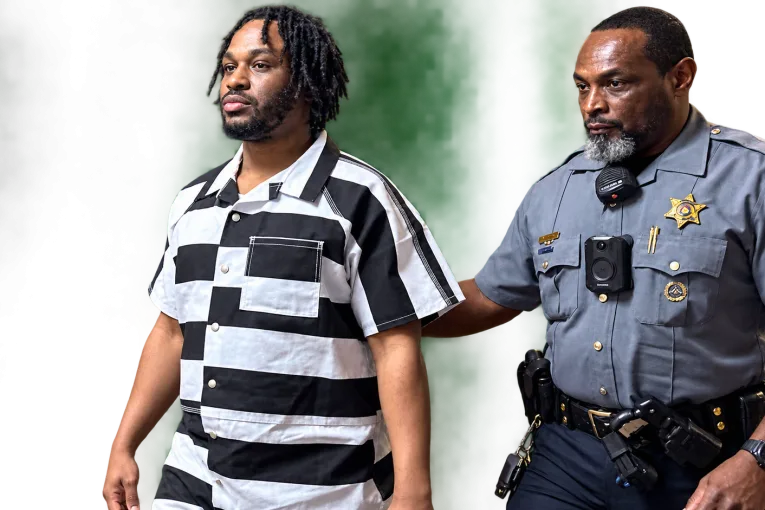
ATMORE, Ala. — Alabama executed 41-year-old Jeremy Williams by lethal injection Aug. 13 after he pleaded guilty to four counts of capital murder, sought the death penalty and declined to pursue legal avenues that could have challenged his conviction and sentence, according to the Equal Justice Initiative.
In 2022, Williams was charged with four counts of capital murder following his confession to the killing of 5-year-old Kamarie Holland. Williams pleaded guilty to all four counts and asked for the death penalty on March 13, 2024.
Despite Williams’ decision to plead guilty and accept responsibility, Alabama law required the jury to attend a trial where evidence was presented — often including “distressing and wholly unnecessary photos and videos,” as the Equal Justice Initiative reported.
In an attempt to spare jurors a drawn-out trial, Williams told his lawyer not to object to anything and to leave constitutional errors unchallenged. Williams was convicted April 12, 2024.
Williams chose not to have his jury decide his sentence. He also did not present any mitigating evidence, “typically presented in a capital sentencing hearing to provide support for a sentence of life imprisonment without parole instead of death,” which ultimately led to his being sentenced to death.
Alabama law requires an automatic appeal anytime a death sentence is issued. Williams was allowed to represent himself on appeal, yet did not file a brief in the Court of Criminal Appeals, finalizing his death sentence.
Despite no evidence being found about Williams’ background or mental health, Alabama still found it appropriate on June 16, 2026, to execute him.
On June 18, Gov. Kay Ivey ordered prison staff to put Williams to death on Aug. 13, 2026.
The Equal Justice Initiative described concerns surrounding how the death penalty can intersect with admissions of guilt and mental illness.
“A competent person could admit guilt and accept accountability without the death penalty in ways that could be legitimate,” the Equal Justice Initiative reported. “But the death penalty introduces the specter that suicidal ideation, mental illness, and insufficient evidence will contribute to a wrongful execution.”
Studies show a direct correlation between “volunteering” — the process of willingly trying to speed up an execution — and severe mental health issues.
In the Equal Justice Initiative article, Professor John Blume of Cornell Law School found that of 106 “volunteers,” 93, or 88%, had documented mental illness or severe substance abuse disorders.
“Even more striking,” the study found, “is the prevalence of the most severe mental illness” — 14 cases related to schizophrenia and several more reported delusions that may reflect schizophrenia.
Depression and bipolar disorder accounted for at least 23 other cases, and post-traumatic stress disorder was present in another 10. At least 30 of those who “volunteered” for execution had previously attempted suicide.
In 2024, the Death Penalty Information Center reported, “[S]cores of people have been executed on their own request despite evidence of severe mental illness and other serious constitutional concerns about their convictions and death sentences.”
The Supreme Court “has permitted the State’s mechanism of execution to be triggered by an entirely arbitrary factor: the defendant’s decision to acquiesce in his own death,” Supreme Court Justice Thurgood Marshall wrote in 1979.
This process, Justice Marshall wrote, is “nothing less than state-administered suicide.”
Justice Marshall insisted that “[s]ociety’s independent stake in enforcement of the Eighth Amendment’s prohibition against cruel and unusual punishment cannot be overridden by a defendant’s purported waiver.”
The Death Penalty Information Center has found that many “volunteers” have been put to death with evidence later found that could have prevented their execution. This evidence includes intellectual disability, severe mental illness, compelling mitigation evidence not presented at sentencing and even innocence.
To comment please go to one of these social media platforms:
Facebook: https://www.facebook.com/DavisVanguard
LinkedIn: https://www.linkedin.com/company/peoples-vanguard-of-davis-inc/
Instagram: https://www.instagram.com/davisvanguard/
X: https://x.com/davisvanguard
Bluesky: https://bsky.app/profile/vanguardnewsgroup.bsky.social
Subscribe to the Vanguard News letters. To make a tax-deductible donation, please visit davisvanguard.org/donate or give directly through ActBlue. Your support will ensure that the vital work of the Vanguard continues.
