
NEW YORK — Members of the Congressional Black Caucus joined leaders from several major U.S. cities Thursday to argue that community-based investments—not punitive federal enforcement strategies—are driving historic declines in crime, offering a competing vision of public safety during a virtual roundtable hosted by the Vera Institute of Justice.
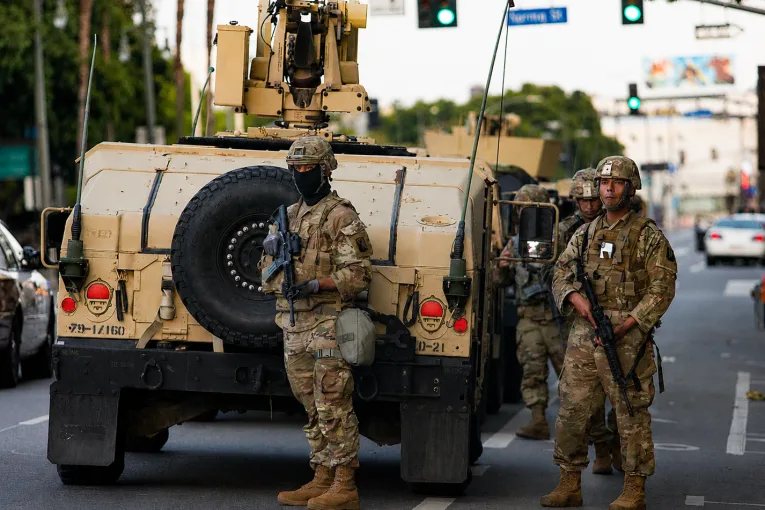
The July 30 discussion focused on what participants described as evidence-based approaches to reducing violence, while criticizing the Trump administration’s emphasis on military deployments and immigration enforcement as ineffective responses to public safety challenges.
According to its official website, the Congressional Black Caucus (CBC) is the official organization of Black members of the U.S. Congress.
Since its founding in 1971, the organization has sought to use the constitutional powers, statutory authority and financial resources of the federal government to ensure Black Americans, along with other historically marginalized communities, have the opportunity to achieve the “American Dream.”
The discussion was moderated by Vera Institute of Justice President Insha Rahman.
Founded in 1961, the Vera Institute of Justice is a nonprofit research and policy organization that advocates for ending mass incarceration, reducing racial disparities in the criminal legal system and reforming U.S. immigration policy.
The panel included U.S. Rep. Summer Lee, D-Pa., an attorney, organizer and representative of Pennsylvania’s 12th Congressional District since 2022.
Also participating was U.S. Rep. Shontel Brown, D-Ohio, who has represented Ohio’s 11th Congressional District since being sworn into office on Nov. 4, 2021.
Baltimore Mayor Brandon M. Scott, the youngest person to hold that office in more than a century, also participated in the conversation.
Joining him were Newark Mayor Ras Baraka—the city’s 40th mayor, as well as an author and educator—and Durham Mayor Leonardo “Leo” Williams, a former teacher and school administrator.
Brown argued that local officials have achieved measurable public safety gains by focusing on investments in communities rather than punitive enforcement.
“While Trump focuses on ‘tough on crime’ fearmongering and counterproductive gimmicks like deploying the National Guard, Black mayors across the country are doing the real work to make cities safer,” Brown said.
She added, “I’m proud to stand with my colleagues in the Congressional Black Caucus to set the record straight and advocate for real public safety solutions.”
Scott said Baltimore’s recent reductions in violence reflect sustained investments in neighborhoods and targeted violence prevention.
“In Baltimore, we know how to solve the issue of public safety,” Scott said.
“It’s about investing in public health, it’s about getting rid of vacant houses and providing opportunities,” he continued. “It’s about being focused on the very small percent who are responsible for the overwhelming amount of violence in our communities—going after guns and getting them off our streets.”
Scott said Baltimore is experiencing a historic reduction in violence and homicides, crediting residents for those gains.
“You don’t do that without the support of the community,” he said.
Rahman closed the discussion by arguing that local strategies centered on community investment are producing measurable public safety improvements despite reductions in federal support.
“Crime rates continue to fall across the country to historic levels thanks to bold, community-first approaches to public safety like the ones discussed today,” Rahman said.
“While the Trump administration continues its assault on immigrants and cities, while simultaneously gutting programs that we know increase safety, local and federal leaders—specifically Black leaders like Rep. Summer Lee, Rep. Shontel Brown, and Mayors Scott, Baraka and Williams—are charting a path forward for all to follow.”
Rahman concluded that the CBC members and local officials highlighted during the discussion offer what she described as a model for reducing crime through prevention, community investment and neighborhood partnerships rather than punitive enforcement.
To comment please go to one of these social media platforms:
Facebook: https://www.facebook.com/DavisVanguard
LinkedIn: https://www.linkedin.com/company/peoples-vanguard-of-davis-inc/
Instagram: https://www.instagram.com/davisvanguard/
X: https://x.com/davisvanguard
Bluesky: https://bsky.app/profile/vanguardnewsgroup.bsky.social
Subscribe to the Vanguard News letters. To make a tax-deductible donation, please visit davisvanguard.org/donate or give directly through ActBlue. Your support will ensure that the vital work of the Vanguard continues.
