
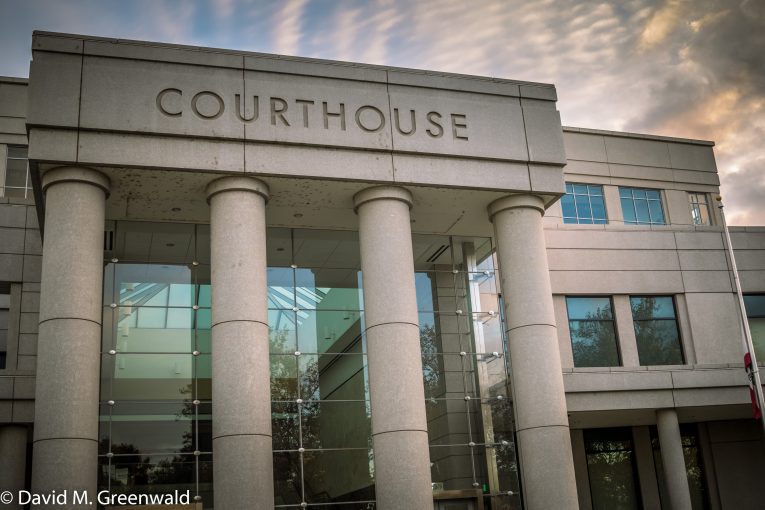
WOODLAND, Calif. — A Yolo County Superior Court judge on Thursday ordered an accused man to attend Narcotics Anonymous twice a week as a condition of his pretrial release without stating that a secular alternative would satisfy the requirement, raising questions about whether the condition comports with federal court precedent governing religiously based recovery programs.
The accused faces three felony counts of child endangerment and misdemeanor charges of cocaine possession and possession of drug paraphernalia.
Deputy District Attorney Robin Johnson opposed release, alleging cocaine was used and left accessible inside a home where children were present. Johnson also cited the accused’s outstanding warrants in two other counties and argued the accused did not recognize his alleged cocaine use as a problem.
Deputy Public Defender Roberto Villa urged the court to grant supervised release, emphasizing the accused’s stable housing and employment. Villa proposed conditions designed to protect the children while allowing the accused to remain out of custody as the case moves forward.
Judge Danette C. Brown granted supervised own-recognizance release, allowing the accused to leave custody without posting bail while imposing court supervision. Brown also ordered drug testing, search conditions and protective orders prohibiting contact with the children unless Child Protective Services authorizes visitation.
Brown described the restrictions as “very, very onerous” and warned the accused that violating any of the conditions could result in his return to custody.
“You shall attend Narcotics Anonymous twice a week,” Brown ordered, adding that the accused must provide proof of attendance at his next court appearance.
Narcotics Anonymous is a peer-led, 12-step recovery fellowship for people seeking to stop using drugs. Although the organization describes its program as spiritual rather than religious, its Twelve Steps refer to a “power greater than ourselves” and God, while Step 11 calls for prayer and meditation.
Neither Brown nor either attorney mentioned a secular recovery program during the hearing. The accused did not object to attending NA or indicate that the requirement conflicted with his religious beliefs or lack of religious belief.
The issue raised by the hearing was not whether the court could require substance use treatment. Given the allegations involving cocaine and children, the court had an evident public safety basis for imposing drug testing, treatment or other recovery-related conditions. Rather, the legal question is whether a court may specifically require participation in NA without making clear that a nonreligious alternative is available.
That question has been addressed by the U.S. Court of Appeals for the Ninth Circuit. In Inouye v. Kemna, the court held that government officials may not coerce participation in a substance use treatment program containing substantial religious components. In Hazel v. Crofoot, the Ninth Circuit later concluded that a California parolee’s constitutional rights were violated after he requested a secular treatment program but was nevertheless required to participate in a 12-step program.
The hearing record does not establish that Brown’s order violated either decision. Unlike the plaintiffs in those cases, the accused did not raise a religious objection, and nothing in the record indicates whether probation would permit a secular recovery program in lieu of NA.
Even so, Brown’s order stated only that the accused “shall attend” Narcotics Anonymous, and proof of attendance was expressly tied to his continued pretrial release. That circumstance raises broader constitutional concerns about courts conditioning a person’s liberty on participation in a specific recovery program without expressly advising that a secular alternative may satisfy the same rehabilitative objective.
Brown scheduled a preliminary hearing for Aug. 27 in Department 8. Until then, the accused must comply with the protective orders, drug restrictions, testing requirements and the twice-weekly Narcotics Anonymous attendance requirement.
To comment please go to one of these social media platforms:
Facebook: https://www.facebook.com/DavisVanguard
LinkedIn: https://www.linkedin.com/company/peoples-vanguard-of-davis-inc/
Instagram: https://www.instagram.com/davisvanguard/
X: https://x.com/davisvanguard
Bluesky: https://bsky.app/profile/vanguardnewsgroup.bsky.social
Subscribe to the Vanguard News letters. To make a tax-deductible donation, please visit davisvanguard.org/donate or give directly through ActBlue. Your support will ensure that the vital work of the Vanguard continues.
