
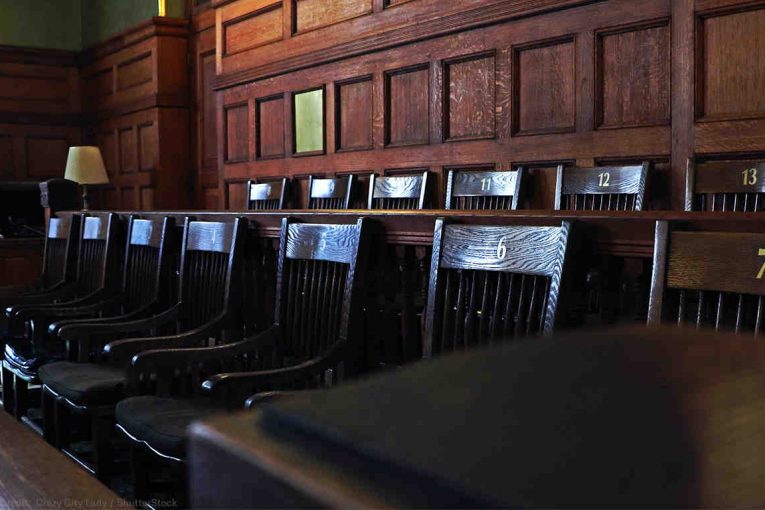
WASHINGTON — Fair and Just Prosecution filed an amicus brief with the U.S. Supreme Court urging the justices to recognize a constitutional right to 12-person juries in serious criminal cases that can result in imprisonment, arguing that larger juries are critical to fairness, reliability and public confidence in the criminal justice system, according to a press release issued by the organization Friday.
According to FJP, the brief was filed in Kian v. Florida and argues that the Sixth and 14th Amendments require people facing serious criminal charges to have their cases decided by a 12-person jury. The organization stated that the issue concerns the constitutional right to a jury trial and the role that juries play in determining whether a person should be convicted of a crime.
FJP stated in the press release that 12-person juries have historically been considered an important part of the constitutional right to a jury trial. According to the organization, English common law and early decisions by the U.S. Supreme Court recognized 12-person juries as the standard for serious criminal cases.
According to FJP, that understanding changed in 1970 when the Supreme Court ruled in Williams v. Florida that states could use six-person juries in certain felony trials. The organization argues in its brief that the reasoning behind the Williams decision should be reconsidered in light of the Supreme Court’s later decision in Ramos v. Louisiana.
FJP stated that Ramos v. Louisiana reaffirmed the constitutional requirement that criminal juries reach unanimous verdicts under the Sixth Amendment. According to the organization, the more recent decision provides a basis for reconsidering whether the Constitution also requires 12-person juries in serious criminal cases.
The organization argued that the size of a jury can affect the reliability and fairness of criminal proceedings. According to FJP, decades of research have found that 12-person juries deliberate more thoroughly, remember evidence more accurately and consider a broader range of viewpoints than six-person juries.
According to FJP’s press release, research also indicates that 12-person juries are more likely to reflect the diversity of the communities from which they are selected. The organization argued that having a broader cross-section of community members participate in criminal trials can contribute to more reliable verdicts.
FJP stated that these differences are particularly important in cases where a person’s freedom is at stake. According to the organization, larger juries can strengthen the criminal justice system by encouraging more extensive deliberation and allowing jurors with different perspectives and experiences to participate in decisions about a defendant’s guilt or innocence.
According to FJP, prosecutors and law enforcement agencies also have an interest in maintaining public confidence in the criminal justice system. The organization stated that people are more likely to trust criminal verdicts when they believe the process used to reach those verdicts was fair, representative and reliable.
FJP argued in its brief that a 12-person jury reflects what the public has historically understood a jury trial to involve. According to the organization, having 12 members of a community come together to evaluate evidence and determine a case provides a broader representation of the public in serious criminal proceedings.
The organization stated that public trust in the criminal justice system depends not only on whether authorities reach what they consider to be the correct outcome, but also on whether the public believes the process leading to that outcome was fair. According to FJP, the size and composition of a jury, therefore, can affect how the public views the legitimacy of criminal verdicts.
“Justice is not only about getting the right result. It’s about ensuring people know the process was fair,” said Fair and Just Prosecution Executive Director Aramis Donell, according to the press release.
Donell added, according to FJP, “When someone’s liberty is on the line, every voice in the jury room matters.” He argued that a 12-person jury can help ensure that decisions are thoughtful, representative of the community and worthy of public trust.
According to the press release, FJP’s position in Kian v. Florida is based on the organization’s argument that the constitutional right to a jury trial should include 12-person juries for serious criminal offenses that carry the possibility of imprisonment.
FJP stated that its amicus brief asks the Supreme Court to reconsider the current legal framework governing jury size. According to the organization, the court’s decisions in Williams v. Florida and Ramos v. Louisiana provide important context for determining the constitutional requirements for criminal juries.
The organization also emphasized that its position is connected to broader concerns about fairness and accountability within the criminal justice system. According to FJP, ensuring that juries are sufficiently large and representative can help strengthen the reliability of criminal verdicts and public confidence in the courts.
Fair and Just Prosecution describes itself as an organization supporting a community of locally elected prosecutors working toward a criminal justice system focused on public safety, fairness, equity, fiscal responsibility and humanity, according to the press release. The organization stated that it promotes prosecutorial accountability through principles including independence, discretion and transparency.
According to FJP, the Supreme Court’s decision in Kian v. Florida could determine whether people facing serious criminal charges have a constitutional right to have their cases heard by 12-person juries. The organization’s brief urges the court to restore what FJP describes as the traditional constitutional understanding of the jury trial right.
To comment please go to one of these social media platforms:
Facebook: https://www.facebook.com/DavisVanguard
LinkedIn: https://www.linkedin.com/company/peoples-vanguard-of-davis-inc/
Instagram: https://www.instagram.com/davisvanguard/
X: https://x.com/davisvanguard
Bluesky: https://bsky.app/profile/vanguardnewsgroup.bsky.social
Subscribe to the Vanguard News letters. To make a tax-deductible donation, please visit davisvanguard.org/donate or give directly through ActBlue. Your support will ensure that the vital work of the Vanguard continues.
