
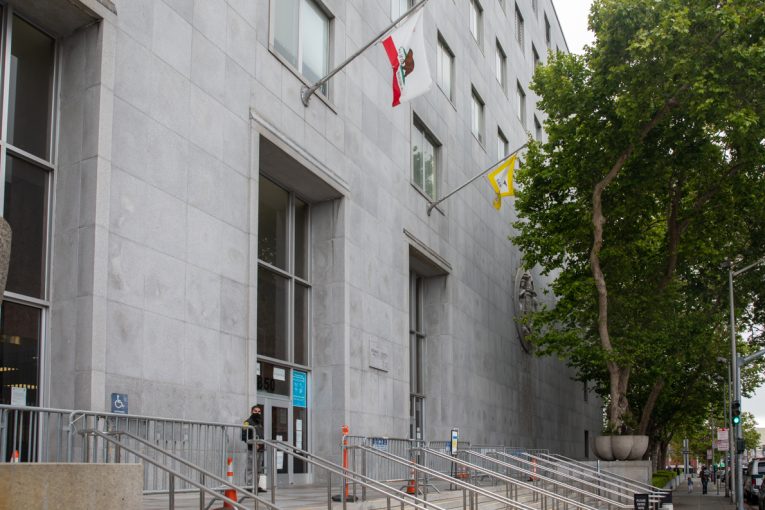
SAN FRANCISCO — A prosecutor objected Wednesday to a request for mental health diversion for an accused person diagnosed with a mental health disorder, arguing in San Francisco County Superior Court that the accused was ineligible for diversion and posed an unreasonable danger to the community.
The accused allegedly shot two individuals in separate incidents on last Sept. 30 and Oct. 4 and has been charged with eight felony counts involving firearm possession and assault. The accused had six family members present at the hearing in support of him.
The accused’s criminal defense attorney, Melissa Lubin, filed for mental health diversion. Lubin claimed that the accused had been diagnosed with a mental health disorder within five years of the alleged crime and was therefore eligible for mental health diversion.
Lubin further explained that unless there was clear and convincing evidence to suggest that the accused’s mental state did not contribute to the alleged criminal behavior, diversion remains an option.
Lubin also claimed that the accused “believed he was acting in self-defense both times,” referencing an exhibit in which one victim appeared to be holding a gun and prior statements by the accused in which he stated he believed he was being robbed.
Deputy District Attorney Colin Alexander objected to diversion on the grounds that the accused was both ineligible and presented an unreasonable danger to the community.
According to Alexander, both incidents were premeditated attacks, and he claimed that the accused told officers he shot one individual after recognizing him as someone who implicated him while in juvenile detention 15 years ago. The highly planned nature of the attack would have made the accused ineligible for diversion, Alexander stated.
In response to Lubin’s claims of partial self-defense, Alexander argued, “It’s much more likely he did it for the reason he said he did.”
Lubin responded by pointing out that the accused was under the influence of drugs and sleep-deprived when he was first arrested and was likely not in a coherent mental state when making those statements.
Alexander also noted that the accused has a history of failing to take his prescribed medication and frequently rejected medical intervention in the past. “Even if medications were able to aid his situation, the chances of him following through are low,” Alexander stated.
Lubin responded by arguing that the accused had been taking all of his prescribed medications and had not had any problems with violence or drug use while in custody for the past 11 months.
Lubin further stated that the accused was taking high school courses while in custody and presented a transcript indicating he received two A’s and a B. She stated that she believed the accused’s “motivation and commitment are genuine.”
Judge Charles Crompton adjourned court for lunch after Lubin’s statements. The accused is set to return to court in the afternoon, where footage of both incidents will be played and Crompton will decide whether to grant diversion.
To comment please go to one of these social media platforms:
Facebook: https://www.facebook.com/DavisVanguard
LinkedIn: https://www.linkedin.com/company/peoples-vanguard-of-davis-inc/
Instagram: https://www.instagram.com/davisvanguard/
X: https://x.com/davisvanguard
Bluesky: https://bsky.app/profile/vanguardnewsgroup.bsky.social
Subscribe to the Vanguard News letters. To make a tax-deductible donation, please visit davisvanguard.org/donate or give directly through ActBlue. Your support will ensure that the vital work of the Vanguard continues.
