
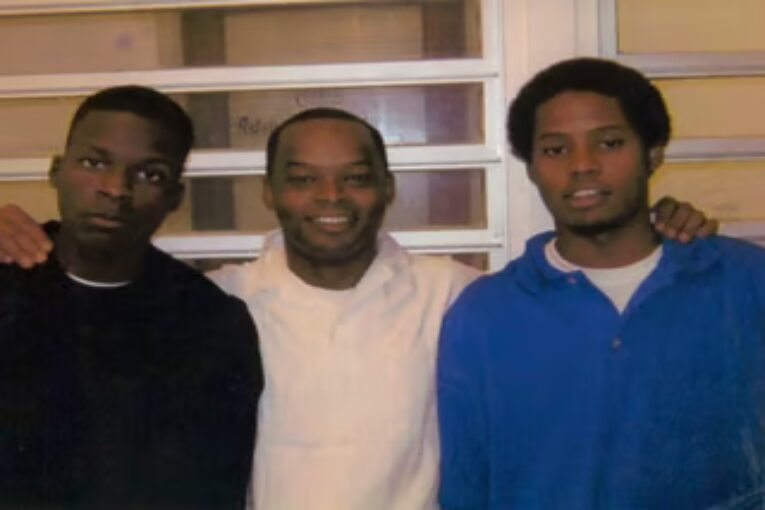
MONTGOMERY, Ala. — Alabama Gov. Kay Ivey granted clemency to Toforest Johnson on Tuesday, Oct. 20, commuting his death sentence to life imprisonment without the possibility of parole after nearly three decades of legal challenges involving allegations of prosecutorial misconduct, suppressed evidence and an undisclosed payment to a key prosecution witness.
The decision spares Johnson from execution but leaves his murder conviction intact, despite calls for a new trial from a district attorney, former state officials, jurors and defense attorneys who have raised concerns about the reliability of the prosecution’s case.
Johnson, 53, has consistently maintained his innocence in the July 1995 killing of Jefferson County Deputy Sheriff William Hardy, who was shot while working off duty as a security guard at a Birmingham hotel.
“When presented with Mr. Johnson’s case, I had concerns there was not enough direct evidence to carry out the most serious punishment, death,” Ivey said in a statement. “My decision is not a determination of innocence, but a recognition that the circumstances of this case justify commuting his death sentence to life imprisonment, without possibility of parole.”
The commutation marks the fourth death row commutation in Alabama since 1976 and the third time Ivey has commuted a death sentence during her tenure.
Questions about Johnson’s conviction have persisted for years, particularly concerning conflicting prosecution theories, witness testimony and evidence that was not disclosed to the defense.
Across four trials involving Johnson and co-defendant Ardargus Ford, prosecutors presented conflicting accounts of the killing, at different points identifying Ford or Johnson as the person responsible.
Defense advocates have also raised allegations concerning the treatment of witnesses during the investigation, including claims that Yolanda Chambers, who was 15 at the time, repeatedly changed her account after police threatened her with incarceration. They have alleged that other witnesses were jailed after refusing to provide statements sought by investigators.
Johnson’s supporters have pointed to telephone records and testimony from at least 10 alibi witnesses who placed Johnson and Ford at a nightclub across Birmingham around the time Hardy was killed.
Ford, who retained private counsel, was acquitted. Johnson, represented by a court-appointed attorney, was convicted of capital murder in 1998 following an earlier mistrial.
A central issue in Johnson’s case involved testimony from Violet Ellison, who claimed she overheard a telephone conversation in which a man identifying himself as Toforest admitted to killing Hardy because the deputy had been involved with his girlfriend.
Ellison had never met Johnson or heard his voice before the alleged telephone conversation. She came forward shortly after authorities announced a $10,000 reward for information about the killing.
In 2001, three years after Johnson’s conviction, Ellison received a $5,000 reward payment approved by trial Judge Alfred Bahakel. The payment was not disclosed to Johnson’s defense attorneys during his trial.
Johnson’s attorneys argued that prosecutors had withheld information concerning Ellison’s potential financial motivation, depriving the defense of evidence that could have been used to challenge her credibility before the jury.
However, the Alabama Court of Criminal Appeals rejected Johnson’s claim in 2022, relying on findings that Ellison received the payment after trial and did not expect to be rewarded when she testified. The ruling did not resolve Johnson’s broader claim of innocence.
The undisclosed payment remained a central concern for Johnson’s supporters, who argued that jurors should have been able to consider whether the prospect of financial compensation affected the credibility of a witness whose testimony was central to the prosecution’s case.
Johnson’s jury recommended a death sentence by a 10-2 vote under Alabama’s former judicial sentencing system. The trial judge subsequently imposed the death penalty.
Alabama has since abolished judicial override, which allowed judges to impose death sentences despite jury recommendations for life imprisonment. The state continues to permit death sentences based on nonunanimous jury recommendations.
In 2020, Jefferson County District Attorney Danny Carr began supporting Johnson’s request for a new trial after reviewing the evidence and circumstances surrounding the prosecution.
Carr wrote that “a thorough review and investigation of the entire case leaves no confidence in the integrity of Johnson’s conviction.”
In a subsequent 2024 filing, Carr raised additional concerns about the prosecution’s evidence, including the absence of physical evidence placing Johnson at the scene, the credibility of alibi witnesses and the reliability of Ellison’s account.
Carr did not make a determination that Johnson was innocent but maintained that the questions surrounding the conviction warranted a new trial.
The effort drew support from former Alabama Supreme Court Chief Justices Drayton Nabers and Sonny Hornsby, former Alabama Attorney General Bill Baxley and other former judges and prosecutors.
Juror Monique Hicks also publicly expressed regret about the verdict, writing in an opinion column, “My role in the wrongful conviction of an innocent man keeps me awake at night.”
Alabama Attorney General Steve Marshall opposed clemency and urged Ivey to uphold the jury’s verdict. His office has maintained that Johnson’s claims have been considered through the judicial process and opposed efforts to reopen the case.
Ivey’s decision nevertheless acknowledged concerns about whether the evidence justified carrying out a death sentence.
Although the commutation removes the possibility of execution, it does not overturn Johnson’s conviction or authorize his release. He remains sentenced to life imprisonment without the possibility of parole unless a court grants further relief.
Ty Alper, one of Johnson’s attorneys, welcomed the commutation while reiterating the defense’s position that Johnson was wrongfully convicted.
“We are grateful to Governor Ivey for diligently reviewing Toforest’s case and taking action to spare an innocent man from execution,” Alper said in a statement.
“This significant milestone was made possible by Alabamians from all sectors of society united in their belief that Toforest does not belong on death row. That list now includes Governor Ivey. Toforest Johnson is innocent. Now it is up to the courts to overturn his conviction and grant him a new trial. We will keep fighting until he is home with his family.”
To comment please go to one of these social media platforms:
Facebook: https://www.facebook.com/DavisVanguard
LinkedIn: https://www.linkedin.com/company/peoples-vanguard-of-davis-inc/
Instagram: https://www.instagram.com/davisvanguard/
X: https://x.com/davisvanguard
Bluesky: https://bsky.app/profile/vanguardnewsgroup.bsky.social
Subscribe to the Vanguard News letters. To make a tax-deductible donation, please visit davisvanguard.org/donate or give directly through ActBlue. Your support will ensure that the vital work of the Vanguard continues.
