
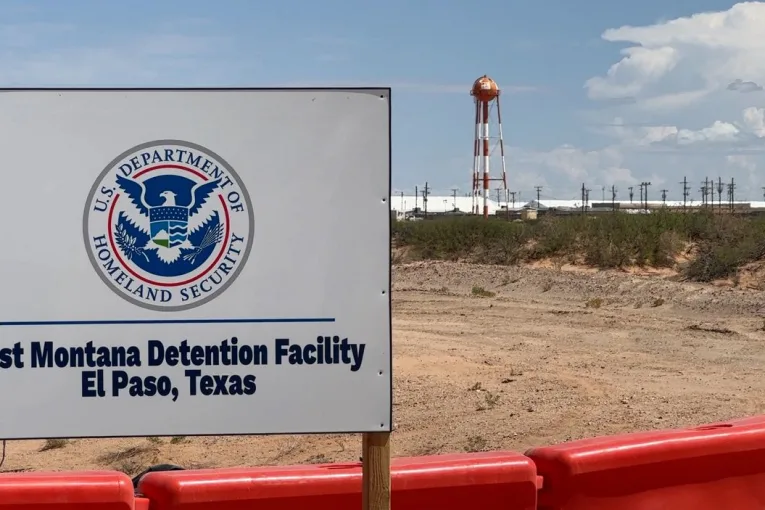
EL PASO, Texas — Civil rights organizations are asking a federal court to intervene immediately at the nation’s largest immigration detention facility, citing three deaths and allegations of physical abuse, medical neglect and dangerous living conditions that attorneys argue violate constitutional protections against punishment in civil detention.
The Oct. 15 motion for a preliminary injunction seeks court-ordered improvements at Camp East Montana, a detention facility on the Fort Bliss military base in El Paso, Texas, where thousands of people have been held while awaiting immigration proceedings or removal from the United States.
The motion describes allegations of inadequate medical care, physical abuse by guards, unsanitary living conditions and insufficient access to food, water and other basic necessities.
According to an Oct. 16 statement from the American Civil Liberties Union, the motion is supported by more than 40 declarations from current and former detainees, medical professionals, correctional experts and relatives of individuals who died in custody.
The ACLU reported that three people have died at Camp East Montana since the facility opened in August 2025.
The lawsuit, Gerald Akari Angye et al. v. U.S. Immigration and Customs Enforcement et al., was filed in May 2026 in the U.S. District Court for the Western District of Texas by the ACLU, ACLU of Texas, Texas Civil Rights Project and Farella Braun + Martel LLP.
The plaintiffs argue that the conditions violate constitutional protections because immigration detention is civil rather than criminal and cannot be used to impose punishment.
The filing describes individuals who have been detained for months while awaiting decisions in their immigration cases or the processing of travel documents, including asylum seekers, people who have lived in the United States for decades and individuals without criminal records.
Gerald Akari Angye, a named plaintiff in the lawsuit, described the need for court intervention.
“Urgent protection is desperately needed at Camp East Montana,” Angye said in the ACLU’s statement.
Angye reported that detained individuals have inadequate access to food, water, medication and recreational activities, raising concerns about their health and safety.
He also alleged that guards subjected him to violence while he was detained at the facility. The court filing states that guards fractured his wrist and spine while he was shackled and not resisting.
The motion cites Dr. Jeffrey Keller, an experienced correctional physician and administrator who reviewed medical records and other evidence concerning health care at Camp East Montana.
Keller identified problems involving medical screenings, treatment of chronic illnesses, emergency medical care and incomplete medical records.
According to the motion, Keller concluded that inadequate health care and unsafe conditions had contributed to preventable deaths and placed detained individuals at risk of serious injury or death.
The filing also describes accounts from relatives of people who died after experiencing medical emergencies while detained at the facility.
In one account, a daughter reported that her father’s health deteriorated while he was detained and that he was eventually hospitalized in septic shock before dying.
The plaintiffs contend that the medical problems reflect systemic failures rather than isolated incidents.
Another major concern involves the treatment of detained individuals by facility staff.
Detainees reported physical abuse, excessive use of force and prolonged confinement in crowded, windowless tents, sometimes for 23 to 24 hours a day.
Dean Williams, former executive director of the Colorado Department of Corrections and former commissioner of the Alaska Department of Corrections, submitted a 58-page expert declaration supporting the motion.
After reviewing detainee statements, government inspection reports and facility records, Williams wrote, “The conditions reported in those declarations shock the conscience.”
In his declaration, Williams identified concerns involving staff harassment, coercion, excessive body searches, misuse of solitary confinement, unsafe intake procedures, unhygienic living conditions, inadequate access to personal hygiene supplies, excessively cold temperatures and insufficient recreational opportunities.
Williams also cited inadequate health care and nutrition as serious problems affecting people held at the facility.
He concluded that the reported conditions served no legitimate nonpunitive government purpose and undermined the safety of detained individuals and facility staff.
The plaintiffs argue that the findings are particularly significant because immigration detention is intended to serve administrative purposes, including ensuring appearances at immigration proceedings and carrying out lawful removal orders, rather than imposing criminal punishment.
Government inspection reports cited in the motion also documented deficiencies in the facility’s operations.
According to the filing, a June 2026 Government Accountability Office report found that Camp East Montana opened before meeting detention requirements.
The plaintiffs cited deficiencies involving medical services, facility security and sanitation, arguing that federal officials had been aware of problems at the facility without implementing sufficient corrective measures.
A February 2026 inspection by ICE’s Office of Detention Oversight identified a 37.5% failure rate among the detention standards reviewed.
Despite those deficiencies, the facility received an overall rating of “Acceptable/Adequate.”
The plaintiffs contend that the inspection findings, together with accounts from detained individuals and expert assessments, demonstrate that the problems extend beyond individual complaints.
The Department of Homeland Security has previously disputed allegations of mistreatment at Camp East Montana.
According to the motion, DHS characterized earlier reports of abuse and neglect as “categorically false,” a “smear campaign,” and “fearmongering clickbait.”
Those statements reflect the department’s previous response to allegations about the facility, rather than a court determination concerning the claims presented in the latest motion.
Attorneys representing the plaintiffs maintain that federal officials were aware of reported deficiencies but failed to implement sufficient improvements.
“We cannot wait any longer,” said Rita Lomio, senior counsel at the ACLU’s National Prison Project.
Lomio said the federal government had long been aware of allegations concerning conditions at the facility and argued that judicial intervention was necessary to prevent additional harm.
The plaintiffs are asking the federal court to require immediate improvements to medical care, sanitation, safety and other detention conditions while the underlying lawsuit continues.
They argue that without preliminary relief, people currently detained at Camp East Montana and those transferred there in the future will remain at risk of serious harm.
The allegations have not been established as final court findings, and the motion for a preliminary injunction remains subject to judicial consideration.
The court must determine whether the plaintiffs have met the legal requirements for preliminary relief, including demonstrating a likelihood of success on their claims and a risk of irreparable harm without intervention.
To comment please go to one of these social media platforms:
Facebook: https://www.facebook.com/DavisVanguard
LinkedIn: https://www.linkedin.com/company/peoples-vanguard-of-davis-inc/
Instagram: https://www.instagram.com/davisvanguard/
X: https://x.com/davisvanguard
Bluesky: https://bsky.app/profile/vanguardnewsgroup.bsky.social
Subscribe to the Vanguard News letters. To make a tax-deductible donation, please visit davisvanguard.org/donate or give directly through ActBlue. Your support will ensure that the vital work of the Vanguard continues.
