
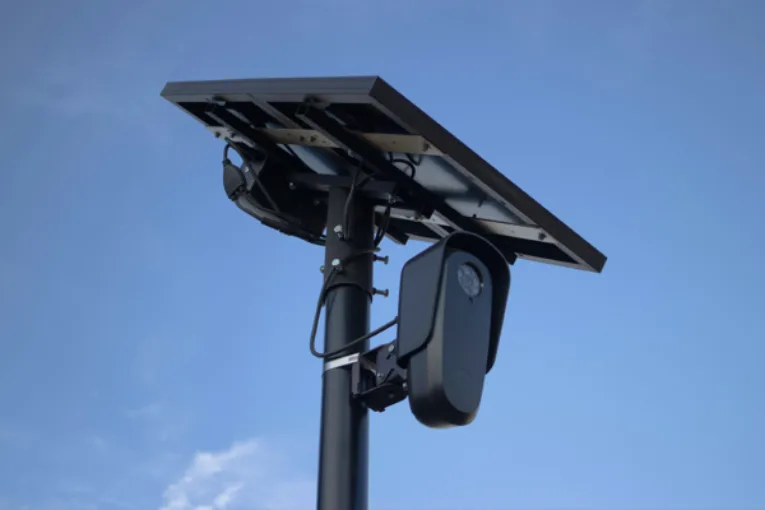
SAN FRANCISCO — The American Civil Liberties Union of Northern California and Electronic Frontier Foundation are demanding answers from the Marin County Sheriff’s Office after records indicated that federal and out-of-state law enforcement agencies accessed the county’s automated license plate reader database hundreds of thousands of times in 2024, despite a previous settlement requiring the sheriff’s office to restrict such sharing.
The ACLU of Northern California and EFF said Monday that audit logs show outside agencies accessed Marin County’s automated license plate reader, or ALPR, information during October, November and December 2024, including 254,131 instances in November alone.
According to an Oct. 1 letter from the organizations, agencies in Alabama, Indiana, Kentucky, Florida and Texas were among those that searched the database. The records also showed access by federal law enforcement agencies.
The organizations said the sheriff’s office redacted the “Reason” field in the audit logs, preventing the public from determining why individual searches were conducted.
The disclosures come four years after the sheriff’s office reached a settlement following a lawsuit alleging that it violated California law by sharing ALPR information with hundreds of federal and out-of-state agencies, including U.S. Immigration and Customs Enforcement and U.S. Customs and Border Protection.
Under the 2022 settlement, the Marin County Sheriff’s Office agreed to stop sharing ALPR information with federal and out-of-state agencies and comply with California laws governing the collection and dissemination of the data. According to the ACLU and EFF, the agreement also applies to the former sheriff’s successors.
“It’s alarming that just two years after we settled a lawsuit against the Marin County Sheriff’s Office for illegally sharing millions of drivers’ license plates and locations, the office again provided federal and out-of-state law enforcement agencies direct access to its automated license plate reader database,” said Nick Hidalgo, senior staff attorney at the ACLU of Northern California.
“Marin County’s cameras are part of a mass surveillance network that gives police access to a trove of sensitive information they have used to locate and detain immigrants, track people seeking reproductive care, and stalk romantic partners,” Hidalgo continued. “The sheriff’s office must put robust safeguards in place to ensure that a harmful breach like this doesn’t happen again.”
ALPR systems photograph license plates and can record the time and GPS location where a vehicle was observed. When accumulated over time, civil liberties advocates argue, those records can reveal where people travel and identify locations associated with their homes, workplaces, medical care and other aspects of their daily lives.
The ACLU and EFF argue that the reported sharing violates SB 34, which restricts California public agencies from sharing ALPR information with federal and out-of-state agencies. They also contend that sharing ALPR information for immigration enforcement could violate SB 54, the California Values Act.
The allegations are particularly significant because the sheriff’s office has represented that outside-California agencies can no longer access its ALPR database. According to the ACLU and EFF, the sheriff’s office has not adequately explained how the reported access occurred, what safeguards failed or what measures have been implemented to prevent it from happening again.
The organizations are also questioning why the public and Marin County inspector general were not informed after the sheriff’s office learned about the outside access.
The ACLU and EFF filed a Public Records Act request seeking audit logs, ALPR policies, Flock Safety system settings, transparency portal information and records showing the reasons outside agencies searched Marin County’s database.
The request also seeks communications with outside government agencies, including emails and messages sent through services such as Signal, WhatsApp and iMessage, as well as records showing changes made to the system and its access controls.
Beyond seeking records, the organizations are calling for a full audit to determine how the sharing occurred, revised protocols to prevent future access and potential penalties or sanctions for employees or officers found to have improperly shared ALPR information outside California.
The dispute raises broader questions about oversight of increasingly interconnected law enforcement surveillance systems. Although a local agency may collect ALPR information within its own jurisdiction, networked databases can potentially make that information available to agencies far beyond the community where it was collected.
Those concerns become particularly acute when location information is accessible to federal immigration authorities or agencies in states with laws substantially different from California’s.
The results of the records request could provide additional information about which agencies accessed Marin County’s ALPR system, why those searches were conducted and whether that access remains possible.
The ACLU and EFF are now seeking documents and an investigation from Marin County to determine whether the reported sharing has stopped, how it occurred despite the previous settlement and what safeguards have been put in place to prevent it from happening again.
To comment please go to one of these social media platforms:
Facebook: https://www.facebook.com/DavisVanguard
LinkedIn: https://www.linkedin.com/company/peoples-vanguard-of-davis-inc/
Instagram: https://www.instagram.com/davisvanguard/
X: https://x.com/davisvanguard
Bluesky: https://bsky.app/profile/vanguardnewsgroup.bsky.social
Subscribe to the Vanguard News letters. To make a tax-deductible donation, please visit davisvanguard.org/donate or give directly through ActBlue. Your support will ensure that the vital work of the Vanguard continues.
