
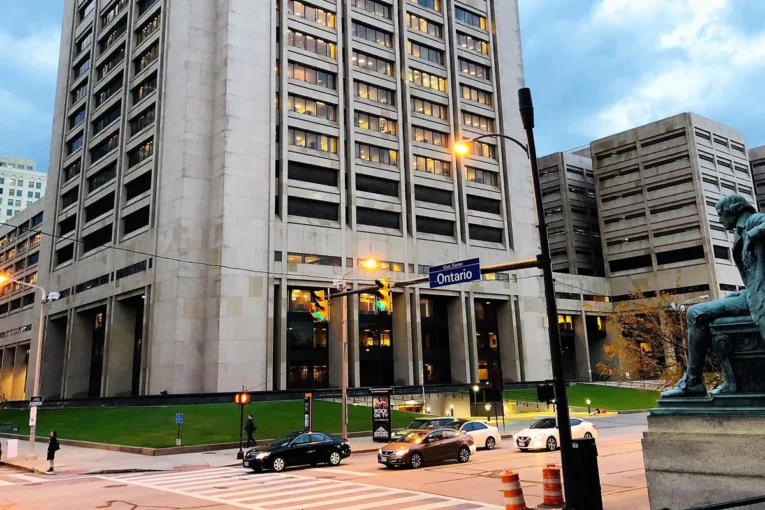
CLEVELAND, Ohio — After spending more than 18 years in prison for a murder he maintains he did not commit, Roberto Wynn has been granted an evidentiary hearing to present new evidence challenging his conviction, including a recantation from a key prosecution witness.
The hearing in Cuyahoga County Common Pleas Court before Judge Shirley Strickland Saffold will give Wynn an opportunity to argue that his conviction should be overturned and that he should receive a new trial.
Wynn was convicted in connection with the April 25, 2008, fatal shooting of Christopher Basie. He has maintained his innocence throughout his incarceration, pursuing direct appeals and post-conviction challenges.
The Ohio Innocence Project, which investigates and litigates claims of wrongful conviction, eventually took up his case.
A central development came in 2022, when a key prosecution witness signed a statement recanting her trial testimony.
The witness, who was 12 years old at the time of the shooting, said she had falsely implicated Wynn because she was upset with him.
In her statement, she acknowledged that she had blamed Wynn for a shooting he did not commit and said she was certain he did not have a gun.
She also expressed regret about the consequences of her statements, saying she had not understood that Wynn’s life could be spent in prison because of her accusations.
Donald Caster, Wynn’s former attorney with the Ohio Innocence Project, questioned the reliability of the remaining evidence against his client.
“What’s left of the case is merely the testimony of wildly inconsistent witnesses,” Caster said, according to News 5 Cleveland.
Caster argued that the recanting witness played a central role in securing Wynn’s conviction.
“Without the witness who recanted, there almost certainly wouldn’t have been a conviction in this case,” he said.
Prosecutors dispute that assessment, maintaining that multiple witnesses identified Wynn as the shooter.
The evidentiary hearing will allow the court to examine the recantation and other evidence before deciding whether Wynn is entitled to a new trial.
The case has also drawn attention to delays in Ohio’s post-conviction review process.
Michael Donnelly, a former Ohio Supreme Court justice who now works as an attorney, said prolonged delays are common in cases involving claims of wrongful conviction.
“Unfortunately, delays are very common,” Donnelly said. “It’s not because of an individual judge. It’s a systemic problem.”
Donnelly said people challenging convictions face fewer procedural protections than defendants awaiting trial.
“The safeguards that people have on the front end of the system, like the right to an attorney, the right to a speedy trial, those don’t exist,” he said. “As a result, cases can languish.”
An investigation by News 5 Cleveland identified 28 motions for new trials in Cuyahoga County that had remained pending for more than 120 days, the period established by the Ohio Supreme Court for resolving such motions.
Donnelly acknowledged that many post-conviction motions lack merit but said the volume of filings can make it difficult for courts to identify cases involving potentially credible evidence of wrongful conviction.
“There’s a lot of the motions that are frivolous,” he said.
“Unfortunately, cases that do have merit — that have been opposed by the state and there may be evidence to be tested — they get lost in the mix,” Donnelly added.
Donnelly founded Ohio Court Watch, an initiative that tracks post-conviction cases involving people who maintain their innocence and are waiting for courts to consider new evidence.
The organization recently launched a website to document cases involving unresolved motions and delays in judicial review.
Proposed legislation could also change how Ohio courts handle post-conviction innocence claims.
House Bill 177 would require judges to conduct evidentiary hearings when a person seeking post-conviction relief presents credible new evidence supporting a claim of innocence.
The proposal has not received a legislative hearing, leaving existing procedures in place.
Defense attorneys have also expressed concerns about challenging delays in pending cases because of the possibility of damaging their clients’ standing before the courts.
For Wynn, the evidentiary hearing represents an opportunity to present evidence that he believes undermines the prosecution’s case.
“The time has come for all the truth and the details to be revealed,” Wynn told News 5 Cleveland.
His parents, Carla Butler and Ronnie Wynn, said the years of incarceration have affected the entire family.
“It’s not just him locked up. We been locked up too,” Ronnie Wynn said.
Butler expressed hope that the hearing could lead to her son’s release.
“It’s been a long time, but I look at it as my prayers have been answered,” she said.
Wynn acknowledged the difficulty of the legal process but said he remains hopeful that the evidence will ultimately establish his innocence.
“The truth will happen, and the truth will come out, but it’s a hard process,” Wynn said. “I just want my freedom back.”
The hearing does not overturn Wynn’s conviction or guarantee a new trial. The court must first determine whether the newly presented evidence meets the legal requirements for post-conviction relief.
To comment please go to one of these social media platforms:
Facebook: https://www.facebook.com/DavisVanguard
LinkedIn: https://www.linkedin.com/company/peoples-vanguard-of-davis-inc/
Instagram: https://www.instagram.com/davisvanguard/
X: https://x.com/davisvanguard
Bluesky: https://bsky.app/profile/vanguardnewsgroup.bsky.social
Subscribe to the Vanguard News letters. To make a tax-deductible donation, please visit davisvanguard.org/donate or give directly through ActBlue. Your support will ensure that the vital work of the Vanguard continues.
