
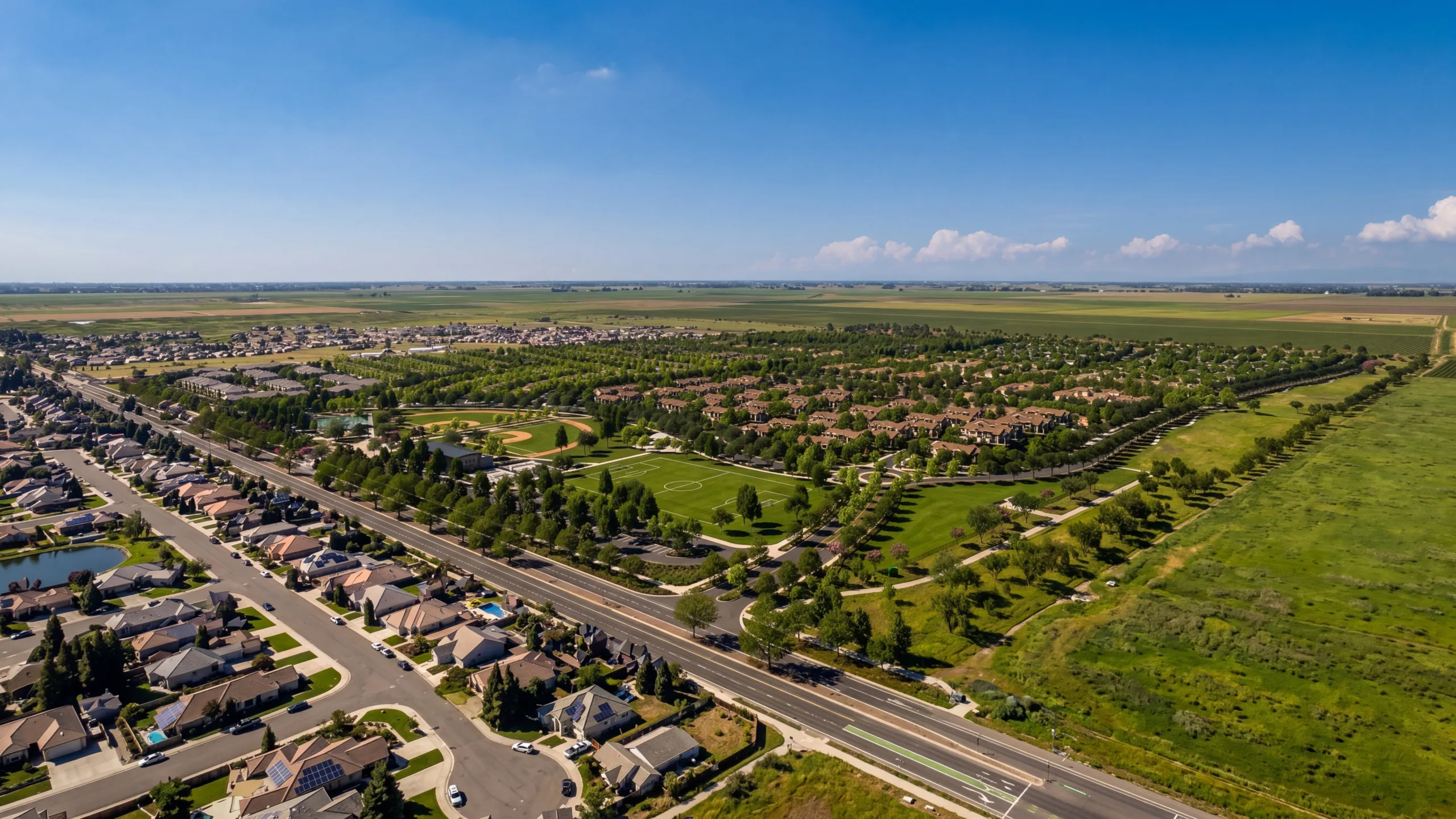
DAVIS, Calif. — Measure W appeared headed toward an overwhelming victory early Wednesday morning, with more than 73% of Davis voters supporting the Willowgrove housing development, a striking result in a city where proposals for peripheral housing have frequently encountered stiff resistance at the ballot box.
According to Yolo County election returns, Measure W received 11,582 yes votes, or 73.17%, compared with 4,246 no votes, or 26.83%. All 18 Davis precincts had reported, although additional ballots remained to be processed.
The nearly 47-percentage-point margin represented a dramatic contrast with June, when Davis voters narrowly rejected the Village Farms development by fewer than 300 votes.
The Willowgrove project would bring approximately 1,250 homes to 232 acres on the northeastern edge of Davis, including at least 250 deed-restricted affordable units, along with parks, bicycle and pedestrian connections, and infrastructure improvements.
The project also includes a $6.8 million affordable housing commitment and a partnership with Mutual Housing California, a nonprofit affordable housing developer.
The early results represent a significant development in the city’s decades-long debate over housing growth under Measure J and its successors, which require voter approval for most conversions of agricultural land to urban development.
While the city has approved only a small number of peripheral housing proposals under the voter-approval system, the Willowgrove result suggests that a substantial majority of voters participating in Tuesday’s election were willing to support a large project with affordable housing commitments.
The outcome also comes amid growing pressure on Davis to accommodate housing production and meet state housing requirements.
As the Vanguard has reported extensively, Davis faces a substantial gap between its projected housing needs and the capacity of existing infill sites.
The city is planning for approximately 7,000 additional homes by 2050, while even optimistic estimates suggest that infill development could accommodate only about 3,000 units.
That gap has been central to the debate over whether Davis can continue to rely primarily on downtown redevelopment, accessory dwelling units and other infill opportunities without approving additional peripheral development.
The city’s lower-income housing production has also lagged significantly behind its state-assigned targets. Earlier this year, city figures showed that only 30 lower-income units had been produced toward a target of more than 900 during the current housing element cycle.
Willowgrove’s 250 affordable units would represent a substantial addition to the city’s affordable housing pipeline, although the units would still require financing and construction before contributing to actual housing production.
The project also includes housing for people with intellectual and developmental disabilities, an element supporters emphasized during the campaign.
Unlike Village Farms, which faced organized opposition over environmental, infrastructure and planning concerns, Willowgrove encountered comparatively little organized opposition.
The campaign emphasized the project’s affordable housing commitments, infrastructure improvements, agricultural buffers and the prospect of completing development in a single phase.
Local coverage also reflected the unusually strong early support.
Abridged reported Tuesday night that Measure W had already secured more than 70% support in the first returns, describing the result as a sharp contrast with the narrow Village Farms defeat.
The publication noted that Willowgrove’s baseline features include an affordable housing contribution, recreational facilities, agricultural conservation measures, traffic improvements and approximately three miles of bicycle and pedestrian trails.
The election provides a significant new data point in the continuing debate over Measure J/R/D and whether Davis voters will support peripheral growth when presented with projects they consider acceptable.
It does not eliminate questions about the city’s long-term housing capacity, infrastructure needs or ability to finance affordable housing, but it moves one of the largest proposed residential developments in Davis toward implementation.
The Davis result was part of a broader election night in which California voters also supported major statewide housing initiatives.
Proposition 1, the Veterans and Affordable Housing Bond Act, was approved, according to an Associated Press race call reported by KQED. The measure authorizes $11.25 billion in bonds, including $10 billion for affordable housing programs and $1.25 billion for veterans’ home loans.
Early returns showed Proposition 1 receiving approximately 59.4% support, compared with 40.6% opposition.
According to the Legislative Analyst’s Office, the measure could help finance as many as 40,000 affordable rental units and assist approximately 40,000 households with home purchases.
Proposition 37 also passed, with approximately 61% support in the early returns.
The measure establishes a $25 billion revenue bond program to provide down-payment assistance to eligible middle-income homebuyers purchasing newly constructed homes.
The program is intended for households earning up to 200% of area median income, with repayment structured through loans rather than the state’s general fund.
Former Assembly Speaker Bob Hertzberg, a leading supporter of Proposition 37, told KQED that the results demonstrated the importance voters placed on housing affordability.
“People obviously see that housing is an important thing, and these are two gigantic steps forward to help California deal with its horrible housing crisis,” Hertzberg said.
The statewide measures address different components of the housing crisis, with Proposition 1 emphasizing affordable housing development and Proposition 37 focusing on expanding homeownership opportunities for middle-income households.
Their approval comes amid continuing disagreement over whether additional financing alone can resolve California’s housing shortage without changes to local land-use restrictions and development costs.
Housing policy was also a central issue in one of California’s most closely watched congressional contests.
State Sen. Scott Wiener held a substantial early lead over San Francisco Supervisor Connie Chan in the race to succeed retiring former House Speaker Nancy Pelosi in California’s 11th Congressional District.
According to election returns updated at 3:17 a.m. Wednesday, Wiener received 87,641 votes, or 55.4%, compared with 70,511 votes, or 44.6%, for Chan.
Wiener, one of California’s most prominent advocates for housing production and state intervention in local zoning, has authored legislation intended to facilitate construction near transit and reduce barriers imposed by local governments.
Chan, who received Pelosi’s endorsement, has emphasized tenant protections, affordability and concerns about displacement associated with development.
The contest drew millions of dollars in campaign spending and highlighted divisions among Democrats over housing policy, economic inequality and the appropriate role of state government in overriding local land-use decisions.
The San Francisco Chronicle reported that Wiener raised approximately $4.6 million compared with $2.2 million for Chan, with additional spending by outside groups.
Wiener’s early lead, the passage of two statewide housing measures and the substantial support for Willowgrove in Davis placed housing policy prominently among California’s election night developments.
For Davis, the immediate consequence is the apparent approval of a development that would add 1,250 homes to the city’s housing pipeline, including 250 affordable units, following years of debate over how the city should accommodate growth.
The final Measure W vote totals will depend on the remaining ballots processed by Yolo County election officials.
To comment please go to one of these social media platforms:
Facebook: https://www.facebook.com/DavisVanguard
LinkedIn: https://www.linkedin.com/company/peoples-vanguard-of-davis-inc/
Instagram: https://www.instagram.com/davisvanguard/
X: https://x.com/davisvanguard
Bluesky: https://bsky.app/profile/vanguardnewsgroup.bsky.social
Subscribe to the Vanguard News letters. To make a tax-deductible donation, please visit davisvanguard.org/donate or give directly through ActBlue. Your support will ensure that the vital work of the Vanguard continues.
