
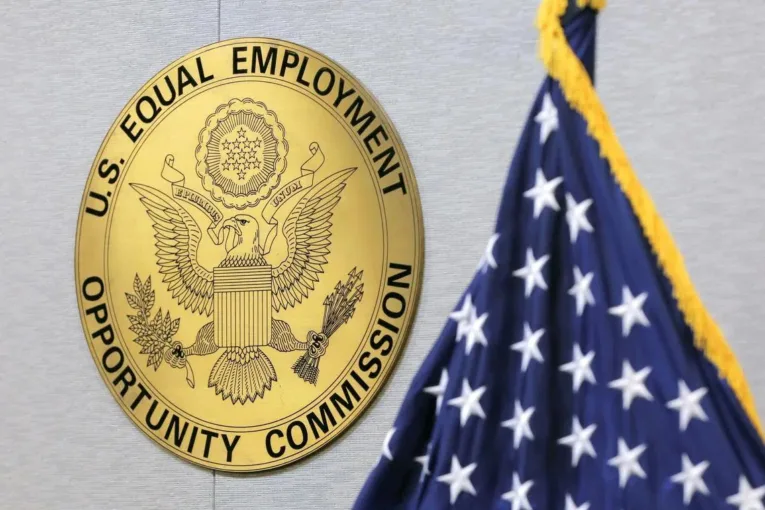
WASHINGTON, D.C. — The U.S. Equal Employment Opportunity Commission has rescinded federal guidance intended to help employers avoid racial discrimination when using arrest and conviction records in hiring decisions, prompting warnings from civil rights advocates that the move could create additional barriers to employment for people with criminal records.
The EEOC voted 2-1 on Oct. 28 to withdraw its 2012 Enforcement Guidance on the Consideration of Arrest and Conviction Records in Employment Decisions under Title VII, with the decision taking effect immediately.
The Legal Defense Fund condemned the decision in an Oct. 30 statement, arguing that the withdrawal removes an important resource for employers seeking to comply with federal anti-discrimination law.
The guidance, adopted during the Obama administration, explained how employers could evaluate criminal histories without violating Title VII of the Civil Rights Act of 1964, which prohibits employment discrimination based on race, color, religion, sex or national origin.
Although the guidance was not legally binding, it provided a framework for evaluating hiring policies under two established theories of employment discrimination: disparate treatment and disparate impact.
Disparate treatment occurs when an employer intentionally treats applicants differently because of a protected characteristic, such as race or national origin.
Disparate impact occurs when a seemingly neutral employment policy disproportionately excludes members of a protected group and cannot be justified as job-related and consistent with business necessity.
The 2012 guidance warned that broadly excluding applicants with criminal records could violate Title VII when the restrictions disproportionately affected protected groups without sufficient justification.
It also distinguished between arrests and convictions, explaining that an arrest alone does not establish criminal conduct and generally cannot justify exclusion from employment without evidence of underlying conduct relevant to the position.
For applicants with convictions, the guidance encouraged employers to consider the nature and seriousness of the offense, the time elapsed since the offense or completion of the sentence, and the responsibilities of the position.
The guidance also recommended individualized assessments in appropriate circumstances, allowing applicants to provide additional information before being excluded because of a criminal record.
EEOC Chair Andrea Lucas defended the rescission, arguing that the commission must enforce federal employment discrimination law within the limits established by Congress.
“The Commission’s rescission of the enforcement guidance reaffirms the agency’s commitment to enforce Title VII consistent with the Constitution and the limits Congress placed on the EEOC’s authority,” Lucas said in the agency’s Oct. 29 announcement.
Lucas emphasized that withdrawing the guidance does not eliminate employers’ obligations under federal anti-discrimination law.
She said Title VII continues to prohibit discrimination based on race or national origin, including employment requirements used as substitutes for intentional discrimination, and pledged continued enforcement of those protections.
However, the rescission comes amid a broader shift in federal enforcement priorities away from disparate impact theories of discrimination.
According to an Oct. 30 analysis by the employment law firm Ogletree Deakins, the EEOC is expected to continue pursuing cases involving intentional discrimination in criminal background screening while moving away from disparate impact enforcement.
The firm noted that private plaintiffs can still bring lawsuits under Title VII alleging either disparate treatment or disparate impact, because both theories remain recognized under federal law.
Employers may nevertheless argue that the withdrawal weakens claims relying on the former guidance, while plaintiffs may contend that existing statutory protections and judicial precedent remain controlling.
The Legal Defense Fund maintained that the rescission does not change federal law but removes guidance that helped employers recognize when criminal background screening unnecessarily excluded qualified applicants.
Demetria McCain, the organization’s director of policy, said the decision could disproportionately affect Black workers and other people of color because of racial disparities throughout the criminal legal system.
“Everyone deserves a chance to be hired for the jobs for which they are qualified—not unfairly excluded based on past mistakes that have nothing to do with whether they can do the work,” McCain said.
The Legal Defense Fund argues that disparities in arrests, convictions and incarceration can carry over into employment when employers adopt broad criminal background exclusions.
A 2023 report by the organization’s Thurgood Marshall Institute examined how criminal history screening can amplify racial inequalities in hiring.
The report cited research by sociologist Devah Pager finding that white job applicants with criminal records received callbacks for interviews at a higher rate than Black applicants without criminal records.
In Pager’s 2003 field experiment, 17% of white applicants with criminal records received callbacks, compared with 14% of Black applicants without criminal records.
The institute also examined research challenging the assumption that people with criminal records necessarily perform worse at work or pose greater employment risks.
Some studies found comparable job performance among workers with and without criminal records, while others identified higher retention rates among employees with prior convictions. The findings varied by occupation and the measures used.
The report further identified inaccuracies in criminal background screening systems, including outdated records, missing case dispositions and duplicate information that can result in applicants being excluded based on incomplete or misleading histories.
The Legal Defense Fund argued that excluding people from employment because of criminal histories can undermine economic stability, housing security and successful reentry after incarceration.
The rescission does not directly alter the federal Fair Credit Reporting Act, which establishes requirements for employers obtaining background reports from third-party screening companies.
It also does not repeal state and local fair-chance hiring laws, which impose separate restrictions on when and how employers may consider criminal records.
According to Ogletree Deakins, employers remain responsible for complying with those requirements even after the withdrawal of the federal guidance.
The EEOC’s Oct. 29 announcement also stated that rescinding the guidance does not require employers to abandon lawful hiring practices they adopted in response to the 2012 policy.
The commission did not announce a replacement framework for evaluating criminal background screening under Title VII.
To comment please go to one of these social media platforms:
Facebook: https://www.facebook.com/DavisVanguard
LinkedIn: https://www.linkedin.com/company/peoples-vanguard-of-davis-inc/
Instagram: https://www.instagram.com/davisvanguard/
X: https://x.com/davisvanguard
Bluesky: https://bsky.app/profile/vanguardnewsgroup.bsky.social
Subscribe to the Vanguard News letters. To make a tax-deductible donation, please visit davisvanguard.org/donate or give directly through ActBlue. Your support will ensure that the vital work of the Vanguard continues.
