
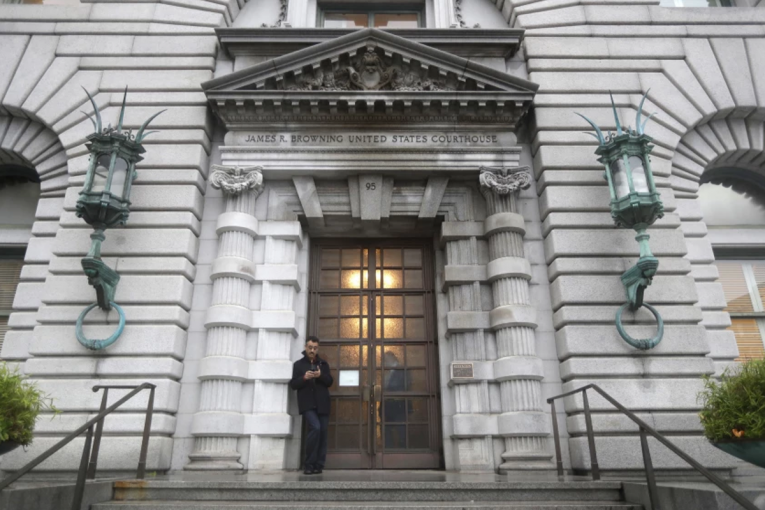
PORTLAND, Ore. — A divided federal appeals court on Tuesday overturned restrictions on federal immigration officers’ use of tear gas, pepper balls and other crowd-control weapons outside an Immigration and Customs Enforcement facility in Portland, raising concerns about protections for journalists and peaceful protesters exercising their First Amendment rights.
In a 2-1 decision issued Nov. 10, 2026, the U.S. Court of Appeals for the Ninth Circuit vacated a preliminary injunction that had restricted federal officers’ use of crowd-control weapons and required more visible identification on their uniforms.
The court also overturned provisional class certification for protesters and journalists who alleged that federal officers had retaliated against them for documenting immigration enforcement activities and participating in demonstrations.
The case, Dickinson v. Trump, arose from a lawsuit brought by five individuals who alleged that federal agents used excessive force against them while they were peacefully protesting or documenting activity outside the Portland ICE facility.
The plaintiffs — Jack Dickinson, Laurie Eckman, Richard Eckman, Hugo Rios and Mason Lake — argued that federal officers had targeted individuals exercising their First Amendment rights.
On March 9, U.S. District Judge Michael H. Simon issued a preliminary injunction restricting the use of crowd-control weapons by federal officers.
The injunction prohibited officers from using chemical or impact munitions unless someone posed an imminent threat of physical harm. It also barred officers from firing munitions at a person’s head, neck or torso unless deadly force was legally justified, imposed restrictions on pepper spray and required changes to officers’ identifying markings.
The federal government appealed, and the Ninth Circuit temporarily suspended the injunction on April 27.
In Tuesday’s decision, Judge Kenneth K. Lee, joined by Judge Eric C. Tung, concluded that the plaintiffs had not demonstrated a likelihood of success on their First Amendment retaliation claims sufficient to justify the preliminary injunction.
The majority acknowledged that peaceful protests and journalism are constitutionally protected but emphasized that demonstrations outside the Portland facility had also involved vandalism, obstruction of federal officers and violence.
According to the majority, federal officers had encountered protesters blocking access to the facility, throwing objects and interfering with law enforcement operations.
The court concluded that federal officers may use nonlethal force to disperse crowds and restore order without waiting until they face an imminent threat of physical harm.
The majority also determined that the evidence did not establish that federal officers had adopted an unwritten policy or practice of targeting individuals because of their protected speech.
Although the plaintiffs described incidents in which they were struck by pepper balls or exposed to chemical irritants while engaging in peaceful activities, the majority concluded that the record did not sufficiently demonstrate retaliatory intent.
The court further found that the injunction was excessively broad because it extended protections beyond the five named plaintiffs and imposed restrictions affecting federal officers’ responses to unlawful conduct around the facility.
The majority also concluded that the district court had exceeded its authority by directing changes to federal officers’ uniforms and that the proposed class of protesters and journalists did not satisfy federal class-action requirements.
Judge Ana de Alba agreed that portions of the injunction were too broad but strongly disagreed with eliminating all of its protections.
In her partial dissent, de Alba argued that the prohibition against firing munitions at a person’s head, neck or torso should remain in effect unless officers were legally justified in using deadly force.
She also disagreed with the majority’s decision to overturn provisional class certification, finding that the district court had sufficient grounds to recognize common constitutional claims among peaceful protesters and journalists.
De Alba emphasized that political expression opposing government policies occupies a particularly protected position under the First Amendment.
Her dissent highlighted evidence that federal officers had deployed crowd-control weapons against people who were not participating in violent or obstructive conduct.
Among the incidents discussed in the litigation was the experience of plaintiff Hugo Rios, an independent journalist documenting a protest on Sept. 1.
According to the plaintiffs’ evidence, Rios was standing across the street from the ICE facility when federal officers fired pepper balls in his direction, striking him approximately 20 times.
Rios reported that the incident left him fearful of returning to document future demonstrations because of the possibility of being injured again.
Another plaintiff, journalist Mason Lake, was exposed to pepper spray while documenting activity outside the facility.
The plaintiffs argued that these incidents demonstrated a broader pattern in which federal officers used crowd-control weapons against people engaged in peaceful protest and newsgathering.
De Alba’s dissent challenged the majority’s assessment of the evidence, arguing that the district court had identified circumstances supporting an inference that officers used force to punish constitutionally protected expression.
The disagreement between the judges centered in part on whether the evidence supported a finding of retaliatory intent and whether the district court’s restrictions were necessary to prevent further constitutional violations.
The majority concluded that the injunction improperly interfered with federal law enforcement operations, while de Alba maintained that at least one restriction on potentially dangerous uses of force should remain in place.
The decision does not establish that federal officers may use crowd-control weapons without legal limits. Their actions remain subject to constitutional restrictions, including protections against unreasonable force and retaliation for protected expression.
However, the ruling removes the specific preliminary protections imposed by the district court while the underlying litigation continues.
For journalists documenting immigration enforcement and protesters exercising their constitutional rights, the decision leaves unresolved the central allegations that brought the lawsuit: whether federal officers unlawfully targeted individuals for recording government activity or peacefully expressing opposition to federal immigration policies.
To comment please go to one of these social media platforms:
Facebook: https://www.facebook.com/DavisVanguard
LinkedIn: https://www.linkedin.com/company/peoples-vanguard-of-davis-inc/
Instagram: https://www.instagram.com/davisvanguard/
X: https://x.com/davisvanguard
Bluesky: https://bsky.app/profile/vanguardnewsgroup.bsky.social
Subscribe to the Vanguard News letters. To make a tax-deductible donation, please visit davisvanguard.org/donate or give directly through ActBlue. Your support will ensure that the vital work of the Vanguard continues.
