
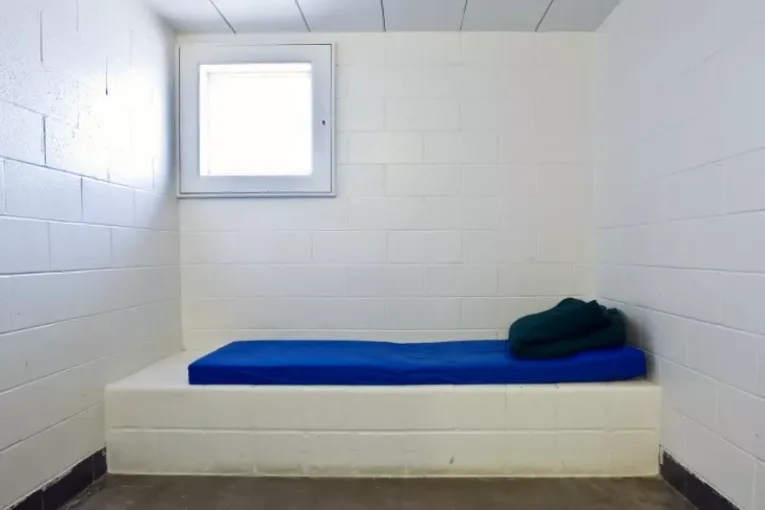
WASHINGTON, D.C. – A sweeping new national report from The Sentencing Project documents widespread physical violence, sexual abuse, prolonged solitary confinement and other forms of mistreatment in 247 juvenile detention and correctional facilities across 41 states and Washington, D.C., raising serious questions about the ability of the nation’s juvenile justice system to protect children in its custody.
The report, Havens of Harm: Widespread Abuse in U.S. Juvenile Detention and Corrections Facilities, 2015-2026, authored by Richard A. Mendel, Joshua Rovner and Raven Lewis, Ph.D., examines documented incidents and credible allegations of recurring or systemic abuse from January 2015 through mid-2026.
Drawing on investigative reports, court records, government findings and news coverage, the researchers identified facilities where young people experienced repeated physical assaults by staff, violence from other incarcerated youth, sexual abuse, dangerous restraints, extended isolation and unsafe living conditions.
The findings span Republican- and Democratic-led states, urban and rural communities, and publicly and privately operated facilities.
The report identifies 116 juvenile detention facilities, 120 correctional placement facilities, eight facilities serving both functions and three correctional facilities housing young people convicted as adults.
The researchers found evidence or credible allegations of physical abuse by staff in 84 facilities, youth-on-youth violence in 79 facilities, sexual abuse in 80 facilities and dangerous or excessive use of restraints in 71 facilities.
Abusive solitary confinement was documented in 131 facilities, while 75 facilities were identified as having other unsafe or inhumane conditions, including exposure to drugs, unsanitary environments, extreme temperatures and inadequate food.
Many facilities were associated with multiple forms of mistreatment.
The report also identifies at least 27 young people who died while confined in juvenile justice facilities between 2015 and 2026, including 12 deaths by suicide. The authors caution that additional deaths may have occurred.
Among the most disturbing findings were incidents in which correctional officers allegedly assaulted children directly or failed to intervene when other incarcerated youth attacked them.
In South Carolina, a 2022 federal investigation of the Broad River Road Complex documented incidents in which staff choked a boy, broke another youth’s arm and bit a girl’s face.
Federal investigators in Texas described an incident in which staff slammed a handcuffed young person’s head into a brick pillar, knocking him unconscious.
In California, the report highlights an incident at Los Padrinos Juvenile Hall in Los Angeles County, where a 16-year-old boy was attacked by at least six other youths in December 2023.
According to the report, surveillance footage showed staff members failing to intervene as the teenager was punched, kicked and stomped. Staff were also observed exchanging high-fives and handshakes with the attackers.
The teenager subsequently sued Los Angeles County and received a $2.7 million settlement.
The report also documents extensive allegations of sexual abuse, including cases in which correctional staff allegedly groomed children through gifts, drugs and special treatment before coercing them into sexual contact.
At Oklahoma’s Tulsa County Family Center for Juvenile Justice, 21 young people reported sexual abuse involving three staff members during 2023 and 2024.
In New Hampshire, more than 2,200 former residents of the state’s Youth Development Center have filed lawsuits alleging abuse spanning more than five decades.
Among those allegations, 425 former residents reported being raped by staff, while hundreds of others described physical assaults, unnecessary restraints and degrading treatment.
The report identifies prolonged solitary confinement as one of the most pervasive forms of abuse.
In New York, lawsuits have alleged that children as young as 12 were confined alone in small rooms for weeks or months, sometimes forced to use trash cans as toilets and eat meals in the same spaces.
Nebraska recorded approximately 127,000 hours of isolation across eight state facilities during fiscal year 2024-25.
The Sentencing Project notes that leading medical and psychiatric organizations have condemned solitary confinement for adolescents because of its potential to cause severe psychological harm.
The researchers also found widespread use of mechanical and chemical restraints.
At San Diego County’s East Mesa Juvenile Detention Facility, young people were handcuffed 782 times in 2023 and placed in leg or ankle chains 703 times.
The report states that 36 states and Washington, D.C., prohibit pepper spray in juvenile facilities, yet some jurisdictions continue to use it extensively.
The findings come as the United States has begun reversing decades of progress in reducing youth incarceration.
Between 2000 and 2020, the number of young people confined in juvenile facilities declined from approximately 109,000 to 25,000 on an average day.
During the same period, youth arrests for serious violent crimes fell substantially, challenging the assumption that large-scale incarceration is necessary to maintain public safety.
However, the report finds that the population of incarcerated youth increased by 17% between 2020 and 2023, while several states enacted legislation expanding the circumstances under which young people can be detained.
The Sentencing Project argues that these policies run counter to research demonstrating that incarceration can increase the likelihood of future offending, disrupt education and employment opportunities, and compound trauma experienced earlier in childhood.
The researchers identify two structural factors contributing to persistent abuse: the isolation and power imbalances inherent in locked institutions and chronic staffing shortages.
A national survey cited in the report found that 90% of juvenile correctional agencies experienced difficulties recruiting and retaining frontline employees.
Staffing shortages can leave young people vulnerable to violence, reduce supervision and undermine rehabilitative programming.
However, the report cautions that increased staffing alone cannot guarantee safety when institutional cultures tolerate abuse or rely heavily on punishment.
The researchers also emphasize that their findings likely underestimate the actual extent of mistreatment.
Their methodology generally required evidence of repeated abusive incidents or patterns of dangerous practices before identifying a facility as abusive. Many incidents never become public, while some jurisdictions fail to collect or disclose facility-specific information.
The 247 facilities identified represent a substantial share of the approximately 825 juvenile detention and correctional facilities operating nationwide in 2022, the most recent year for which the report cites comparable national data.
The Sentencing Project recommends sharply reducing youth incarceration and reserving confinement for rare cases involving an imminent risk of violence.
The organization calls for expanded investment in community-based alternatives, which it argues can better support rehabilitation while reducing future involvement in the justice system.
The report also recommends prohibiting punitive solitary confinement, eliminating pepper spray and dangerous restraint devices, and imposing stricter limits on physical force.
Additional recommendations include independent facility monitoring, comprehensive video surveillance, accessible procedures for reporting abuse and public disclosure of incidents involving assaults, restraints and isolation.
The researchers urge authorities to remove staff members responsible for mistreatment and pursue criminal charges when warranted, including against supervisors and administrators who knowingly tolerate abuse.
The report concludes that reducing incarceration is essential not only to protecting young people but also to improving public safety.
It argues that exposing children to violence and trauma within institutions intended to rehabilitate them can increase the likelihood of future offending, undermining the stated purpose of juvenile justice.
The authors contend that meaningful reform requires reducing reliance on confinement while ensuring that the young people who remain incarcerated are protected from abuse.
To comment please go to one of these social media platforms:
Facebook: https://www.facebook.com/DavisVanguard
LinkedIn: https://www.linkedin.com/company/peoples-vanguard-of-davis-inc/
Instagram: https://www.instagram.com/davisvanguard/
X: https://x.com/davisvanguard
Bluesky: https://bsky.app/profile/vanguardnewsgroup.bsky.social
Subscribe to the Vanguard News letters. To make a tax-deductible donation, please visit davisvanguard.org/donate or give directly through ActBlue. Your support will ensure that the vital work of the Vanguard continues.
