
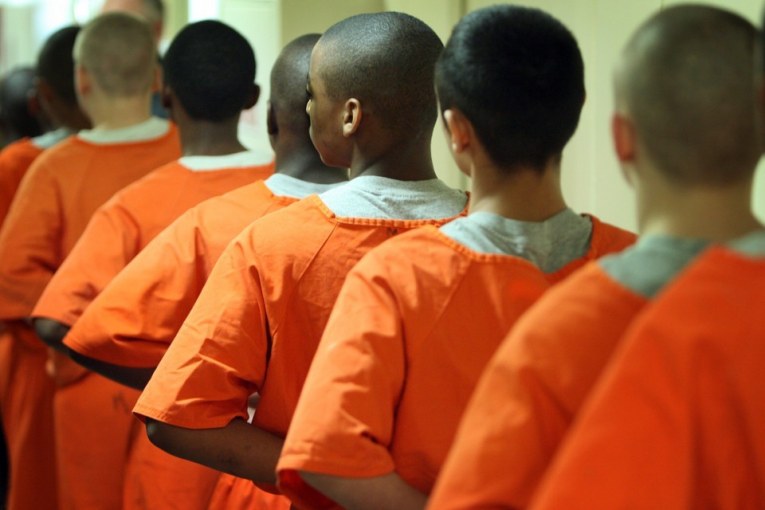
NORTHAMPTON, Mass. — A new research roundup published by the Prison Policy Initiative on Nov. 12 highlights the lasting psychological consequences of youth incarceration, finding that children held in juvenile detention centers and adult correctional facilities face significantly higher risks of depression, suicidal ideation and other mental health conditions that can persist into adulthood.
In the report, titled “Research roundup: Youth incarceration can cause lasting damage to mental health,” author Emily Widra examines decades of research documenting the relationship between childhood incarceration and deteriorating mental health.
Widra explains that “many children enter youth prisons with histories of trauma and existing mental health disorders only to have their mental health deteriorate further while locked up.”
According to research cited in the report, about two-thirds of children held in juvenile detention facilities have a diagnosable mental health condition, compared with approximately one-fifth of children in the general U.S. population.
An international analysis of more than 30,000 detained youths found significantly higher rates of mental health disorders among girls than boys. Major depression was identified in 26% of detained girls compared with 10% of boys, while post-traumatic stress disorder was found in 18% of girls compared with 9% of boys.
Widra points out that “anger,” “irritability,” “hostility,” “property destruction” and “physical aggression” may be ways that youths experiencing depression, anxiety or PTSD express emotional distress.
Research shows that law enforcement officers and school resource officers are responsible for nearly nine out of 10 referrals to juvenile court, raising concerns about whether young people experiencing behavioral health crises are receiving appropriate interventions.
The report also identifies racial disparities within the juvenile justice system. Although Black youths account for approximately 14% of the U.S. population younger than 18, they represent 47% of boys and 39% of girls held in juvenile detention facilities.
Widra further emphasizes that “confinement does not support mental health treatment,” particularly when children experience isolation, violence, limited access to services and separation from their families.
These problems are compounded when children are incarcerated in adult correctional facilities.
Approximately 2,500 incarcerated youths are housed in adult jails and prisons, where they face greater exposure to violence and reduced access to appropriate mental health treatment compared with youths held in juvenile facilities.
Research involving incarcerated youths in Michigan found that those confined in adult facilities experienced depression at rates at least 20 times higher than youths who were not incarcerated or who were held in juvenile facilities.
Other research found that youths held in adult jails were 36 times more likely to die by suicide than those housed in juvenile detention centers.
Another serious concern is the use of solitary confinement. A study examining self-harm in New York City’s adult jail system from 2010 through 2012 found that solitary confinement and being younger than 19 were both significant predictors of self-inflicted injury.
Similarly, a study of 100 suicides in juvenile detention facilities between 1995 and 1999 found that half occurred while the young person was locked in their room.
According to 2022 data from the Census of Juvenile Residential Facilities, fewer than 70% of surveyed facilities assessed every youth in their care for potential mental health conditions. Fewer than half, approximately 46%, conducted those assessments within the first 24 hours after admission.
Additionally, a 2026 congressional report found that at least 75 juvenile detention facilities across 25 states continued to hold children who might have been eligible for community-based mental health programs if those services had been available.
Beyond the immediate consequences of confinement, research indicates that incarceration during childhood and adolescence can have lasting effects on mental health in adulthood.
Studies using data from the National Longitudinal Study of Adolescent to Adult Health found that adults who spent less than one month incarcerated before age 25 were 41% more likely to experience depression later in life than adults who had never been incarcerated.
Another study found that adults who had been incarcerated as youth for more than one year had 318% higher odds of experiencing depression and 134% higher odds of suicidal ideation.
Researchers also found that 38% of people arrested before their 14th birthday experienced depression in adulthood, compared with 24% of those first arrested between ages 14 and 32.
These findings raise concerns about the long-term psychological consequences of incarceration during critical stages of childhood and adolescent development.
Widra argues that there is a “critical need” to address childhood mental health conditions and prevent or limit young people’s involvement in the criminal legal system.
The report emphasizes the importance of accessible community-based mental health services, early intervention and alternatives to incarceration that can better meet the needs of vulnerable youths.
To comment please go to one of these social media platforms:
Facebook: https://www.facebook.com/DavisVanguard
LinkedIn: https://www.linkedin.com/company/peoples-vanguard-of-davis-inc/
Instagram: https://www.instagram.com/davisvanguard/
X: https://x.com/davisvanguard
Bluesky: https://bsky.app/profile/vanguardnewsgroup.bsky.social
Subscribe to the Vanguard News letters. To make a tax-deductible donation, please visit davisvanguard.org/donate or give directly through ActBlue. Your support will ensure that the vital work of the Vanguard continues.
