
NEWPORT, Calif. — A judge on Wednesday declined to significantly modify a no-contact order, despite the protected party’s request to allow limited communication and time between the accused and her daughter, maintaining strict restrictions while reinstating formal probation.
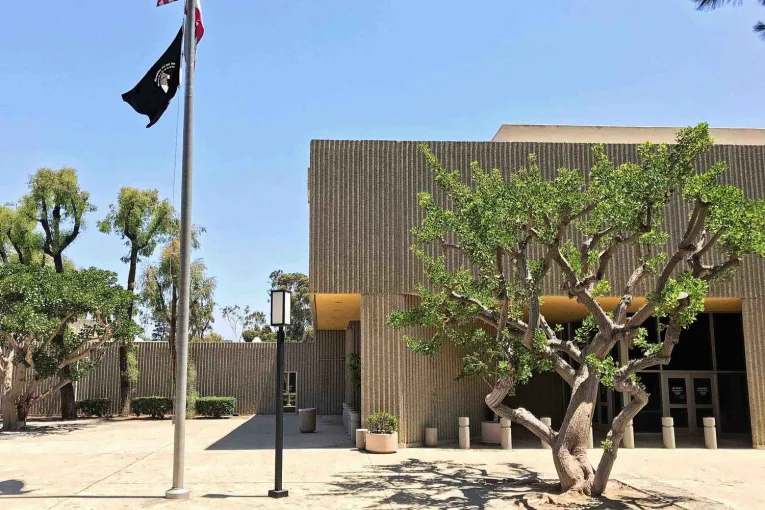
During a Wednesday morning hearing at the Harbor Justice Center, the court declined to modify a no-contact order despite the protected party’s request to allow limited communication and time between the accused and her daughter. Judge Gregg L. Prickett maintained that contact would be limited to phone calls and reinstated formal probation, preventing the accused from spending the day with his daughter on her birthday.
The accused pleaded guilty on Oct. 10, 2024, to multiple misdemeanor counts, including obstructing or resisting an officer, assault and battery on a peace officer, resisting a public officer, and public intoxication.
Judge Prickett opened the hearing, stating, “The court believes in greater honor to decline your request for contact, but the court gives the protected party permission to make minor phone calls, with no physical contact.”
During the hearing, the protected party reiterated her request for limited contact, noting that “he is the father of my daughter” and has played a supportive role in her life. She explained that her daughter’s birthday on March 27 prompted her request, expressing that her daughter wished to speak with the accused.
Judge Prickett inquired whether a party would be held and the location. The protected party confirmed the event would take place in Huntington Beach.
Judge Prickett allowed a limited exception, permitting a two-hour visit from 2 to 4 p.m., emphasizing that contact must remain strictly restricted. The protected party acknowledged this and requested to speak privately with the public defender.
The protective witness asked whether she could be granted limited contact with the accused. Judge Prickett denied the request and directed the public defender to clarify any questions the accused might have.
The deputy public defender explained that the accused has remaining questions about his probation, particularly after being denied access to contact his family and following his termination from previous programs. He stated, “My client believes he was terminated from the Batterer’s Treatment Program.” He noted that court records regarding the matter remained unclear on the accused’s end before the trial date.
Judge Prickett corrected this, explaining that the accused should have already been reenrolled regardless, and added, “You cannot be on defense. If you are on probation, you have to do the class. So as of right now, he is in formal probation, and being reenrolled should have already been done.”
The public defender requested that the accused be provided an extended deadline of April 5 to enroll in the program, allowing the matter to return to the trial calendar.
Judge Prickett agreed, noting that the accused is invited, but not required, to attend, and cautioned that failure to appear could adversely affect the accused’s position.
The court reinstated the accused’s three years of formal probation and scheduled a hearing to review the protective order modification on April 10, 2026, at 8:30 a.m. in Department 4 at Harbor Justice Center.
Limited opportunities were left for the accused to get in touch with family and address concerns over program completion for more than two months.
Follow the Vanguard on Social Media – X, Instagram and Facebook. Subscribe the Vanguard News letters. To make a tax-deductible donation, please visit davisvanguard.org/donate or give directly through ActBlue. Your support will ensure that the vital work of the Vanguard continues.
