
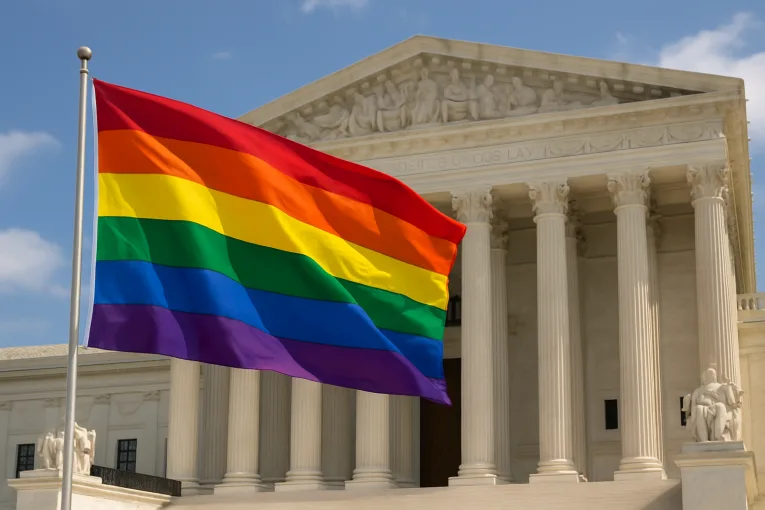
WASHINGTON, D.C. — The U.S. Supreme Court agreed Monday to hear a closely watched case that could reshape the balance between religious liberty and anti-discrimination protections, deciding whether Catholic preschools in Colorado that refuse to enroll children of same-sex or transgender parents may participate in a publicly funded state preschool program.
At issue is Colorado’s universal preschool program, which allows families to use public funds at participating schools, including private and faith-based institutions, while requiring those schools to comply with nondiscrimination rules.
Two Catholic parish preschools in Denver contend that admitting such children would conflict with their religious beliefs. Colorado’s program requires participating schools to ensure all families have an “equal opportunity” to enroll, and state officials denied the preschools an exemption from those requirements.
That denial prompted the church to sue.
Lower courts ultimately sided with the state, but the latest clash between religious freedom and anti-discrimination laws will now be heard during the high court’s next term, which begins in October.
In previous disputes involving similar issues, including cases involving a baker who declined to create a wedding cake for a same-sex couple and a Catholic social services agency that refused to work with same-sex foster parents, the Supreme Court ruled in favor of religious claimants, allowing exemptions from certain anti-discrimination requirements.
In the latest case, the Archdiocese of Denver and two Catholic parishes also raised questions about Employment Division v. Smith, a precedent holding that neutral laws of general applicability do not violate the First Amendment, even when they incidentally burden religious practices.
That decision has been heavily criticized by many conservative Christians, who argue it provides insufficient protection for religious exercise. Justices Clarence Thomas, Samuel Alito and Neil Gorsuch have signaled they are open to reconsidering it.
At the center of the Colorado dispute is whether enforcing a nondiscrimination requirement on religious schools violates the First Amendment’s protection of religious freedom. The preschools argue the policy blocks them from accessing generally available public benefits because of their religious practices.
Colorado officials, however, maintain that participation in the publicly funded program requires compliance with rules ensuring equal access for all families.
The state argues that no participating preschool may discriminate against or exclude children based on sexual orientation or gender identity.
Lawyers for the schools from the Becket Fund for Religious Liberty told the justices that Colorado’s actions “reduce access, pushing parents and children toward preschools that share the government’s views on these issues.”
Colorado Attorney General Phil Weiser defended the state’s position, saying that while faith-based providers may create their own curriculum, “no publicly funded preschool can turn away children and families” based on their status.
He further stated, “This ensures that all Colorado parents—including Catholic parents and same-sex parents—know their children will not be excluded, because of their protected-class status, from the publicly funded preschool that best meets their families’ needs.”
A unanimous three-judge panel of the U.S. Court of Appeals for the 10th Circuit upheld the lower court’s ruling and sided with the state, finding that the exclusion of the preschools was not on the “explicit basis of religion” and that the program does not permit exceptions from its equal-opportunity requirements.
The appeals court found that the nondiscrimination requirement “applies to all preschools regardless of whether they are religious or secular” and rejected claims that the state created improper exceptions to its policy. The court said allowing some schools to prioritize low-income families or children with disabilities does not violate the nondiscrimination requirement.
The court also stated that Colorado officials “did not exclude faith-based preschools from participating” in the program. It further concluded that the policy was not intended to prevent public funds from being used for religious practices.
Richard Garnett, a professor at Notre Dame Law School and director of the school’s program on church, state and society, said the First Amendment’s guarantee of religious liberty does not permit the government to punish religious schools by excluding them from public funding programs.
He also said Colorado has continued to evade recent Supreme Court rulings by “imposing requirements that religious schools abandon various policies that reflect their religious character.”
As the Supreme Court prepares to review the case, the outcome could have broad implications for how constitutional protections for religious institutions are balanced against equal-access policies for families nationwide.
Follow the Vanguard on Social Media – X, Instagram and Facebook. Subscribe the Vanguard News letters. To make a tax-deductible donation, please visit davisvanguard.org/donate or give directly through ActBlue. Your support will ensure that the vital work of the Vanguard continues.
