
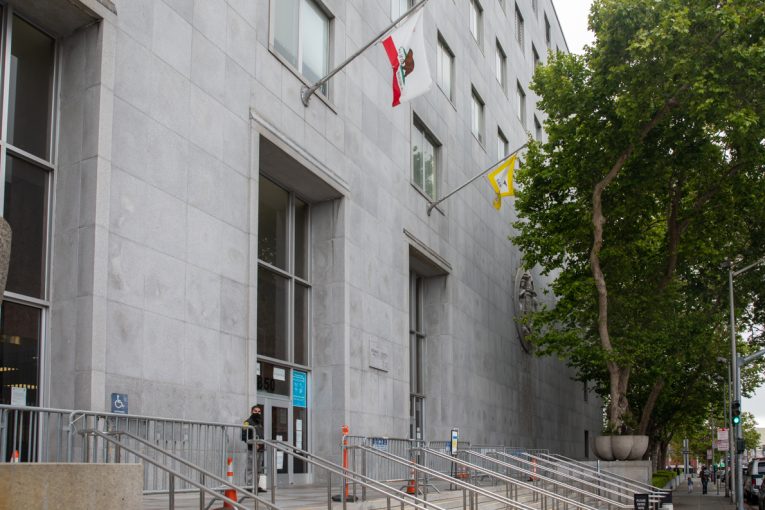
SAN FRANCISCO — In San Francisco Superior Court, Deputy District Attorney John Robles sought to challenge the credibility of Deputy Public Defender Tatiana Howard’s expert witness by introducing evidence related to an expunged 2006 criminal case, after earlier presenting testimony from a prosecution expert that included broad generalizations about Hondurans involved in drug activity.
The accused is charged with drug possession.
In Department 13, DDA John Robles sought to discredit DPD Tatiana Howard’s expert witness, Katherine O’Bryant, by introducing to the court an expunged criminal record from 2006 and submitting police reports that included statements indicating racial bias against Hondurans.
DDA Robles called Officer Smith as an expert witness. During his testimony, Officer Smith said he had spoken with many people who possessed and sold drugs in the Tenderloin and had spent hours observing the relationship between dealers and people possessing drugs.
While discussing his experience interviewing people who possessed and sold drugs, Officer Smith said he had interviewed about 80 Honduran individuals who possessed drugs and claimed that none of them had been forced to sell drugs.
“After waiving their Miranda rights, they always tell me, ‘Oh no, absolutely not, I’m just here for money,’” Officer Smith said when asked whether there was a correlation between human trafficking and drug sales.
Officer Smith testified that people possessing drugs and dealers generally maintained a cordial relationship. He also claimed that 75% to 80% of those involved in drug dealing in the Tenderloin were Honduran.
Howard then called Katherine O’Bryant, a peer counselor with a focus on substance abuse, as an expert witness. O’Bryant testified that she has 25 years of experience in research and data collection and has previously testified as an expert five times.
While on the stand, Howard asked O’Bryant whether she had personal experience with narcotics. O’Bryant explained that her own experience with substance abuse has helped her connect with clients. She also testified that many people resist counseling because they fear speaking with police or “ratting” someone out.
Robles then introduced a copy of O’Bryant’s personal website and directed the court’s attention to her job title, which identified her as a “Substance Use Counselor.” He repeatedly questioned whether she had the credentials to use that title.
O’Bryant responded that she had been experimenting with different fonts and job titles for her website and was unaware that the version she had been editing had been published publicly. She told the court that, for legal reasons, she could not call herself a substance abuse counselor, which is why she identifies herself as a “Peer Counselor with a Focus on Substance Abuse.”
Robles then questioned O’Bryant about an unrelated felony drug possession charge from 2006. He did not explain how the decades-old case was relevant to the current proceedings.
O’Bryant testified that she had possessed “0.08 grams of cocaine,” but said the record should have been expunged because she successfully completed a Proposition 36 diversion program.
Robles asked O’Bryant several variations of the same question and received the same response each time. Judge Brian J. Ferrall, who had previously instructed Robles to rephrase his questions, ultimately directed him to conclude his examination.
The trial is ongoing.
Follow the Vanguard on Social Media – X, Instagram and Facebook. Subscribe the Vanguard News letters. To make a tax-deductible donation, please visit davisvanguard.org/donate or give directly through ActBlue. Your support will ensure that the vital work of the Vanguard continues.
