
Key points:
- Douglas “Chief” Stankewitz seeks relief under California Racial Justice Act.
- Stankewitz claims racial bias tainted his 1978 conviction and sentence.
- Judge Arlan Harrell previously denied Stankewitz’s habeas petition in December 2024.
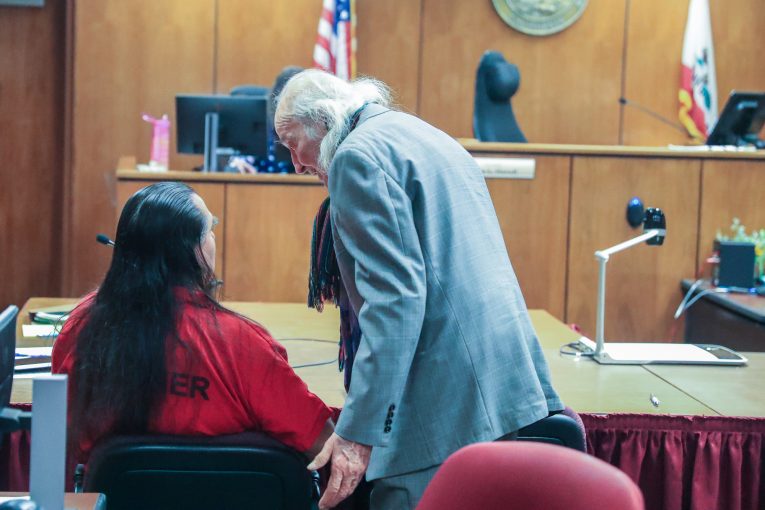
Douglas “Chief” Stankewitz, California’s longest-serving individual on death row, is seeking relief under the California Racial Justice Act (RJA), arguing that racial bias tainted his conviction and sentence in a case that has kept him incarcerated since 1978.
In a motion filed under Penal Code § 745(a)(1) and (a)(2), his defense argues that prosecutors relied on racial stereotypes and that at least one juror was improperly excluded because of their Native American identity.
The Fresno County District Attorney’s Office has opposed the motion, while the defense has submitted a formal reply pressing its case for a hearing.
Stankewitz, who is of Native American heritage, has maintained that he did not receive a fair trial. In the motion for relief filed with the Fresno County Superior Court, his legal team cited multiple instances in which race allegedly influenced the proceedings.
Among them, the motion alleges that during the penalty phase of his second trial, prosecutors emphasized stereotypes about Native American drug and alcohol abuse on reservations—drawing a direct connection between his background and his alleged inability to follow the law.
“Racially coded themes of lawlessness, substance abuse, and an inability to function in society were repeatedly emphasized by the prosecution,” the motion argues. It contends that prosecutors made “overbroad generalizations about Native Americans” to encourage jurors to view Stankewitz not as an individual but as a representative of a dangerous group.
Stankewitz’s attorneys also pointed to the removal of the only Native American juror from the panel as an example of racial bias. The motion maintains that this juror was struck because of her background, not any legitimate race-neutral reason. At the heart of this portion of the RJA motion is the assertion that the dismissal denied Stankewitz a jury of his peers and helped shape an outcome rooted in racial prejudice.
The Racial Justice Act, signed into law in 2020 and retroactively expanded in 2022, prohibits criminal convictions or sentences based in whole or in part on race, ethnicity, or national origin. It allows individuals to bring claims supported by statistical evidence, historical patterns, or overtly discriminatory acts.
Stankewitz’s filing, the second amended motion for relief, is among a growing number of efforts to use the law to revisit long-standing convictions—particularly those with known racial disparities.
The petitioner argues that racial prejudice, rather than neutral application of the law, played a central role in shaping the outcome of Stankewitz’s capital case.
“The prosecution elicited and emphasized racially charged testimony from an expert witness that described Native Americans as living in communities marked by alcoholism, drug use, and social dysfunction,” the motion argues.
The prosecutor urged jurors to sentence Mr. Stankewitz to death, they continue, “because of his background and association with a community of people allegedly plagued by substance abuse and violence, rather than any individualized assessment of his character or future behavior.”
They add, “This pattern of racial generalization and stereotyping amounted to a direct appeal to racial bias and undermined the fairness of Mr. Stankewitz’s sentencing proceeding.”
In response, Fresno County prosecutors submitted a detailed opposition, disputing the factual and legal basis for the motion. In their filing, they asserted that the juror was removed for legitimate reasons, specifically that she was a teacher who had personal knowledge of the defendant’s family. They cited case law to argue that such familiarity is a widely accepted, race-neutral ground for exclusion.
“There has been no showing of bias by the prosecution,” the opposition brief reads. “A juror’s familiarity with a party, especially in a case involving a serious capital charge, is a widely accepted, legitimate, non-discriminatory reason for exclusion.”
The prosecution argued that no Batson/Wheeler objection was raised at the time of trial regarding the removal of the Native American juror. They also argued that Stankewitz’s current motion fails to present comparative juror analysis, statistical evidence, or affidavits supporting the claim of racial bias.
“Defendant offers no comparative juror analysis, statistical data, or supporting affidavits—only speculation,” they wrote. “That is insufficient under both the RJA and California constitutional standards.”
On the broader claims of discriminatory rhetoric, the district attorney’s office contends that the defense opened the door to such evidence. According to the opposition, the defense team at the time of the second trial used expert testimony to describe the effects of substance abuse and poverty in Native communities, presumably as a mitigating factor. The prosecution claims it merely responded to this narrative during its penalty-phase arguments.
“Defense tactically decided to use an expert to testify about the Native American culture and the substance abuse that was prevalent on the reservation,” the brief states. “This tactic was likely used to elicit sympathy for the defendant and the upbringing that he was exposed to. Defense opened the door to this evidence which now is being argued as racially biased fifty plus years later.”
The People’s opposition also argues that the defense’s allegations could have been raised earlier in habeas petitions, and thus should be considered untimely. “This argument could have been made long before the RJA law came into existence and therefore is untimely,” prosecutors wrote.
In a reply brief filed after the People’s opposition, Stankewitz’s legal team pushed back strongly against the idea that these issues are time-barred or that the RJA does not apply. They note that the act was specifically intended to address historical injustices—many of which were not legally actionable until the law changed.
Stankewitz’s reply also reiterates the argument that the use of racial stereotypes by the prosecution during the penalty phase amounted to a violation of due process and equal protection. The reply underscores that the prosecutor’s closing arguments invoked collective Native identity rather than focusing on individualized behavior.
Citing case law, the defense countered that even if the defense introduced cultural context, that does not give prosecutors license to “essentialize” the defendant’s identity or suggest a causal link between race and dangerousness.
The defense further argues that the People misstate the legal standard. The RJA does not require that race be the sole motivating factor, only that it was a factor in the outcome. “The People ignore this statutory language and instead attempt to impose a higher burden on the defense,” the reply reads.
Regarding the excused juror, the reply brief asserts that the People failed to present sufficient evidence that the removal was based on a race-neutral reason. It reiterates that striking the only Native American juror raises a serious concern that should not be dismissed based on assumptions about the individual’s family ties.
The motion is currently set for a hearing on August 20, 2025, in Fresno County Superior Court, Department 62. If the court finds that the defense has established a prima facie case, it must hold an evidentiary hearing under Penal Code § 745(c), allowing for testimony, data, and additional evidence to be presented.
The motion is currently set for a hearing on August 20, 2025, in Fresno County Superior Court, Department 62. If the court finds that the defense has established a prima facie case, it must hold an evidentiary hearing under Penal Code § 745(c), allowing for testimony, data, and additional evidence to be presented.
Judge Arlan Harrell previously denied Stankewitz’s habeas petition in December 2024, following two weeks of evidentiary hearings in February of that year. Despite that ruling, Stankewitz’s legal team argues that the Racial Justice Act presents a distinct legal avenue, one focused specifically on racial bias in the trial and sentencing process. Whether the court finds those claims compelling enough to warrant relief remains to be seen.
