
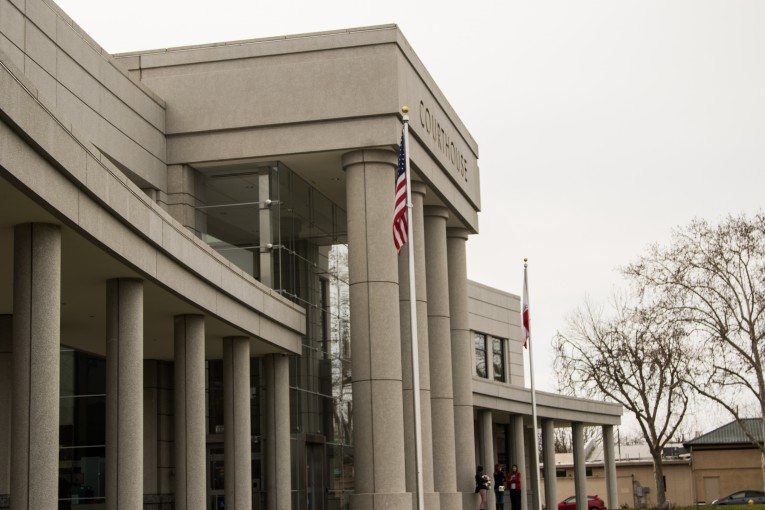
WOODLAND, Calif. — A Yolo County Superior Court judge has granted a motion from the defense seeking the disclosure of homicide charging and conviction data for white and Hispanic individuals, citing potential concerns under California’s Racial Justice Act.
Judge Daniel Wolk ruled in favor of the motion, filed by Deputy Public Defender Jonathan Opet, who argued that his Hispanic client had been overcharged due to racial bias.
The accused faces a murder charge with three enhancements, including use of a deadly weapon, habitual offender status, and circumstances in aggravation. Opet contended that the accused had been involved in a serious altercation with the victim before the alleged killing, and that, in similar circumstances, white individuals were more likely to be charged with manslaughter or offered manslaughter plea deals.
Opet argued that the prosecution’s charging decision could constitute a violation of Section 3 of the California Racial Justice Act, which prohibits charging individuals with more serious crimes due to their racial or ethnic background.
He requested statistical records from the prosecution showing charging and conviction outcomes for white and Hispanic individuals in comparable homicide cases, to assess whether Hispanic defendants were systematically overcharged.
Deputy District Attorney Ava Chin-Perez strongly opposed the motion, denying any racial bias. She stated that the accused would have been charged with murder regardless of race and argued that statistical data is not relevant to determining whether the charge in this specific case was appropriate.
Chin-Perez, who identified herself as Hispanic, said she had worked to increase Hispanic representation in the criminal justice system and was “offended” by the allegation of racial discrimination.
She also raised logistical objections, citing the significant burden that would be placed on her office in compiling case files, witness testimony, and other materials that could include personal information about unrelated victims. Chin-Perez argued that disclosing such information could violate privacy and impose an undue workload on prosecutors.
Opet reiterated that data shows Hispanic defendants are less likely to receive manslaughter plea offers compared to white defendants, but Chin-Perez responded that no plea offer had yet been made in the current case and that hypothetical comparisons are therefore speculative.
Judge Wolk referenced the Racial Justice Act’s requirement that a defense attorney must present a “prima facie” case suggesting that racial discrimination could have occurred. The statute authorizes courts to allow discovery of evidence if the defense provides a plausible basis for the claim.
Citing legislative intent and precedent, Wolk ruled in favor of the defense motion, emphasizing that the law allows broader access to statistical evidence when raising potential racial bias. He also said he would be open to granting exceptions if the data collection proves overly burdensome for the prosecution.
Opet agreed to coordinate with the district attorney’s office to establish a workable timeline for the release of the requested information.
The California Racial Justice Act, signed into law in 2020, prohibits racial discrimination in charging decisions, jury selection, sentencing, and convictions. More information on the law is available here.
