
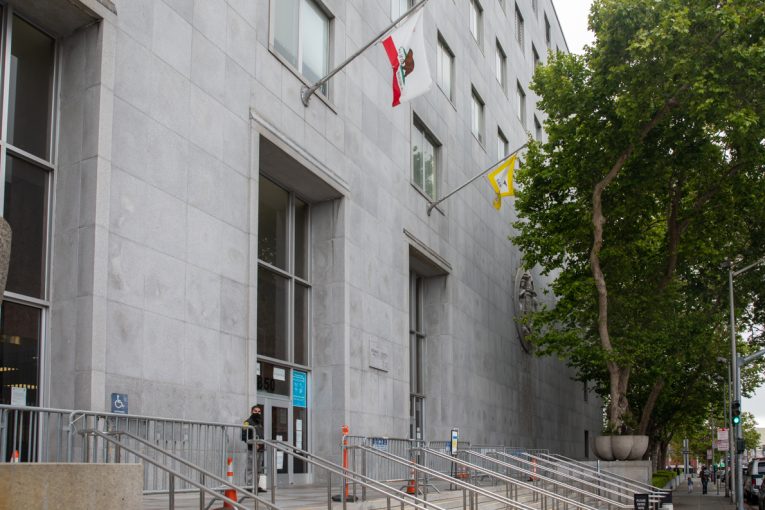
San Francisco, CA — A felony trial in San Francisco Superior Court on Tuesday centered on whether a young man facing drug charges was a trafficked victim coerced into the narcotics trade. Deputy Public Defender William Helvestine argued that his client was forced into selling drugs under threat and manipulation by organized crime groups, while Deputy District Attorney Dennis Guzman contended the accused knowingly participated in distribution.
The accused told the court he had been trafficked by gangs in Honduras and coerced into selling drugs through threats made against him and his family.
The defense called Dr. Thomas John Boerman to testify about the psychological torment a trafficking victim could face. Dr. Boerman described Honduras as a “criminalized state” where it is hard to “separate government from organized crime.”
He testified that more than 100,000 people have been forced to relocate because of gang threats against themselves or their families. Human trafficking, he said, is common in Honduras with gangs such as MS-13 and Barrio 18 forcing victims into transporting or harvesting drugs. He noted that “common people” are often targeted more because they “don’t attract attention.”
Dr. Boerman added that organized crime groups “capitalize on the vulnerability of migrants.” Under questioning from Helvestine, he listed traits gangs look for in potential victims, including people traveling alone, those with disabilities, women, or those perceived as weaker.
He explained that trafficked victims often face debt bondage to the gang. Gangs will threaten to kill or harm victims’ families if debts are not repaid, and will often increase the debt without the victim’s knowledge. Victims may be forced to work it off through drug dealing, prostitution, or transportation for gang members.
Dr. Boerman testified that human trafficking does not require physical control. Psychological control can leave victims in a state of terror, trauma, helplessness, and hopelessness, leaving them unable to seek help. He referred to these conditions as creating “modern day slaves.”
When asked by Helvestine how threats could be credible if gangs were not physically controlling the victim, Dr. Boerman explained that such threats carry emotional weight. He said people in Central America are socially conditioned to witnessing gruesome acts, making it easy to believe violent threats will be carried out.
The defense argued that this coercion drove the accused to San Francisco. According to their account, he was trafficked from Honduras by gang members who exploited his vulnerability and used threats against his family to force him into the drug trade.
Dr. Boerman’s testimony on psychological control, debt bondage, and fear of retaliation supports the defense’s claim that the accused had no meaningful choice in his actions. Helvestine contended that the narcotics-related activity his client is charged with in San Francisco is a direct result of exploitation and coercion.
Follow the Vanguard on Social Media – X, Instagram and Facebook. Subscribe the Vanguard News letters. To make a tax-deductible donation, please visit davisvanguard.org/donate or give directly through ActBlue. Your support will ensure that the vital work of the Vanguard continues.
