

At UC Berkeley School of Law, a packed room of students, faculty, advocates, and community members gathered for the screening of Reflections Behind Bars, a short documentary filmed inside San Quentin that explores the intersections of childhood trauma, incarceration, and the possibilities of healing.
The film, directed by Emmy Award-winner Jacob Kornbluth and produced by Back to the Start, captures incarcerated writers, policymakers, and community members sharing stories as part of a groundbreaking effort to humanize people behind bars and push for evidence-based solutions.
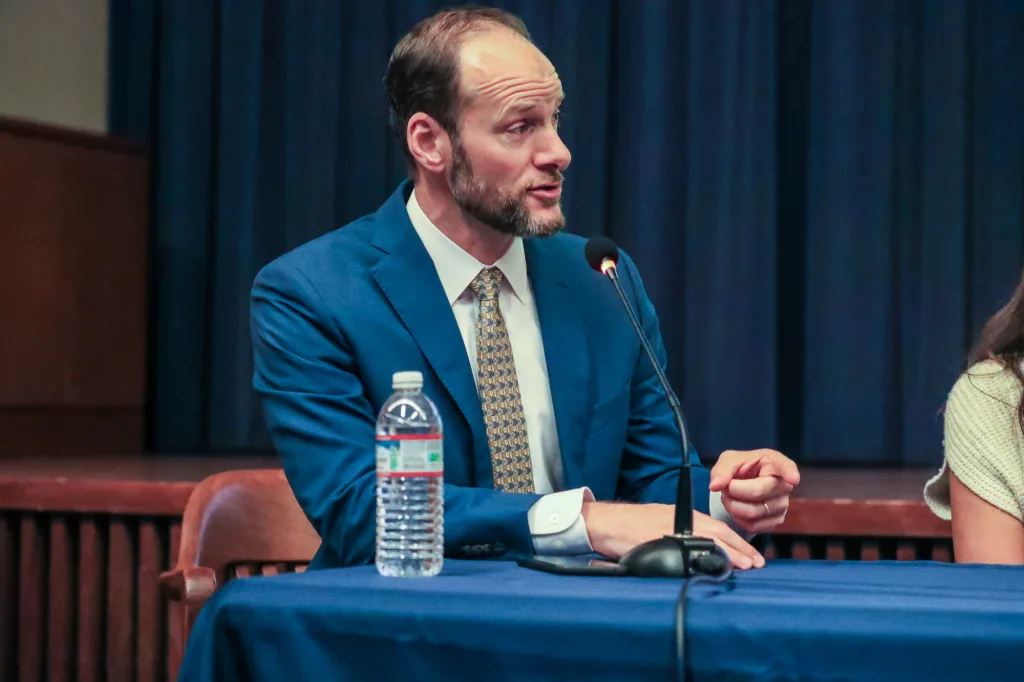
The panel discussion following the screening was moderated by Chesa Boudin, executive director of Berkeley Law’s Criminal Law & Justice Center and former San Francisco district attorney. Boudin opened the event by underscoring the power of narrative in reshaping justice policy.
“How we tell stories, how we communicate is often far more important than what we communicate,” he said. “Understanding the personal stories behind the kind of statistics and data that you saw in this film and that often we use to marshal evidence and argument is critical, and that’s one of the things that’s so powerful and so impactful about the work that Back to the Start does.”
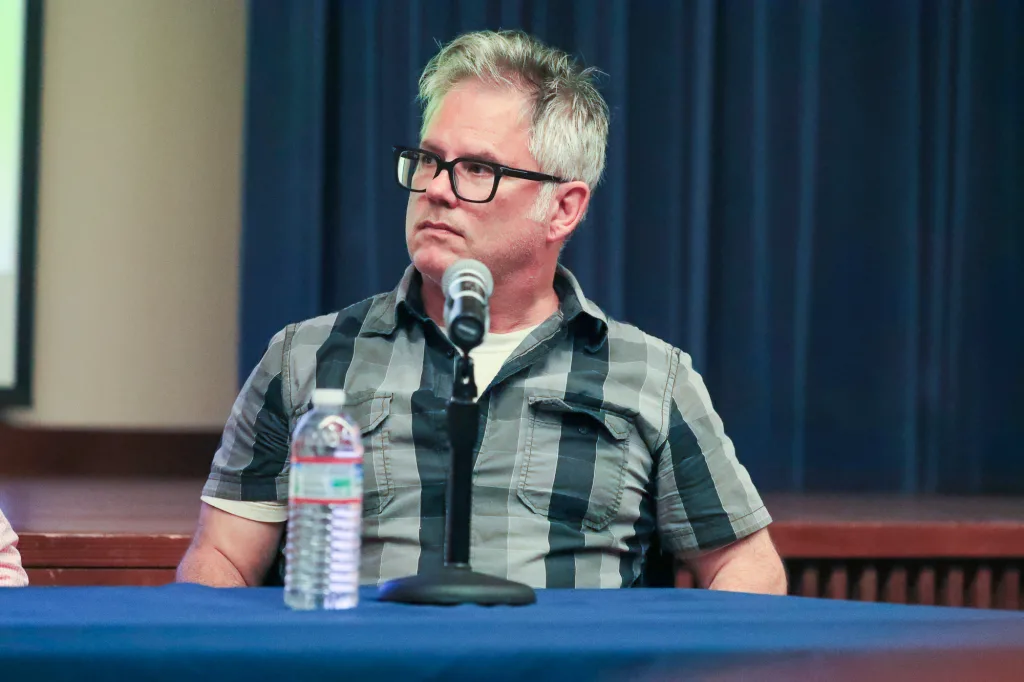
Kornbluth, who directed the film, described the alignment between storytelling and policy advocacy.
“I’m always looking for a way for things where policy and storytelling are aligned so that if you can change the story that opens the space most clearly for the policy change work to get done,” he said. “We can only change policy at the speed that the narrative changes.”
He added that the work of filming inside San Quentin faced logistical and bureaucratic barriers.
“It was also just striking that you can’t get stuff into San Quentin in terms of filming material and in terms of how to get it out. So you’d hear stories of these amazing… but it wasn’t able to be shared on the outside. So the idea that we went through this amazing six-month process of getting the camera to your hand and being able to get this story out, this is the first time that type of thing has been able to get done.”
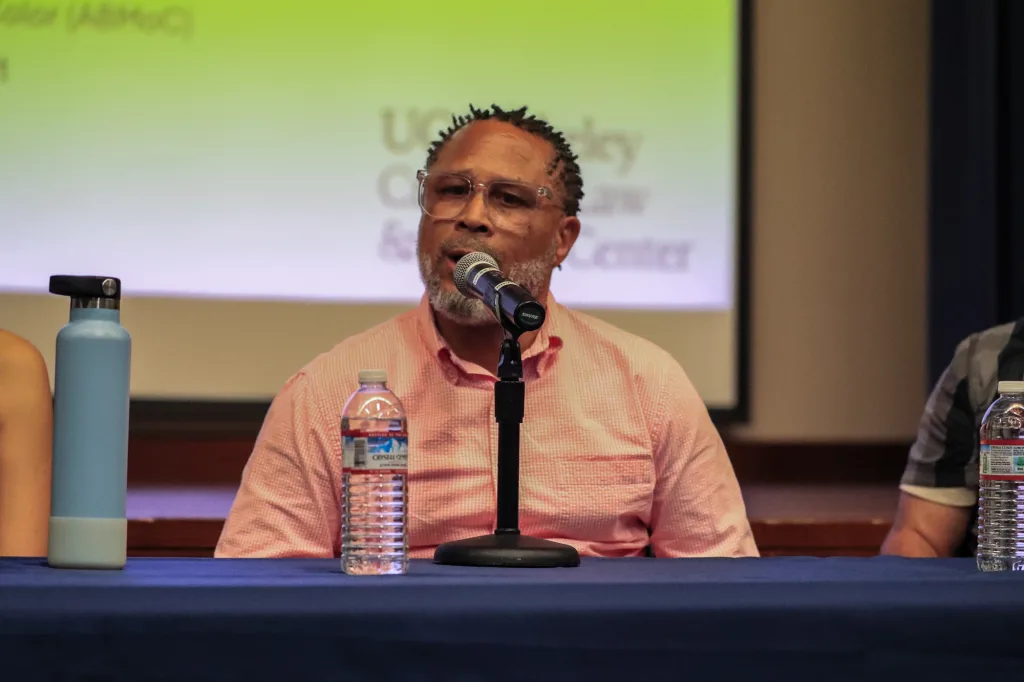
For Brian Gonsoulin, co-founder of Back to the Start and formerly incarcerated at San Quentin, the project was born from an urgent need to shift public perceptions. “Our whole goal was to try to educate the public about incarceration,” he said. “We wanted to change the narrative on how people view people of incarceration.”
Gonsoulin, who spent 26 years in prison, emphasized that storytelling could spark both personal transformation and systemic change.
“If I can get an individual to kind of understand this, then maybe we can make a change. But then how can we make a bigger change by getting society and getting the policy makers to back this up? So when they came with the idea of taking stories to change policy, I was all in.”
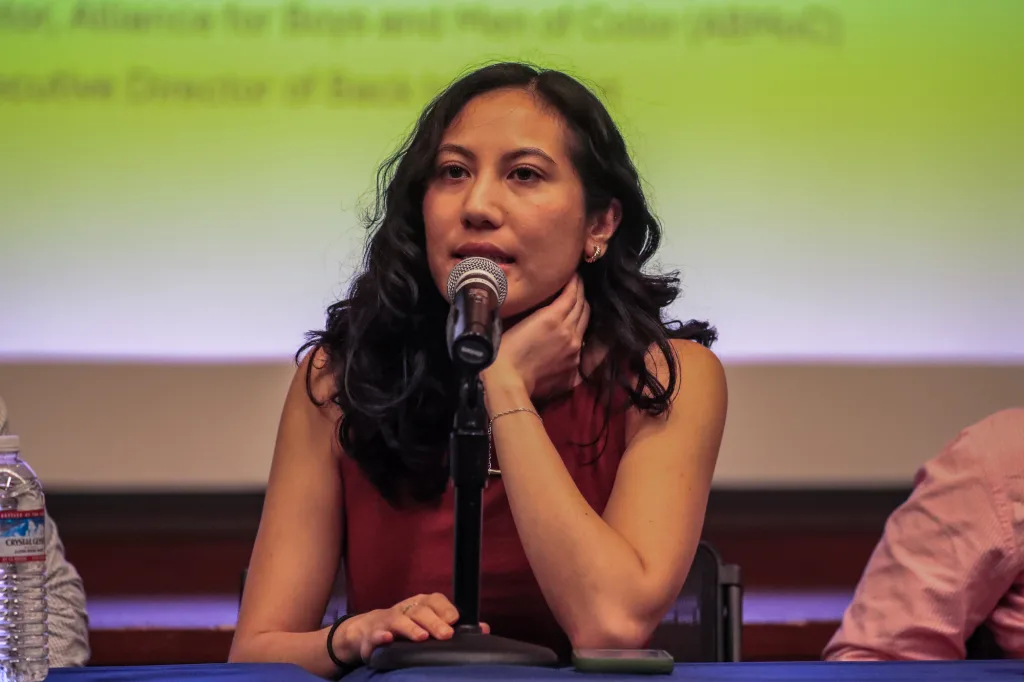
The panel brought together diverse perspectives from those directly impacted by the justice system and those working in policy and advocacy. Sally Ching, policy director for the Alliance for Boys and Men of Color, spoke about AB 1376, a bill aimed at ending indefinite probation for California youth.
“Because of the power of narratives, we were able to pass a bill out,” she said, highlighting the role of storytelling in breaking through legislative resistance. But she warned that progress is stalling. “We’re seeing a huge pendulum swing away from what we were seeing a few years ago in 2020 during the summer of Racial Reckoning and George Floyd protests where legislators now are no longer interested in appearing like they’re pushing for progress. They are now conceding to more moderate interests.”
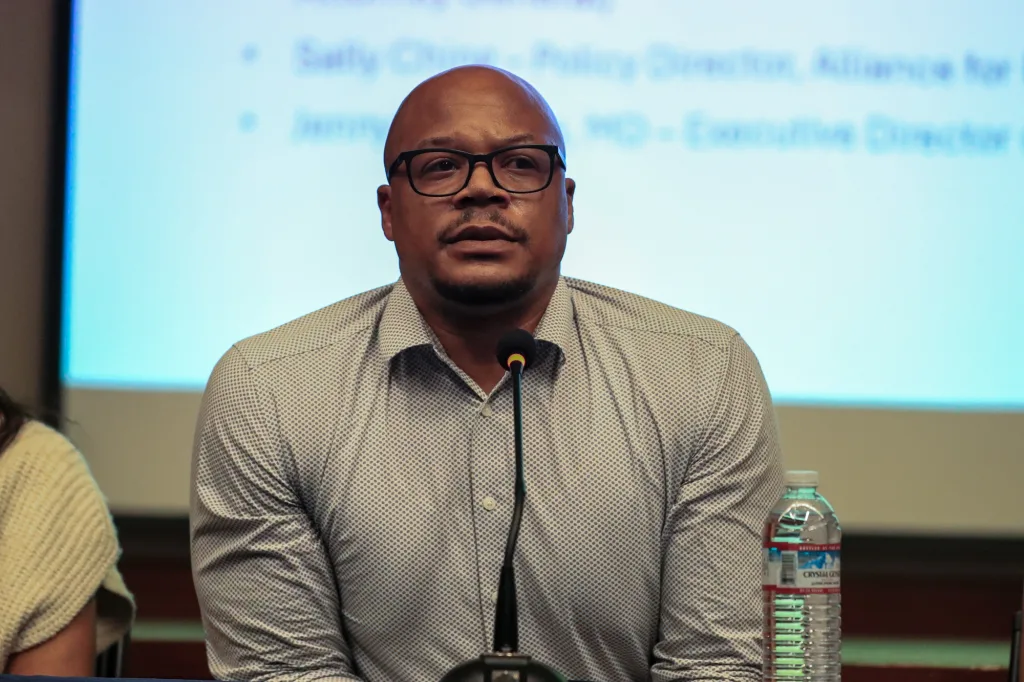
Anthony Ammons, sentenced as a teenager to 102 years to life and later released, described his journey from trauma to advocacy.
“A lot of people looked at me as, oh, he’s a troubled youth. Instead of he’s in pain, he’s a youth that’s hurting, he’s a youth that needs to talk,” Ammons said. Now working for the California Attorney General’s Office, Ammons explained how his role allows him to help break down silos and amplify unheard stories. “The Attorney General wanted the opportunity to break down these silos. He wanted to hear stories. So we have groups like Disability Rights Group, Immigration Rights Group, because he said human beings are closer to the work that he is.”
Dr. Jenny Espinoza, a physician and faculty member at UC Berkeley’s School of Public Health, reflected on the broader goals of Back to the Start.
“We finally have a really rich library of stories that we’re ready to leverage and disseminate to the public,” she said. Espinoza explained that incarcerated people’s testimonies are rarely heard by policymakers, even when bills directly affect their lives. “Obviously, they can’t be there in real time when they’re incarcerated, but it’s especially powerful when they’re trying to think about passing bills based on cost and just the perspective of, well, if to save some money here, you’re going to spend a lot more later on in addition to the human costs.”
Audience questions pushed the conversation deeper.
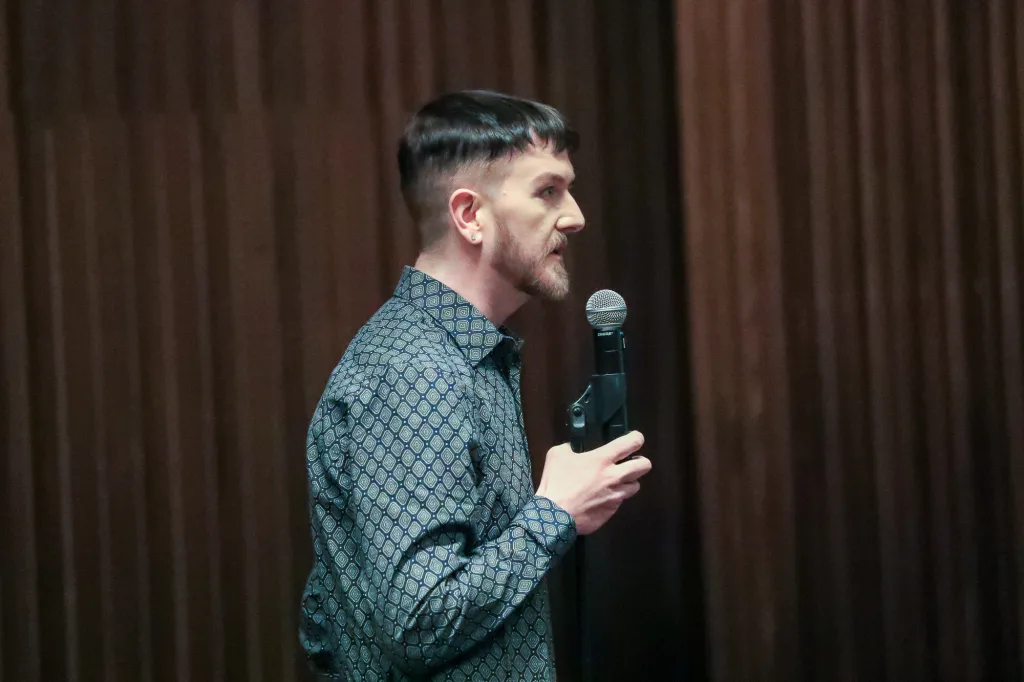
Steven Hensley, a recent Berkeley Law graduate and formerly incarcerated, asked about the impact of bringing prosecutors inside prisons for dialogue.
Gonsoulin said such exchanges can dismantle misconceptions. “Until you get to know a person, that’s when you know their story, then you would feel differently. So yes, you should bring people inside.”
Ammons added that prosecutors should not wait until young people are incarcerated to see them as human beings. “Let’s go to their schools where they’re hurting at, where they’re screaming for help at, where there is no mental health, where there is no counselors helping them get to college.”
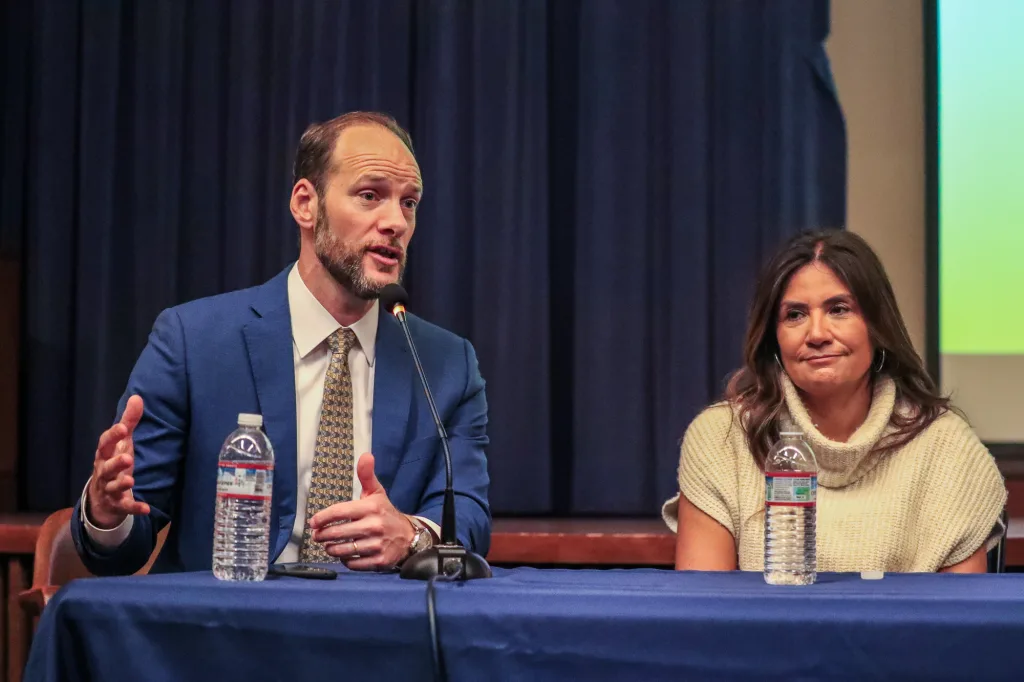
Boudin connected those reflections to his own experience as a district attorney.
“It’s really, really easy to create bad inhumane, draconian, punitive policies when you don’t see the people on the receiving end as human,” he said. “And when you can simply find ways to make those human connections sitting down in a circle, going to visit people and seeing where they live, it becomes much harder to justify what are truly in many of these instances, morally indefensible kinds of policies and practices.”
Another audience member, who had facilitated the program while incarcerated, asked about how storytelling transformed participants.
Gonsoulin pointed to a neighbor who had been hardened before joining the project.
“It helped him open up, it helped him. He said it felt like it was a burden lift off his shoulders,” he said.
Espinoza added that many participants had never shared their experiences before.
“Sometimes they were shaking… it really was transformative for them.” She noted that one striking commonality was the prevalence of sexual abuse. “Pretty much everyone relates to having experienced sexual abuse. So I would say that’s something that’s been striking for me as the facilitator of the program as well.”
A community member asked what ethical response should replace long sentences for serious harm. Ammons stressed the importance of considering trauma.
“They didn’t give a damn about what I went through as a kid,” he said of his sentencing. “Only that day mattered. And I would say counseling through prison, mental health through prison, advocacy of support network while in prison. So that way you don’t come out the same way you went in.”
Gonsoulin echoed that investment in early education and social support would be more effective than punishment. “We spent a whole lot of money on locking people up, but we don’t spend half of that on the kids in schools. How can you pay an officer more than you pay an educator?”
A medical student from UCSF asked about avenues for change outside of direct policy. Espinoza responded that her background as a physician shaped her perspective.
“It was pretty interesting that I realized I could potentially have a larger impact improving health of my patients by doing this narrative work. That’s actually how I entered that space.”
She emphasized the potential for media and culture to shift perceptions.
“My wish is that despite all of what we see on TV and in movies currently, when we think about prison and people that are incarcerated that one day we will actually have programming available, whether it’s on streaming movies, TV, that reflect the authentic stories.”
As the discussion neared its end, Kornbluth urged participants not to retreat in the face of political challenges.
“Stand up and say your piece now is more important than ever. And do it loud and proud,” he said. “Personally, I’d like to see people… it feels like a retreat for people on the progressive side for me, and I’d like to see it feel like a little bit more active and aggressive.”
Ching offered a call to action beyond legislative halls.
“You don’t have to be a policymaker or a prosecutor to effect change and to help us with these stories and these narratives,” she said. “Organize, back mutual aid, fund community safety and tell better stories.”
For Ammons, the solution starts at the most fundamental level.
“We need to reinvest in elementary schools about teaching feelings and how big on teaching youth how to speak,” he said. “Because that way we can have a dialogue. That’s my ultimate dream, because that would stop people from going to prison and hurting other people.”
Espinoza noted that while solutions exist, the challenge is summoning the collective will to act.
“The solutions here are not actually that complicated. It is trying to garner the will to effectuate the solutions. That’s the difficult part,” she said. “If I had a magic wand, I would look at some of the mini pilot programs that we’ve seen in this country with holistic wraparound care for children and families that have been tremendously successful. We could scale that. I want to scale that to every block, to every neighborhood.”
As the audience filed out, Boudin reminded them of the core message of both the film and the discussion: behind every statistic is a human being whose story deserves to be heard.
Follow the Vanguard on Social Media – X, Instagram and Facebook. Subscribe the Vanguard News letters. To make a tax-deductible donation, please visit davisvanguard.org/donate or give directly through ActBlue. Your support will ensure that the vital work of the Vanguard continues.
